Custom Sew On Patches
Plain back, stitched border, made from your artwork.
Personalized sew on patches made from your artwork. No adhesive, just a stitched-on finish built for washing. Free proof in 24 hours.
CONSTRUCTION
What Makes a Sew-On Patch: No Adhesive, Just Thread
A sew-on patch has a plain back. There is no glue and no film. Thread does all the holding.
| Part | Material | Job |
|---|---|---|
| Face | Polyester thread | Carries the design |
| Base | Polyester twill | Gives the shape strength |
| Border | Wrapped thread edge | Seals the outline |
| Back | Plain cloth | Sits flat for stitching |
Custom Sewable Patches: Twill Base, Polyester Thread, Merrowed Border
The face is stitched on a polyester twill base. Polyester thread keeps color well. A merrowed border wraps the outer edge. A twill base is tight woven polyester. It holds its shape while you stitch.
You choose the shape, size and colors. We match colors to Pantone and send a free proof. The plain back is ready for any needle.
Why a Merrowed Edge Locks the Patch Border
A merrowed edge is thread wrapped over the rim. It stops the base from fraying. It also frames the design like a picture border.
Merrow suits simple shapes best. Sharp, narrow points are harder to wrap. Tell us your shape and we will advise.
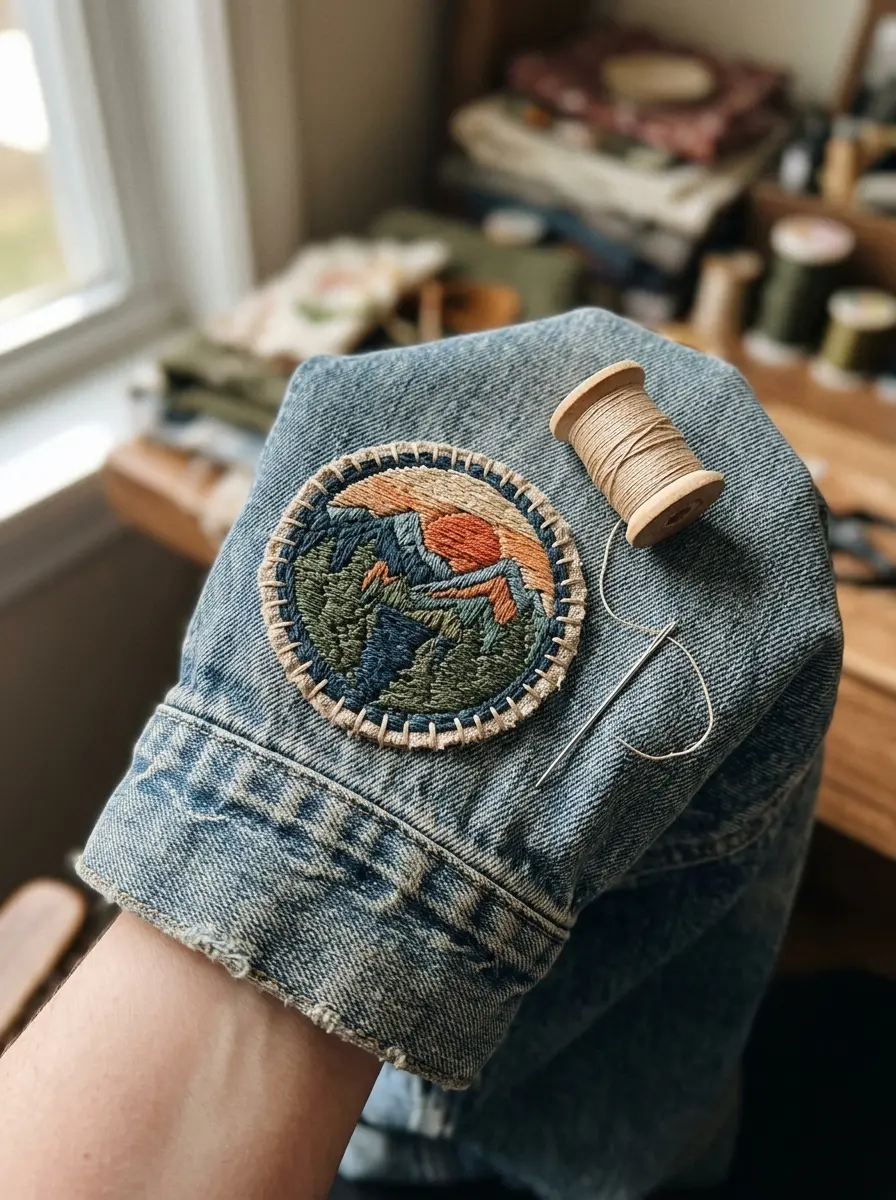
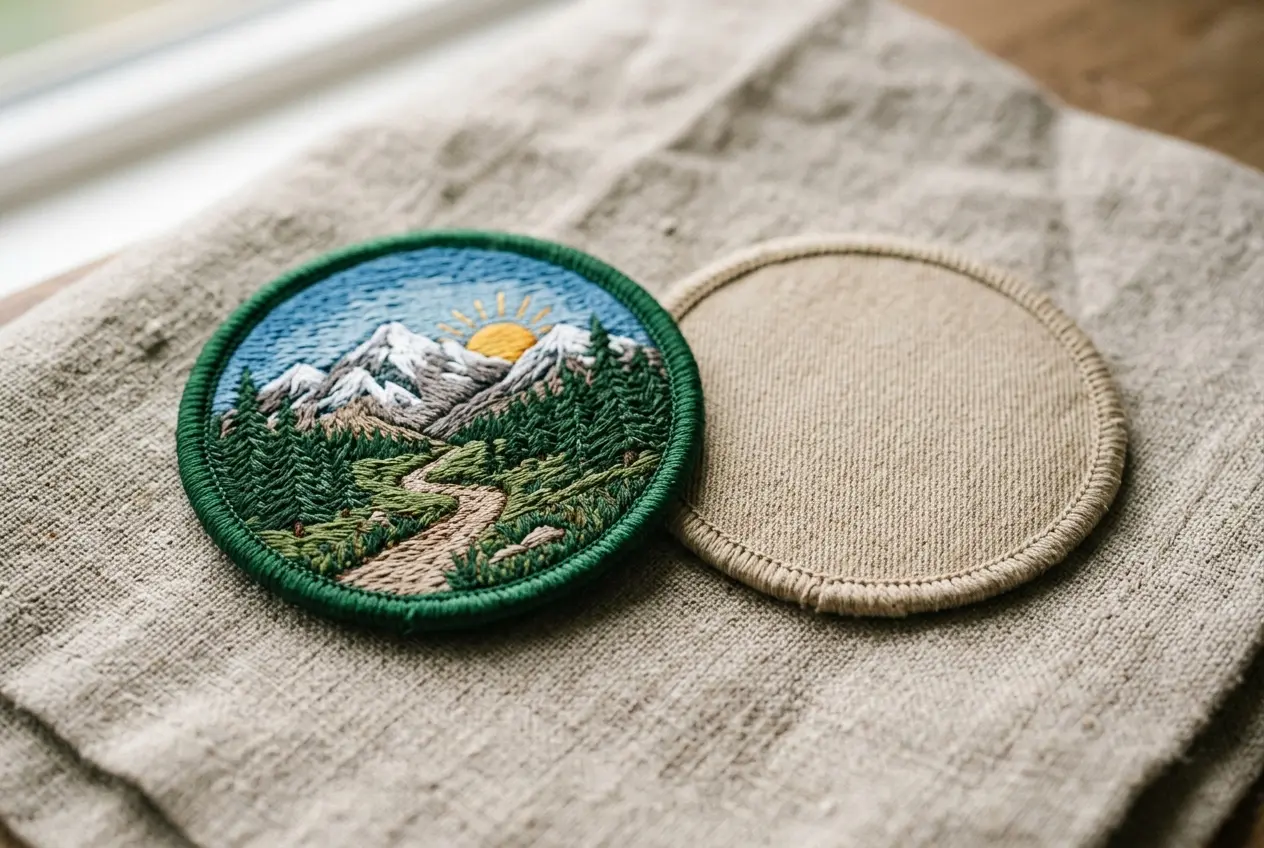
Pros
- No heat limits on fabric
- Stays on through frequent washing
- Works on leather, nylon and wool
- Easy to restitch later
Limits
- Takes a few minutes to sew
- Needle holes in delicate fabric
- Needs a steady hand on curves
FABRIC AND JOBS
Fabrics and Jobs That Need a Sewn Patch
Thread works on every cloth. Heat does not. That is the whole case for sewing.
No iron touches the patch or the fabric.
Thread holds when hot water softens glue.
Leather, nylon and wool all take a needle.
Cut the stitches and reposition if needed.
| Fabric | Iron-on | Sewn |
|---|---|---|
| Cotton | Good | Good |
| Denim | Good | Good |
| Wool | Poor | Best |
| Canvas | Test first | Good |
| Nylon | Poor | Best |
| Waterproof shell | No | Best |
| Leather | No | Good, with care |
| Polyester blend | Test first | Good |
Leather, Nylon and Waterproof Fabrics
Heat melts nylon and ruins coatings. Waterproof layers lose their seal. Leather marks under an iron. Custom sewn patches avoid the heat entirely. That is why many bag makers and jacket owners choose thread.
Use a leather needle on hide. Use a fine needle on nylon. Each hole in a rain shell is a tiny leak, so keep stitches few.
Uniforms and Workwear Washed Every Week
Weekly washing is hard on glue. Hot cycles and tumble dryers add heat. Over many washes the glue lets go. Heat is what glue hates. Hot water softens it. Thread does not care. Many uniform patches stay sewn for years.
Think about who wears it and how often. A weekly uniform needs a patch that outlasts the wash. Many scout groups and crews sew for that reason.
- Work shirts and coveralls
- School and scout uniforms
- Team jackets and aprons
- Hospitality aprons and chef coats
Heavy Fabric and Thick Seams
Thick seams stop an iron from pressing flat. Backpack straps and coat cuffs rarely lie flat. A needle goes through. Canvas bags and wool coats suit a sewn patch.
Heavy fabric is where thread beats glue. Wool, canvas and padded gear resist a flat press. A needle goes where an iron cannot reach.
Backpacks take hard wear. Straps rub and bags get dragged. Stitches take that punishment better than heat-set glue.
- Use a thimble on thick cloth.
- Pin the patch before you stitch.
- Go slowly across seams.
STITCH BASICS
What Stitching Takes: Tools, Stitches and Time
You do not need special skills. Patience matters more. You need a few tools and some patience. Here is the short kit.
- Needle that fits the fabric
- Thread matched to the border
- Pins or fabric tape
- Small scissors
- Thimble for thick cloth
- Seam ripper, in case you slip
| Stitch | Where it goes | Note |
|---|---|---|
| Whip stitch | Around the border | Fast and common |
| Ladder stitch | Along the edge | Nearly invisible |
| Machine stitch | Flat garments | Needs room under the foot |
Our sewing guide walks through each stitch. Want a quick comparison with heat? Read sew-on versus iron-on.
- Press the cloth flat first
- Mark the position with chalk
- Start under the border edge
PATCH TYPES
Custom Made Sew On Patches in Every Patch Type
Backing is a separate choice from patch type. Any face style can carry a plain back. Pick the look first.
| Type | Look | Best for |
|---|---|---|
| Embroidered | Raised thread | Logos and lettering |
| Woven | Flat and fine | Small text |
| Chenille | Fuzzy and bold | Varsity letters |
| Leather | Debossed or cut | Jackets and bags |
| PVC | Rubbery and bright | Outdoor gear |
| Printed | Full color | Photo art |
- See embroidered patches for thread styles.
- See woven patches for fine text.
- See chenille patches for letters.
Each face gives a different feel. Pick by look, then check the back. Chenille is thick and soft. Leather is stiff and takes a sharp needle. Printed is flat and fine.
Some types may need a different back, such as PVC. Ask us which backing suits yours. You can also compare options on our backings page.
Custom Sew On Badges: The UK Wording
In the UK, people say badges. Same product. Same plain back. UK orders ship duty-free.
The badge word is common in UK clubs, schools and sports teams. Search tools show both spellings, so we cover both.
- Thick patches suit sturdy cloth
- Light twill suits shirts and caps
- Check the cloth weight before you choose
ORDER DETAILS
What to Send When You Order Sew-On Patches
Want custom sew on patches no minimum? Order from 1 to 100,000. Send us these five things.
- Artwork in AI, EPS or PDF
- Size in inches or millimeters
- Quantity, from one patch up
- Patch type and border style
- Garment fabric, if you know it
Tell us the garment too. A thick jacket and a thin shirt need different advice. We can suggest border width and shape.
Leave a clear border for the needle. Thin art at the very edge is hard to stitch past. Your proof will show the final outline.
- A photo of the garment helps us advise
- Mention any care label rules
- Say if the patch will be washed often
READY TO ORDER
Order Custom Sew On Patches From Your Artwork
Upload Artwork
Send any common file format.
Approve Your Proof
Free digital proof within 24 hours.
We Ship Worldwide
Standard 10 to 14 business days. Rush in 5.
Upload your art and get a free proof within 24 hours.
No minimum. Free proof in 24 hours. Ships to 50+ countries.
COMMON QUESTIONS
Questions About Sew-On Patches
How hard is it to sew on patches?
Easy by hand. Most people finish a patch in about 5 to 15 minutes. You need a needle, thread and steady hands. Go slowly around curves. See our sewing steps for each stitch.
When is a stitched patch the better choice?
Choose sewing when fabric cannot take heat. Choose it for garments washed often. Sewn patches are lasting. Iron-on is quicker. Compare them in our comparison.
Will dry cleaners sew on patches?
Many tailors and alteration shops do. Ask first about price and fabric limits. Bring the patch and matching thread.
Do you make personalised sew on patches for the UK?
Yes. We ship to the UK and the shipping is duty-free. Spelling aside, it is the same made-to-order patch with a plain back. Send your artwork and get a free proof in 24 hours.
Can I buy patches at Walmart?
Stores sell ready-made patches. We do not. Every patch we make is custom and made to order from your artwork. There is no minimum. Order one or thousands.
Which tools do I need before sewing a patch?
You need a needle, matching thread and pins. Add small scissors and a thimble for thick cloth. A seam ripper fixes slips. Pick a needle by fabric. Use a fine one for nylon and a sharp one for leather.
What should I know about dry cleaner alterations?
Ask the price and any fabric limits. Keep the patch clean and protected on the way there. Shops may refuse delicate fabric. Bring the garment and the patch together so they can plan placement.
Do sew-on patches have any adhesive?
No. The back is plain and the border is stitched. Thread is the only thing that holds the patch.
Which patch types can be made sew-on?
Most face types can. Embroidered, woven and chenille are common. Ask us about PVC and leather backs before you order. We will confirm the plain back on your proof.
What is the best fabric for a sewn patch?
Woven cloth like denim, canvas and wool is easiest. Leather works with a sharp needle and care. Stretch knits need loose stitches so the fabric can still move. Thin silk is risky.
Is a sewn patch permanent?
Mostly. Thread stays through washing, and stitches can be cut if you change your mind. Strong thread and close stitches help the patch last. We do not promise a set number of washes.
Can I sew a patch onto a stretchy knit shirt?
Yes, with care. Use a ballpoint needle and small, loose stitches. Tight stitches pucker the knit. A scrap of soft stabilizer inside the shirt adds support.
KEEP EXPLORING