Custom Woven Patches With Flat Finish and Sharp Detail
Loom-woven from your artwork. Flat, sharp and made to order.
We weave personalized woven patches from your artwork on a loom. Flat finish, sharp small text, free proof in 24 hours, no minimum.
THE BASICS
What a Woven Patch Is: Flat, Smooth and Finely Detailed
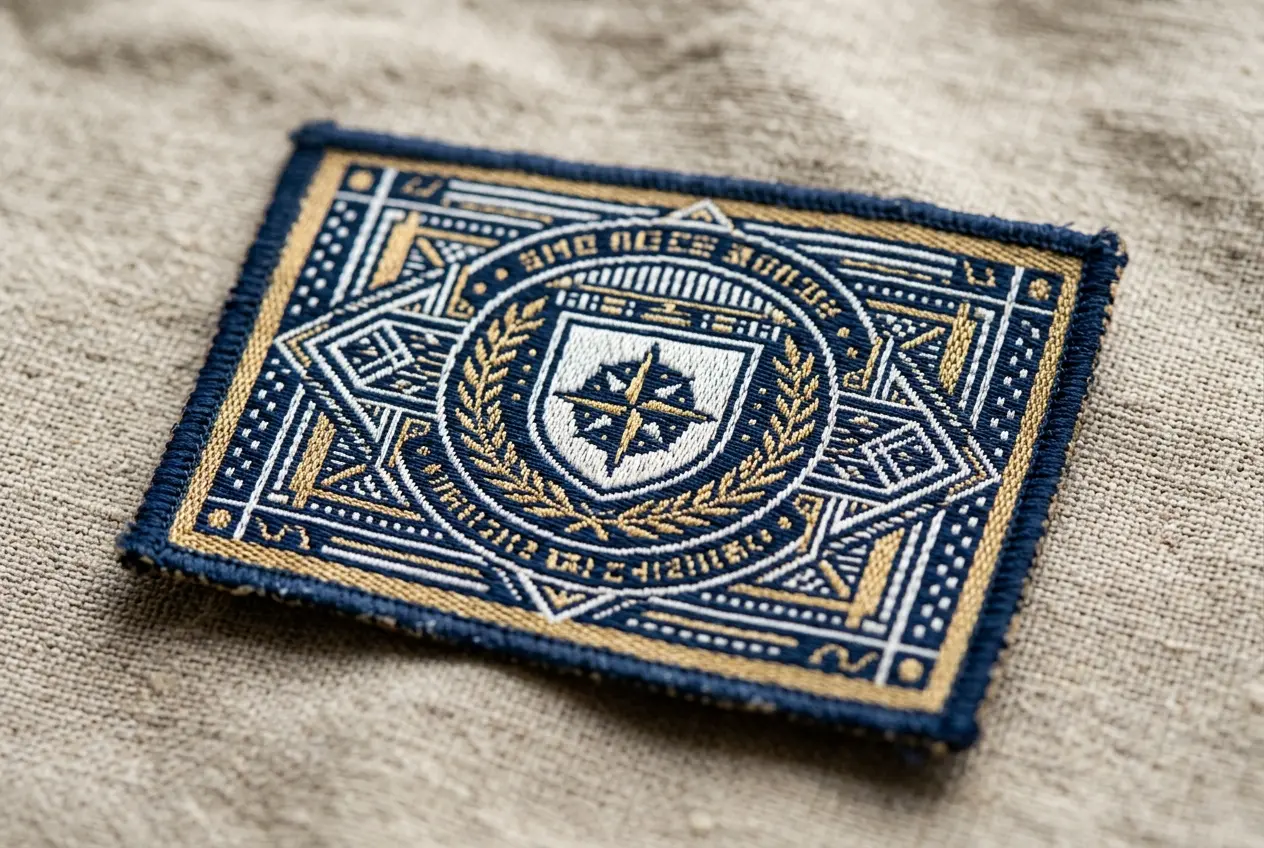
A loom builds the fabric and the image together. Nothing is stitched on top. The result is flat, smooth and sharp.
Our custom woven patches look like a tiny printed label. UK and Australian buyers call them custom woven badges. Both names mean the same thing.
- Sheen
- The soft shine a tight weave gives. Thread choice changes it.
- Hand
- How the fabric feels in your fingers. A tight weave feels smooth.
- Loom
- A machine that interlaces threads into fabric.
- Warp
- Threads that run the length of the fabric.
- Weft
- Threads that cross the warp.
- Damask weave
- A tight, smooth weave that holds fine detail.
- Flat finish
- No raised stitches. The surface is level.
| Trait | What you see | Why |
|---|---|---|
| Surface | Flat and level | Single thin layer |
| Text | Sharp and clear | Fine thread |
| Edge | Clean line | Sealed or wrapped |
| Touch | Smooth | Tight weave |
| Weight | Very light | No twill base |
Fine detail is the main reason people pick this style. Small type stays readable. Thin lines stay connected. Tiny shapes keep their form.
Think of a small printed fabric label. Now picture the print made of thread. That is the look. It suits designs with fine lines, small type and many tiny shapes.
- Smooth surface under your thumb
- Sharp small text and thin lines
- Thin and light on the garment
- Slight sheen from the tight weave
- Fine detail in every color area
| Design type | Fit | Reason |
|---|---|---|
| Small text | Excellent | Fine thread keeps it sharp |
| Tiny icons | Excellent | Many small shapes hold |
| Bold block art | Good | Works, but any style does |
| Raised texture | Poor | Surface stays flat |
The surface stays level. Light does not catch on raised thread.
Thin lines and small text stay readable at small sizes.
One thin layer adds almost no weight to a garment.
- You need small, sharp text
- You want a thin, light patch
- You want a clean, label-like look
- You print fine logos on other items too
- You care about smooth feel
Want a side by side view of patch styles? Read the style comparison.
THE LOOM
How Woven Patches Are Made on a Loom
Buyers often ask, how are woven patches made? The short answer is on a loom. Your custom woven patches start as a digital file.
- Artwork
You send AI, EPS or PDF art. We check shapes, lines and gaps.
- Color setup
Each color is matched to a Pantone code. The proof shows every one.
- Loom set-up
Threads are loaded for your design. The weave pattern is programmed.
- Weave
The loom interlaces warp and weft into one thin layer. Rows build the picture.
- Cut and edge
Patches are cut apart. The edge is sealed or wrapped.
- Backing
Your chosen backing is added. Then the patches are packed.
- Artwork checks come first
- Color setup comes second
- Weaving comes third
- Finishing and backing close the job
Each step has a purpose. Artwork checks prevent surprises. Color setup protects your brand shades. The weave itself is fast once the loom is ready.
| Stage | What happens | Result |
|---|---|---|
| Digital file | Art is prepared | Clean shapes |
| Weave plan | Colors are mapped to threads | Pattern ready |
| Weaving | Loom builds the fabric | Flat design |
| Finishing | Edge and backing added | Ready to ship |
Warp, Weft and Damask Weave: The Loom Basics
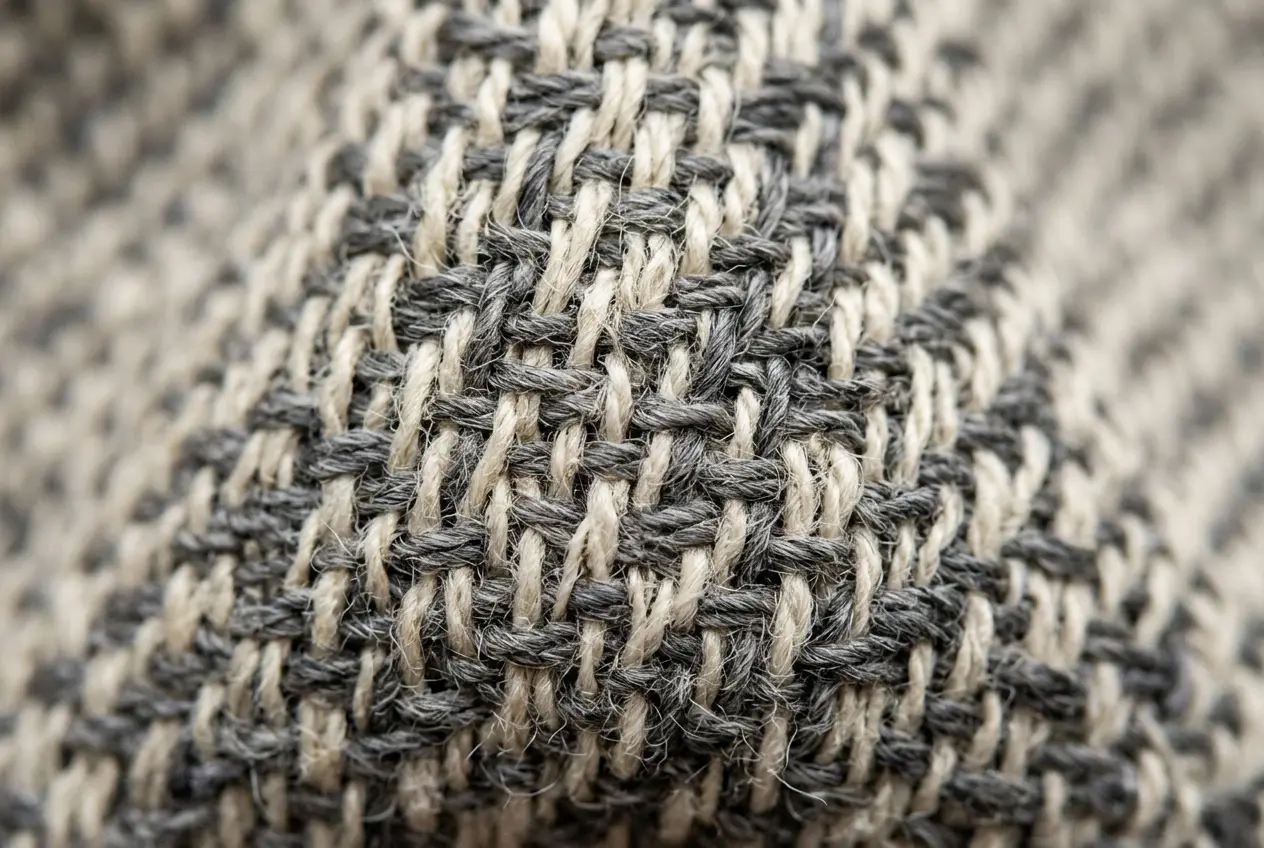
Every woven fabric has two thread sets. Warp runs lengthwise. Weft crosses it. Where they meet, the design appears.
| Term | Direction | Job |
|---|---|---|
| Warp | Lengthwise | Forms the frame |
| Weft | Crosswise | Draws the picture |
| Damask | Tight pattern | Gives smooth detail |
| Jacquard | Programmed control | Weaves the design |
Think of fabric as a grid. Warp threads form the frame. Weft threads pass over and under. Damask patterns control which thread shows on the face.
- Fine thread means fine detail
- Tight weave means a smooth face
- Each pass adds one row of design
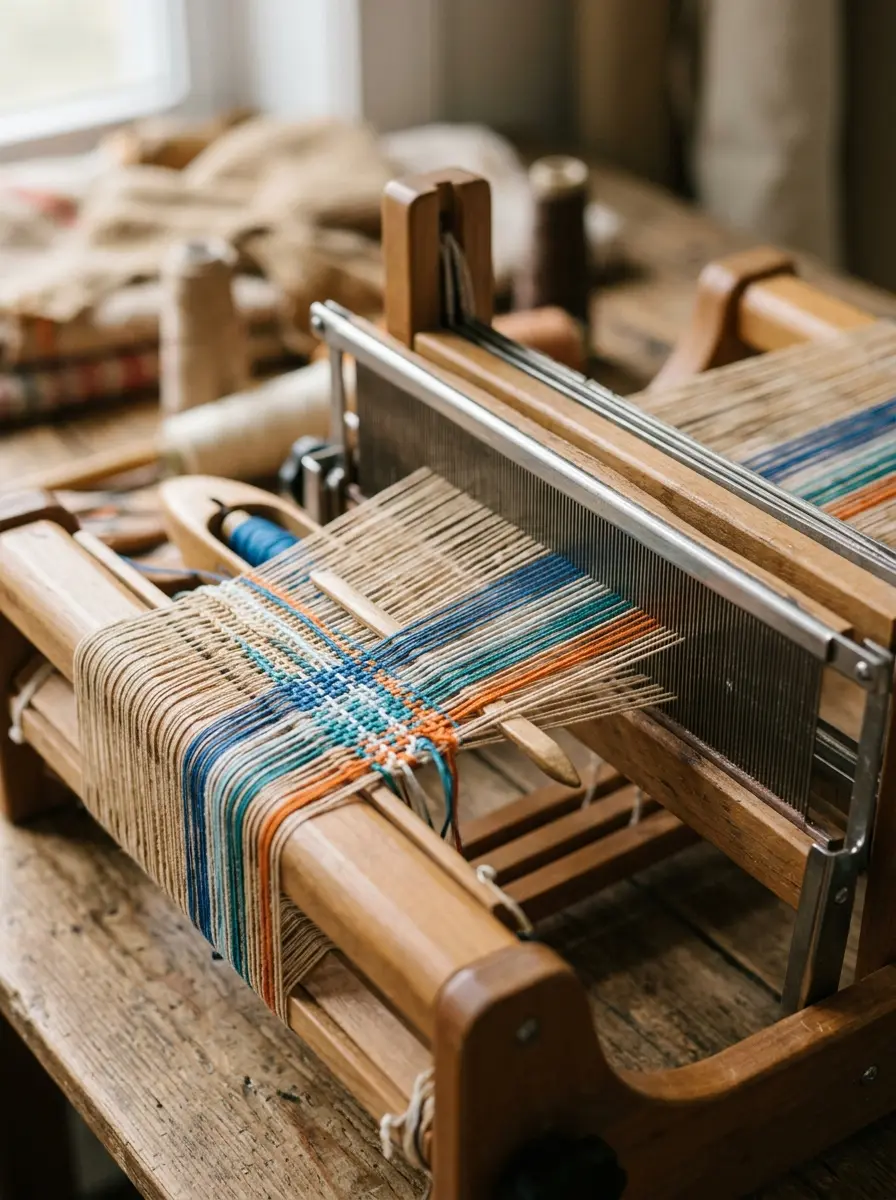
Speed and detail trade off in every craft. A looser weave moves faster but holds less detail. A tight weave takes more care. We choose the weave for your design.
| Weave density | Detail level | Feel |
|---|---|---|
| Looser | Medium | Softer |
| Tighter | Fine | Smoother |
| Very tight | Very fine | Firm and flat |
Weave density is a balance. A tighter weave holds finer detail. It also makes a firmer, flatter patch. Your proof shows the final result.
- Tight weave raises detail
- Tight weave also firms the patch
- Your proof shows the final look
Polyester Thread and Single-Layer Construction
We weave with fine polyester thread. The patch is one thin layer. There is no twill base underneath.
| Part | Detail |
|---|---|
| Thread | Fine polyester |
| Layers | One |
| Base | None, the weave is the fabric |
| Surface | Smooth and flat |
Fine thread makes a smooth face. A thick thread would blur small shapes. That is why thread weight matters for detail.
- Shuttle
- A tool that carries weft thread across the warp.
- Jacquard
- A control system that picks which threads rise for each row.
- Selvedge
- The finished edge of a woven fabric.
- Fine thread holds small shapes
- One layer keeps the patch thin
- Thin patches bend with the garment
- The design is part of the cloth
| Question | Short answer | Detail |
|---|---|---|
| Does it stitch? | No | It weaves threads |
| Is there a base? | No | Design forms the fabric |
| How many layers? | One | Thin and flexible |
| What sets detail? | Thread weight | Finer thread, finer lines |
| Who checks it? | You | Free proof first |
Loom or Embroidery Machine? What Each One Runs
These are two different machines. One weaves fabric. The other stitches thread onto fabric.
| Feature | Loom | Embroidery machine |
|---|---|---|
| Action | Weaves threads | Stitches thread |
| Base | None | Polyester twill |
| Surface | Flat | Raised |
| Fine detail | Very fine | Limited by thread width |
- A loom builds a fabric with the design inside
- An embroidery machine adds thread to an existing fabric
- A loom works in rows of thread
- An embroidery machine works shape by shape
A loom suits flat detail. An embroidery machine suits raised texture. Neither is better. Each makes a different surface.
FINE DETAIL
Small Text, Thin Lines and Gradients on Woven Patches
Weaving handles fine detail well. It still has limits. Every custom woven patches order gets a free proof that flags thin spots.
| Element | Result | Tip |
|---|---|---|
| Small text | Sharp | Use a clear typeface |
| Thin lines | Clean | Keep lines continuous |
| Gradients | Stepped | Use flat color areas |
| Serif fonts | Usually fine | Check the proof |
| Tiny dots | Risky | Enlarge them |
| Photos | Not suited | Try a printed option |
- Use solid color areas
- Keep lines connected
- Avoid tiny gaps between shapes
- Pick a clear, simple typeface
- Limit the color count
- Send vector art if you can
- Test your art in grayscale first
- Merge touching shapes of one color
- Keep outlines as bold as the text
- Line weight
- How thick a line is. Very thin lines can break up.
- Counter
- The gap inside a letter, such as the hole in an e. Tiny counters can close.
- Contrast
- The difference between thread and background colors. High contrast reads best.
- Banding
- Visible color steps where a smooth blend was.
- Kerning
- The space between letters. Tight spacing can merge them.
We do not publish a minimum text size. Limits depend on your design. The free proof checks it before weaving.
| Style | Reads well? | Tip |
|---|---|---|
| Bold sans-serif | Very well | Best for tiny sizes |
| Light sans-serif | Usually | Keep letter spacing open |
| Serif | Often | Check the thin strokes |
| Script | Sometimes | Avoid hairline joins |
| All capitals | Well | Add letter spacing |
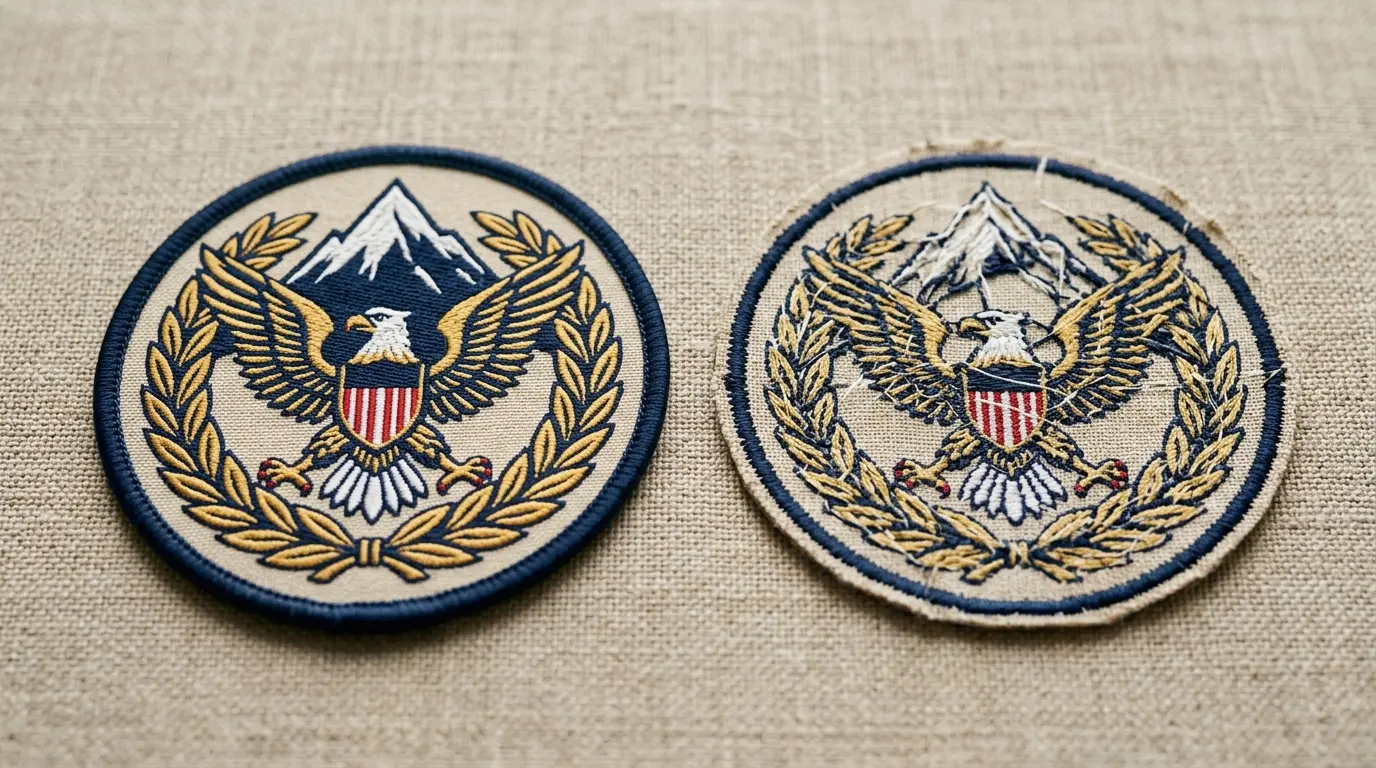
Check small text first. It is the most common trouble spot. Next check thin lines. Last, check tiny gaps between shapes. Fix those three and most art weaves well.
| Detail | How it weaves | Our advice |
|---|---|---|
| Bold shapes | Very easy | No changes needed |
| Small text | Easy | Pick a clear typeface |
| Thin lines | Moderate | Keep them connected |
| Tiny gaps | Hard | Open them up |
| Gradients | Stepped only | Use flat blocks |
- Print your art at real size
- Look for thin or vanishing lines
- Check small text at arm length
- Check gaps between shapes
- Send the file and read the proof
- Zoom out
View your art at the real patch size.
- Look for thin spots
Mark any line that nearly vanishes.
- Thicken
Make those lines bolder.
- Send
Upload and check the free proof.
Most fixes are small. A designer can thicken a line in minutes. We flag the spots on your proof. You approve every change.
| Problem | Fix |
|---|---|
| Thin line breaks up | Make it bolder |
| Small counters close | Use a wider typeface |
| Shapes bleed together | Add a clear gap |
| Gradient looks banded | Use flat color blocks |
| Too many colors | Merge close shades |
A weave cannot blend colors like ink. Gradients become color steps. For photo-style art, print can do more.
COLORS
Thread Colours, Pantone Matching and Metallic Accents
Color is where a patch wins or loses. We match your thread to Pantone codes. Personalized woven patches arrive true to your brand.
Threads come in many shades. Your proof lists the ones we pick. You can change any of them.
| Option | What it means | Note |
|---|---|---|
| Pantone match | Threads match your codes | Proof shows each color |
| Standard colors | Common thread shades | Good for simple art |
| Metallic | Shiny accent thread | Ask about it first |
- Name Pantone codes when you have them
- Pick contrast for small text
- Dark thread on light thread reads best
- Avoid near-identical shades
- Check the proof on a screen and on paper
Pantone codes keep your shades on target.
Strong contrast keeps small text readable.
Fewer colors give cleaner, bolder results.
| Color count | Look | Note |
|---|---|---|
| Few colors | Bold and clean | Easy to read |
| Many colors | Rich and detailed | Needs clear gaps |
- Light thread on dark ground reads best
- Dark thread on light ground also works
- Mid-tone pairs blur at small sizes
- Test the proof on a phone screen too
- Avoid pairing red with green
| Text color | Background | Readability |
|---|---|---|
| White | Navy | Excellent |
| Black | Yellow | Excellent |
| Gold | Black | Very good |
| Red | Blue | Weak |
| Grey | Silver | Weak |
Color choices affect readability more than people expect. Light text on a dark ground reads best at small sizes. Close shades blur together. Strong contrast keeps every letter clear.
- Choose
Pick your brand colors. Use Pantone codes if you have them.
- Compare
Check text against its background for contrast.
- Simplify
Merge shades that look nearly the same.
- Approve
Review the proof and change any thread.
- Pantone code
- A numbered color standard used worldwide. It keeps shades consistent.
- Thread shade
- The actual dyed thread used in the weave.
- Color step
- One flat block of color, used instead of a smooth blend.
- Colorway
- One set of thread colors for a design. You can order several.
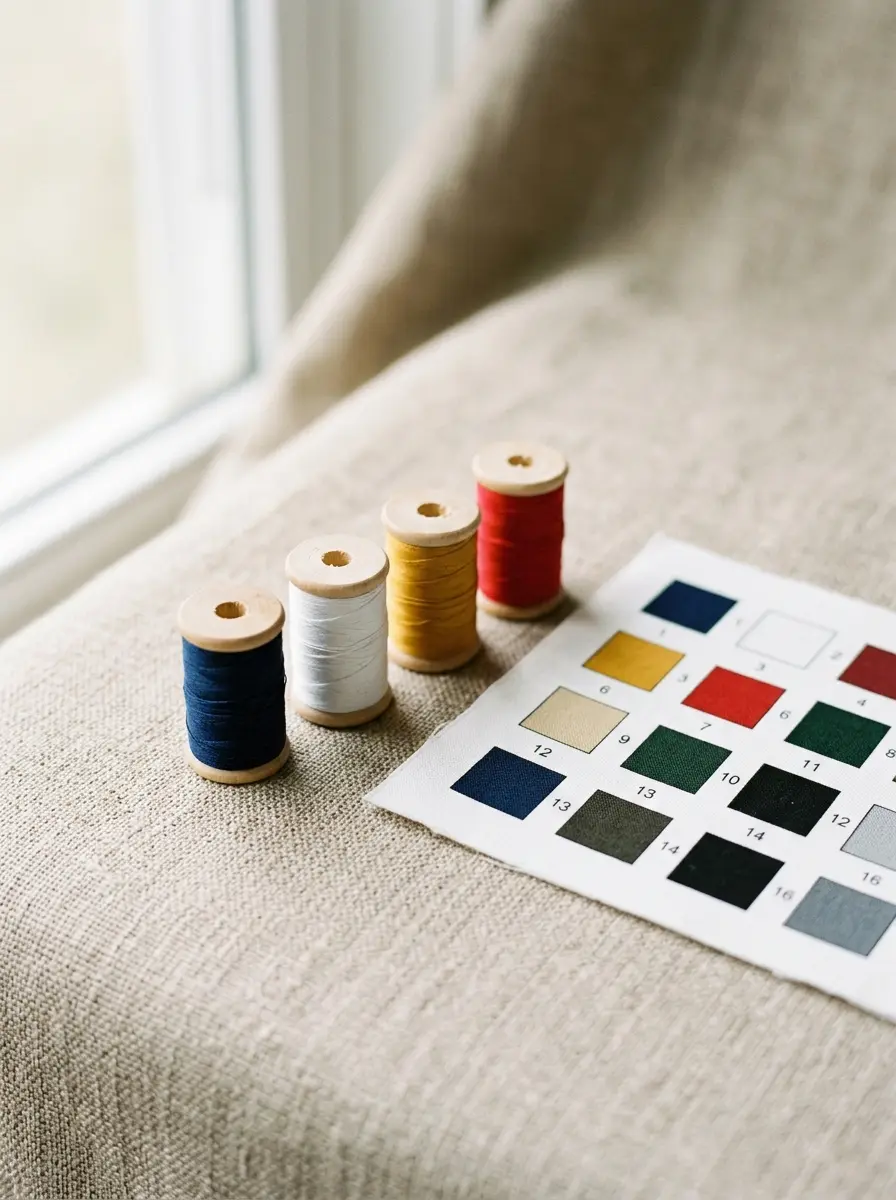
The proof is free and fast. It arrives in 24 hours. You can change colors as often as needed.
EDGES
Woven Patch Edges: Merrowed, Heat-Cut and Borderless
The edge decides how a patch wears. Edges also change the look. Buyers of custom woven badges often pick by edge first.
Three edges cover most orders. Each one seals the cut threads in a different way. The proof shows your choice before weaving.
| Edge | Look | Best for | Watch out |
|---|---|---|---|
| Merrowed | Thread wrap | Classic badge look | Adds edge thickness |
| Heat-cut | Sealed flat edge | Thin, light patches | Less raised look |
| Borderless | Cut edge only | Clean modern designs | Needs a clean cut |
Pros
- Merrow wraps and protects the edge
- Heat-cut stays flat and thin
- Borderless gives a clean modern look
Limits
- Merrow adds a little thickness
- Cut edges need good sealing
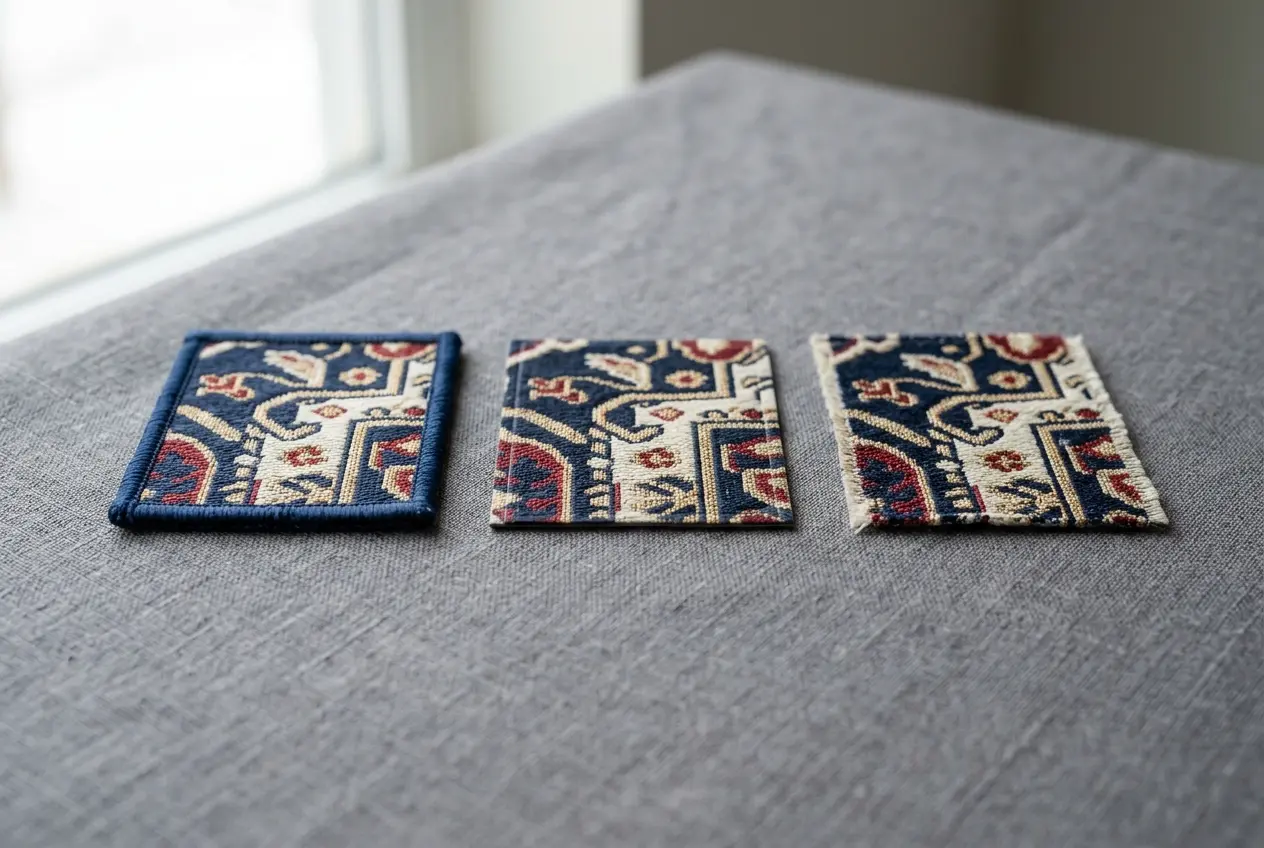
- Merrow
- A machine wrap of thread over the edge.
- Heat-cut
- A heated blade cuts and seals the edge.
- Borderless
- No wrap. The cut edge is the finish.
| Edge | Fray risk | Reason |
|---|---|---|
| Merrowed | Low | Thread wraps the edge |
| Heat-cut | Low | Heat seals the threads |
| Borderless | Depends on sealing | Cut edge needs care |
- Straps rub patches, so choose a wrapped edge
- Light shirts suit a flat sealed edge
- Frequent washing favors a sealed or wrapped edge
Think about wear before you pick. A patch that rubs on a strap needs a strong edge. A patch on a light shirt can use a flat edge. Pick the edge that matches daily life.
| If you want | Choose | Because |
|---|---|---|
| Classic badge look | Merrowed | Thread wraps the edge |
| Thinnest possible patch | Heat-cut | Edge stays flat |
| Modern clean look | Borderless | No frame around art |
| Odd custom shape | Heat-cut | Follows tight curves |
| Maximum edge strength | Merrowed | Wrap resists wear |
- Name the shape
Is it round, square or custom?
- Pick the look
Raised wrap or flat seal?
- Check the proof
See the edge before weaving.
- Choose merrowed for a classic badge
- Choose heat-cut for a thin, flat look
- Choose borderless for a modern look
- Describe the garment and we help you pick
- Ask for a sample edge if unsure
Edge finish also controls fraying. A sealed or wrapped edge resists it. Ask the proof which edge fits your shape.
SIZE AND SHAPE
Woven Patch Sizes, Shapes and Thickness
Loom-made pieces run thin and flexible. They suit small and mid-size designs. We confirm the exact size on your proof.
- Inch
- A common patch size unit. One inch is about 25 millimeters.
- Profile
- How much a patch rises from the fabric. Thin means a low profile.
- Aspect ratio
- Width compared with height. Keep it when you resize.
| Use | Typical size | Note |
|---|---|---|
| Clothing label | 1 to 2 inches | Fine detail shines |
| Hat or cap | 2 to 3 inches | Suits curved crowns |
| Chest logo | 3 to 4 inches | Clear and flat |
| Sleeve | 2 to 3 inches | Keep text bold |
| Bag | 3 to 4 inches | Add firm backing |
- Squares and rectangles weave easily
- Circles and ovals need a clean edge
- Custom outlines suit heat-cut
- Very large pieces may suit another style
- Measure the space before you choose
- Small size means fewer details can show
- Larger size gives text more room
- Ask us when a size feels borderline
Thin patches suit small areas well. Fine detail stays sharp at small sizes. Large pieces are possible. Another style may suit them better.
- Small patches suit caps and labels
- Medium patches suit chests and sleeves
- Large patches need firm backing
Detail and size are linked. A small patch has less room for text. A larger patch gives fine lines space to breathe. Pick the smallest size that still reads clearly.
| Size | Detail level | Tip |
|---|---|---|
| Small | Simple shapes | Use bold text |
| Medium | Fine text possible | Check the proof |
| Large | Most detail | Mind the weight |
| Shape | Edge fit | Note |
|---|---|---|
| Square | Any edge | Simple to weave |
| Rectangle | Any edge | Good for text |
| Circle | Merrowed or heat-cut | Even edge |
| Custom outline | Heat-cut | Follows curves |
| Banner | Heat-cut | Long, narrow text |
- Check the real size on your proof
- Ask about borderline sizes
- Check thickness with your backing choice
- Test the size on your garment
BACKING
Which Backing Works on a Thin Woven Patch?
A thin patch needs a gentle backing. Heavy backing can stiffen it. Pick one that keeps the patch flexible.
Most buyers pick iron-on or sew-on. Velcro suits patches you swap. Adhesive suits light, short use.
| Backing | Fit | Note |
|---|---|---|
| Sew-on | Very good | Keeps the patch flexible |
| Iron-on | Very good | Common for thin patches |
| Velcro | Good | Adds some thickness |
| Adhesive | Light use | Best for short wear |
| Garment | Backing | Why |
|---|---|---|
| Shirt | Iron-on | Adds almost no bulk |
| Cap | Sew-on | Fits the curve |
| Jacket | Sew-on | Holds in daily wear |
| Bag | Velcro | Easy to swap |
- Iron-on adds almost no bulk
- Sew-on keeps the patch flexible
- Velcro suits swappable patches
- Adhesive suits short wear
- Match the backing to the garment fabric
Backing is the last layer. It does not change the face of the patch. It changes how the patch attaches and how it feels on the garment.
- Iron-on
- A heat-activated adhesive layer. Heat bonds it to fabric.
- Sew-on
- No adhesive. You stitch the patch by its edge.
- Velcro
- Hook and loop pieces. One part sews on the garment.
Want every option side by side? Open the full backing guide.
USES
Best Uses for Woven Patches: Fashion Brands, Hats and Uniforms
Thin, flat patches suit soft garments. Our custom woven patches go on shirts, jackets and bags. Fashion brands pick custom woven badges for a clean, label-like look.
A fine logo patch adds a quiet brand mark. It sits flat on shirts and knits, so it never looks bulky.
Small, sharp patches suit hoodies and jackets. Fine type adds a premium touch.
Thin patches fit curved crowns without bulk. They also sit neatly under the brim.
Flat patches suit shirts and vests. Text stays readable even at small sizes.
Sharp small text suits badges and rank marks. Matching sets look consistent.
| Use | Key need | Good pick |
|---|---|---|
| Fashion brand | Fine logo detail | Heat-cut edge |
| Streetwear | Small sharp marks | Iron-on backing |
| Hats | Thin, flexible patch | Sew-on backing |
| Uniforms | Readable text | Merrowed edge |
| Scouts | Small badge text | Sew-on backing |
- Brands want logo detail to stay crisp
- Hat makers want thin patches
- Uniform buyers want readable text
- Groups want matching sets
- Resellers want repeat batches
Each use asks for something different. A cap needs a curve-friendly patch. A uniform needs readable text. A fashion label needs a quiet look.
- Will fine text stay readable?
- Does the patch bend with my fabric?
- Which edge suits my shape?
- Which backing fits my garment?
- How many do I need?
Fashion labels often pick this style for its clean look. Hat makers pick it for the thin profile. Groups and teams pick it for readable small text.
| Garment | Fit | Note |
|---|---|---|
| T-shirt | Excellent | Flat patch sits smooth |
| Hoodie | Excellent | Thin patch bends well |
| Cap | Very good | Thin fits the curve |
| Jacket | Good | Pick firm backing |
| Bag | Good | Add velcro or sew-on |
| Uniform | Very good | Keep text readable |
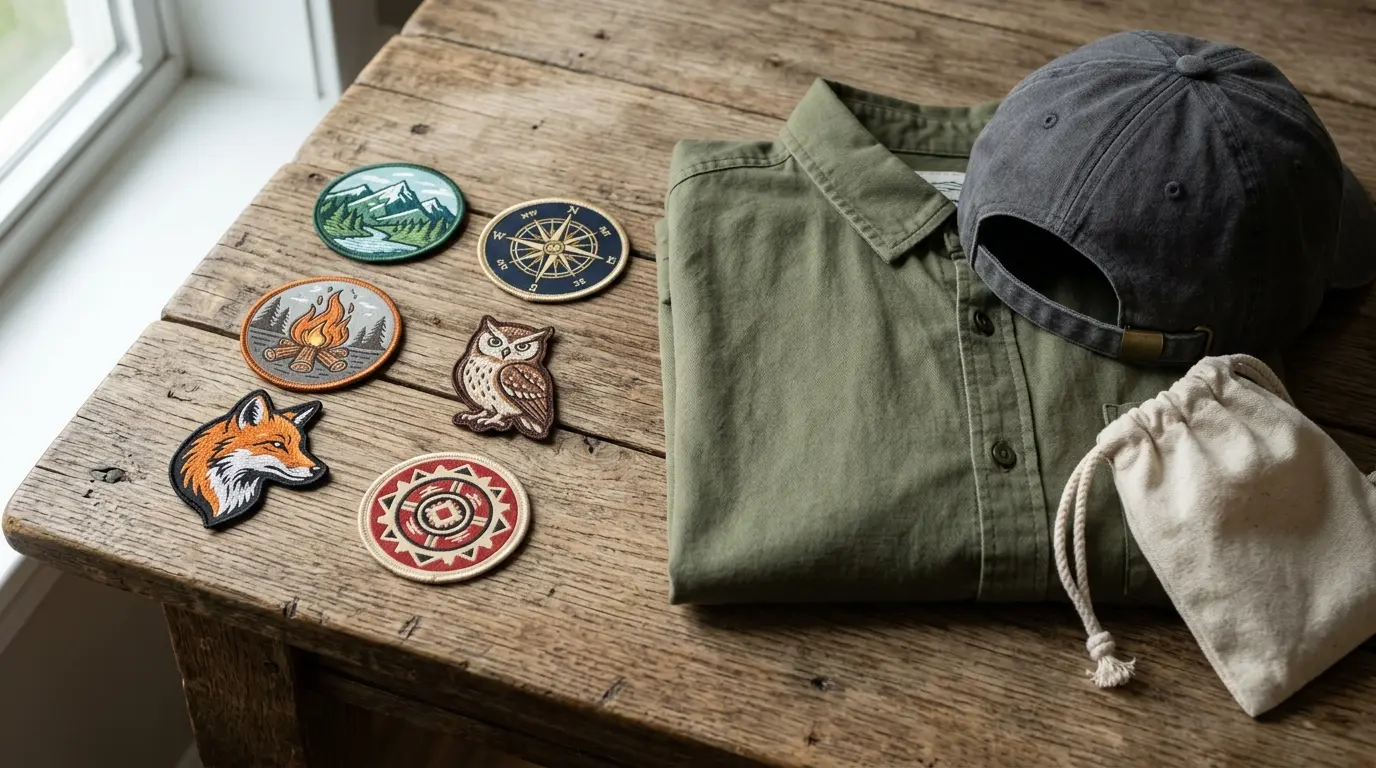
For caps, see hat patches. For groups, see team and club patches.
ORDER SIZE
Custom Woven Patches No Minimum: Start With One
You can order a single patch. You can also order 100,000. Custom woven patches no minimum means you can start small.
- Order one to check color
- Order a handful to test garments
- Order more once you approve
- Order two colorways to compare
Many buyers start small. They order one patch and test fit, color and feel. Then they place a larger order. The proof is free either way.
- Test a design before a big run
- Order one for a sample
- Reorder when it fits
There is no wrong size to start with. A single patch gets the same care as a large run.
| Order size | Allowed | What to expect |
|---|---|---|
| 1 patch | Yes | Free proof first |
| 100 patches | Yes | Quote shows price |
| 500+ patches | Yes | Better unit price |
| 100,000 patches | Yes | Quote shows price |
Small orders get the full service. You get a free proof. You get unlimited free revisions. You get the same quality guarantee as a large run.
A small first order also shows how the weave feels on your fabric. Fold it, rub it and wear it for a day. Then you know what to scale.
| Item | Small order | Large order |
|---|---|---|
| Free proof | Yes | Yes |
| Unlimited revisions | Yes | Yes |
| Duty-free shipping | Yes | Yes |
| Quality guarantee | 100% | 100% |
Check fit and color before you scale.
Order for a club, event or product test.
Order in volume. The unit price falls.
Price per patch falls as quantity rises. See the pricing page for live figures.
CARE
Woven Patch Care: Washing, Pressing and Sewing
Thin patches are easy to care for. Gentle handling gives the longest life. Every order carries our 100% quality guarantee.
Sewing takes ten minutes for most patches. Work on a flat surface. Pin first, stitch second.
- Mark the placement with chalk
- Pin the patch flat
- Use thread that matches the border
- Stitch around the edge by hand or machine
- Knot and trim the thread
Care is simple because the patch is thin. Gentle washing and air drying cover most needs. Heat is the main risk, mostly for adhesive backing.
- Wash
Use gentle cycles and mild detergent.
- Dry
Air dry flat when you can.
- Press
Use a cloth and moderate heat.
- Check
Look at edges and stitches now and then.
| Backing | Care note |
|---|---|
| Sew-on | Wash gently |
| Iron-on | Keep high heat low |
| Velcro | Close it before washing |
Store spare patches flat and dry. Keep them away from direct heat. Check backing adhesive before you press.
| Do | Do not |
|---|---|
| Wash gently | Scrub the surface |
| Air dry | Use high heat |
| Press with a cloth | Press hard directly |
| Check the edge | Ignore loose threads |
| Mistake | Result | Better way |
|---|---|---|
| Hot iron on the face | Flattened sheen | Use a cloth |
| Hard scrubbing | Worn surface | Wash gently |
| Skipping edge checks | Loose threads | Check regularly |
| Rough tumble drying | Edge wear | Air dry |
- Use a fine needle
- Use small, even stitches
- Match the thread to the border
- Sew through the border, not the face
- Skip fabric softener on the first wash
Thin patches sew on easily. A fine needle and small stitches work best. Go slowly around curves. Keep the thread tension even.
- Pressing cloth
- A thin cotton sheet placed over the patch. It protects the surface from direct heat.
- Whip stitch
- A simple over-the-edge stitch. It holds the patch flat.
Need full steps? See sewing steps and the care guide.
HOW TO ORDER
From Artwork to Loom: Ordering Your Personalized Woven Patches
Ordering is simple. You send art and approve a proof. We handle the loom.
- Upload your artwork
- Get a free proof in 24 hours
- Approve it or request changes
- We weave in 10 to 14 business days
- Your patches ship duty-free
| Format | Type | Note |
|---|---|---|
| AI | Vector | Best choice |
| EPS | Vector | Best choice |
| Vector | Best choice | |
| PNG, JPG | Image | We redraw it |
| SVG, PSD, BMP, TIF | Accepted | We check it |
Prepare a short brief before you upload. Tell us the size, the garment and the quantity. Add Pantone codes if you have them. Then the proof can be exact.
| Item | Why | Required? |
|---|---|---|
| Logo file | Starts the proof | Yes |
| Target size | Sets the layout | Helpful |
| Pantone codes | Matches colors | Helpful |
| Backing choice | Sets the finish | Helpful |
| Quantity | Sets the price | Yes |
| Placement note | Guides the layout | Helpful |
- Gather your logo files
- Note Pantone codes if you have them
- Pick a size and a backing
- Check the proof carefully
- Decide your placement on the garment
- Share a photo of the finished layout
| Stage | Time | Note |
|---|---|---|
| Digital proof | 24 hours | Free and Pantone matched |
| Standard production | 10 to 14 business days | After proof approval |
| Rush production | 5 business days | After proof approval |
| Shipping | Duty-free | 50+ countries |
Proofs are free and fast. Changes are free and unlimited. Nothing is woven until you approve. That keeps surprises off your doorstep.
- Proof
- A digital preview of your patch. It shows colors, size and edge.
- Revision
- A change you request after the proof. Revisions are free and unlimited.
- Vector file
- Art made of lines and shapes. It stays sharp at any size.
Upload your art and tell us the size.
Check the proof and request changes.
Your patches ship duty-free.
Unlimited revisions are free. Rush runs five business days after proof approval. Your custom woven patches then ship to 50+ countries.
READY TO ORDER
Start Your Woven Patch Order: Free Proof in 24 Hours
Upload Artwork
Send any common file format.
Approve Your Proof
Free digital proof within 24 hours.
We Ship Worldwide
Standard 10 to 14 business days. Rush in 5.
Upload your art today. Custom woven patches no minimum, with a free proof in 24 hours.
No minimum. Free proof in 24 hours. Ships to 50+ countries.
COMMON QUESTIONS
What Buyers Ask Before Ordering Woven Patches
What are woven patches?
Patches made on a loom from fine polyester thread. The design and the fabric form together in one thin layer. The surface is flat, smooth and sharp. Fine detail, such as small text and thin lines, is their strength.
Do woven patches have a shine?
A slight sheen, yes. The tight weave reflects a little light. Thread choice changes how matte or glossy the surface looks. Your free proof shows the finish before weaving starts.
How are woven patches made and what machine is used?
A loom weaves the design and the fabric together in one pass. Warp and weft threads interlace to draw each color. We do not name machine brands. The free proof shows the result before any thread is woven.
Which file should I send to have a woven patch made?
Upload AI, EPS or PDF. We also accept PNG, JPG, SVG, PSD, BMP and TIF. Then get a free proof in 24 hours. Approve it or ask for changes. Production takes 10 to 14 business days.
Can woven patches have small text?
Yes, and usually finer than embroidery allows. A tight weave of fine thread holds small letters well. We publish no fixed minimum size, because it depends on your typeface. The free proof checks your exact text before weaving.
Can I wash a garment with a woven patch?
Yes, with gentle care. Wash gently and air dry. Keep high heat away from the backing. Custom woven patches carry our 100% quality guarantee. See the care guide for removal and cleaning steps.
What is a damask weave on a patch?
A tight, satin-like weave. The threads pack close together. That makes a smooth surface that holds fine detail. It is the reason small text stays sharp. The result is a flat face with a slight sheen.
Which thread is used in woven patches?
Fine polyester thread. It weaves into a smooth, flat face. Fine thread lets the loom draw small shapes and thin lines. Your proof lists every thread color before production, so you can approve each one.
Are woven patches thinner than other patches?
Yes. The patch is one flexible layer with no twill base. It bends with the fabric. That makes it a good fit for soft garments, caps and light shirts. Heavier styles exist if you want more bulk.
Do you make personalised woven badges for UK buyers?
Yes. UK buyers can order custom woven badges, also searched as woven badges personalised. Custom woven patches no minimum applies there too. Shipping is duty-free to 50+ countries. Proofs arrive in 24 hours.
Do woven patches fray at the edge?
The edge finish decides it. A merrowed edge wraps the border in thread. A heat-cut edge seals the threads with heat. Either resists fraying. Your proof shows which edge fits your shape and use.
Does a woven piece pucker on stretchy fabric?
The thin weave bends with the cloth. Stretch knits can still pull the edges. Pick a soft backing and sew the corners. Ask the proof team about very stretchy garments.
How do I pick thread colors for a dark background?
Use a lighter thread for text. Keep clear gaps between shapes. Pantone codes help the proof match your brand. Check the digital proof on a bright screen.
What artwork details disappear in a weave?
Hairline strokes and tiny gaps can close up. Soft color blends turn into steps. Bold shapes and clear spacing weave best. The free proof flags weak spots.
Is a woven design good for a curved cap front?
Thin cloth lies flat on curved panels. A small, simple shape sits best. Sew-on or heat-applied backing both work. Avoid placing it across a seam.
How do I check a woven order when it arrives?
Hold each piece to the light. Look for even edges and clean text. Compare colors to your approved proof. Flip it over and check the backing is smooth.
KEEP EXPLORING