Custom Velcro Patches Made From Your Artwork
Hook-backed patches you swap on and off.
Personalized velcro patches made to order from your artwork. Hook backing lets you swap them on and off. Free proof in 24 hours, no minimum.
HOOK AND LOOP
What Hook and Loop Means on a Custom Velcro Patch
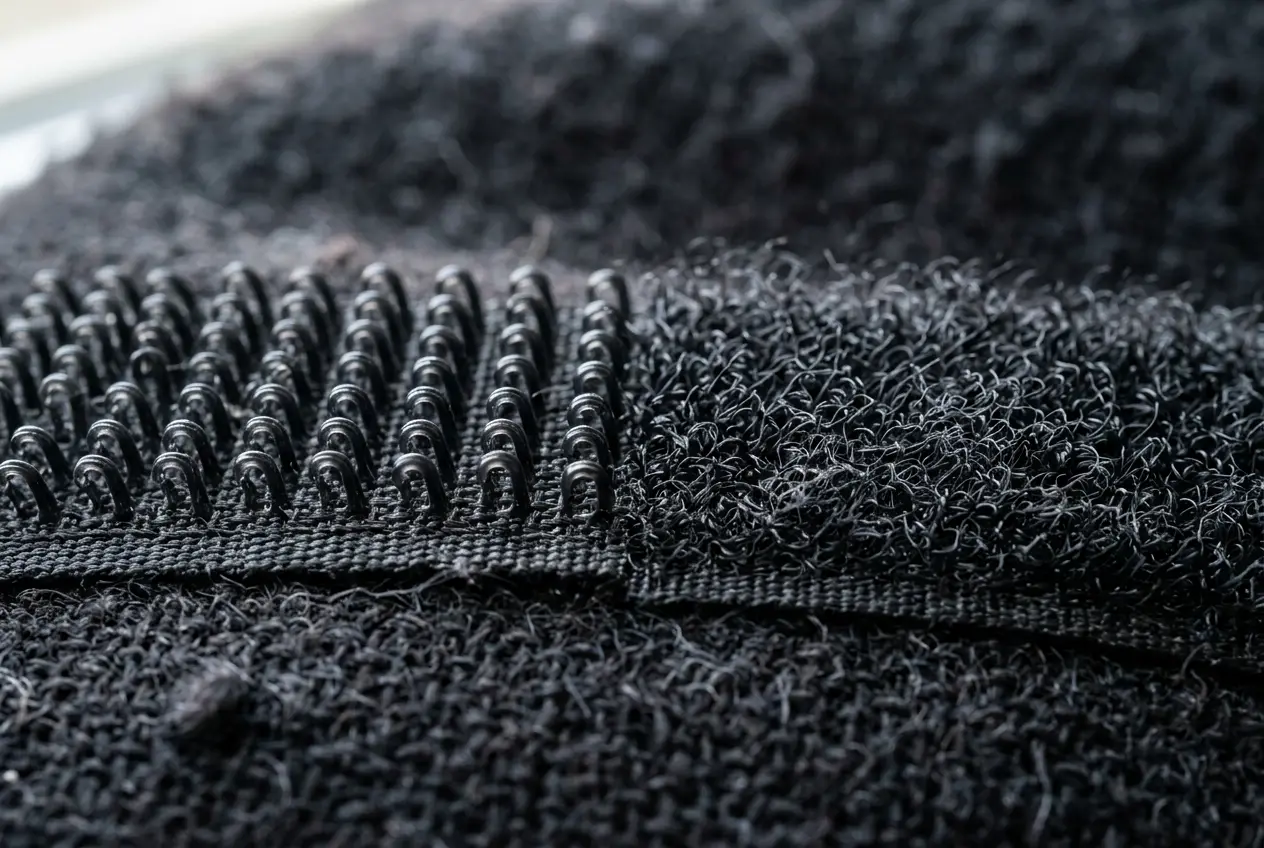
Hook and loop is a two-part fastener. One side has tiny stiff hooks. The other side has soft loops.
Press the two sides together and they grip. Peel them apart and they let go. That is why a patch can swap on and off.
- Hook
- The stiff, scratchy side. It sits on the patch back.
- Loop
- The soft, fuzzy side. It sits on your gear.
- Grip
- How firmly the two sides hold once pressed.
- Release
- Peeling from one edge so the hooks let go.
Why choose hook and loop over thread? Sewing is permanent. Hook backing keeps your options open. You can retire a patch, swap it or move it to new gear.
| Side | Feel | Where it sits |
|---|---|---|
| Hook | Stiff and scratchy | On the patch back |
| Loop | Soft and fuzzy | On the garment or bag |
Grip depends on contact. More overlap means more hold. A small panel holds less than a big one.
| Pull direction | Grip |
|---|---|
| Sliding sideways | Strongest |
| Peeling from an edge | Weakest |
- Hook and loop sides are often nylon or polyester
- Both sides need clean, flat contact
- Lint is the main enemy of grip
- A firm press seats the hooks
Which Side Is Hook and Which Side Is Loop
The patch carries the hook. Your gear carries the loop. A hook side can snag knit fabric, so it stays off your clothes.
Grip is strongest sideways. It is weakest when you peel. So a patch always comes off from one edge.
Velcro Versus Hook and Loop: Brand and Generic Term
VELCRO is a brand name. Hook and loop is the generic term for the fastener. Many people say velcro for both.
A Swiss engineer, George de Mestral, modeled the idea on burrs. This page uses both terms. Hook and loop means the fastener itself.
- Swap patches between jackets and bags
- Retire old designs without cutting thread
- Keep a clean base for new ones
WHERE TO USE
Custom Hook and Loop Patches by Where You Wear Them
Removable patches belong where you swap them. Personalized velcro patches suit bags, gear and work wear. The loop panel needs a flat, stable surface.
Flap fronts and flat panels carry a loop panel well.
A flat front lets you rotate names and logos.
Front and back panels hold bigger patches.
Chest and sleeve panels keep patches swappable.
Pick a surface before you pick a size. The surface sets the panel size. It also sets how many patches fit.
- Backpack flap fronts
- Bag side panels
- Vest front panels
- Work jacket sleeves
- Duffel end panels
- Tool pouch fronts
| Surface | Good fit | Watch for |
|---|---|---|
| Backpack flap | Flat and firm | Curved edges |
| Tote front | Flat when full | Soft, floppy fabric |
| Vest panel | Large and flat | Stretch fabric |
| Sleeve pocket | Small, flat | Tight curves |
| Duffel end | Firm and flat | Shared seams |
Soft, stretchy cloth makes a weak base. Add a stiff backing behind the panel if you need to. That keeps the patch flat.
Custom Velcro Patches for Backpacks and Bags
Flap fronts and flat side panels work best. Curved or padded spots weaken the grip. Check that the panel stays flat when the bag is full.
- Use a firm, flat surface
- Avoid zipper edges and seams
- Keep the panel clear of straps
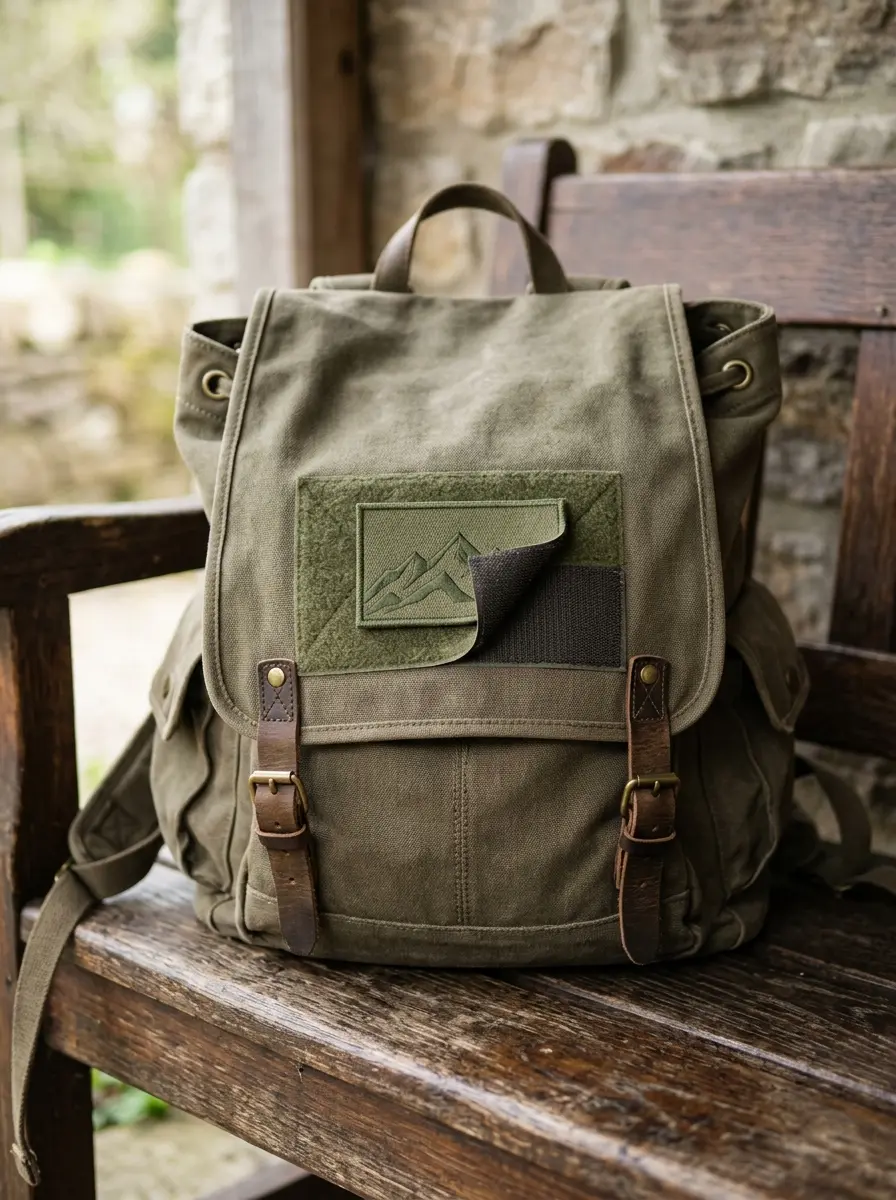
Bags take rough handling. Stitch the loop panel on, rather than gluing it. Glue can peel when the bag flexes.
Work Gear and Uniform Panels With Removable Patches
Crews swap name, role and team patches often. Hook backing makes that quick. Vest and sleeve panels are common spots.
Need a specific look? See military patch options or fire department patches. Cap fans can read the hat patch page.
- Name and role patches that change often
- Event or shift patches that rotate
- Team patches shared between wearers

Packs and pouches carry patches that change by trip.
One bag, a new patch each season.
Match the loop panel color to your gear. Black and tan are common choices. A matching panel hides at the edges.
- Flat panels hold best
- Curved edges lift first
- Padded spots give a weak base
Think about who uses the gear. Crews change patches often. Hobby bags change them less. Hook backing suits both.
BACKING
Velcro Backing Options for Custom Patches
Custom patches velcro backing comes in two main setups. Choose by how you plan to fit your gear.
| Option | What you get | Best for | Loop panel |
|---|---|---|---|
| Hook only | Patch with hook back | Gear with a panel | You supply it |
| Hook and loop set | Both halves | Gear without a panel | Fitted to your gear |
Both setups use the same hook. The difference is who supplies the loop half. Pick the one that saves you work.
- Hook only suits gear that has a panel
- A set suits new gear
- Either way, the patch is made to order
Pros
- Swap patches in seconds
- Reuse the same loop panel
- No re-sewing for each swap
- Good for shared gear
Limits
- Grip fades with lint and wear
- The loop panel must be fitted
- Less permanent than sewing
- Bulkier than a flat back
Pick the setup before you design. The setup sets the patch edge and the panel size. It also sets how you attach the patch.
- List the gear you want to patch
- Note which already has a loop panel
- Decide how often you will swap
Hook Side Only: The Standard Setup
The patch carries the hook half. You add the loop panel, or your gear already has one. That keeps the patch thin.
- Thinnest option
- Suits gear with a loop panel
- Easy to reorder later
Many buyers already own loop panels. Others fit a panel once and swap patches for years. Both cases suit hook-only.
- Thin and light
- Easy to swap
- Pair with a stitched loop panel
Hook and Loop Set: Both Halves
A set gives you the hook patch and the matching loop. Fit the loop to your gear first. Then press the patch on.
- Good for new gear
- Panel matches the patch outline
- One order covers both parts
A set suits new gear with no panel yet. You skip hunting for a matching loop. The shapes line up.
The Popular 2 by 3 Inch Velcro Patch
A custom 2x3 velcro patch is a popular size. It fits a name, a role or a small logo. Bigger designs need a bigger loop panel.
- Check the panel size first
- Match the patch outline
- Allow a small margin
Rectangles waste less loop material than odd shapes. They are also easy to align. Round and shield shapes still work.
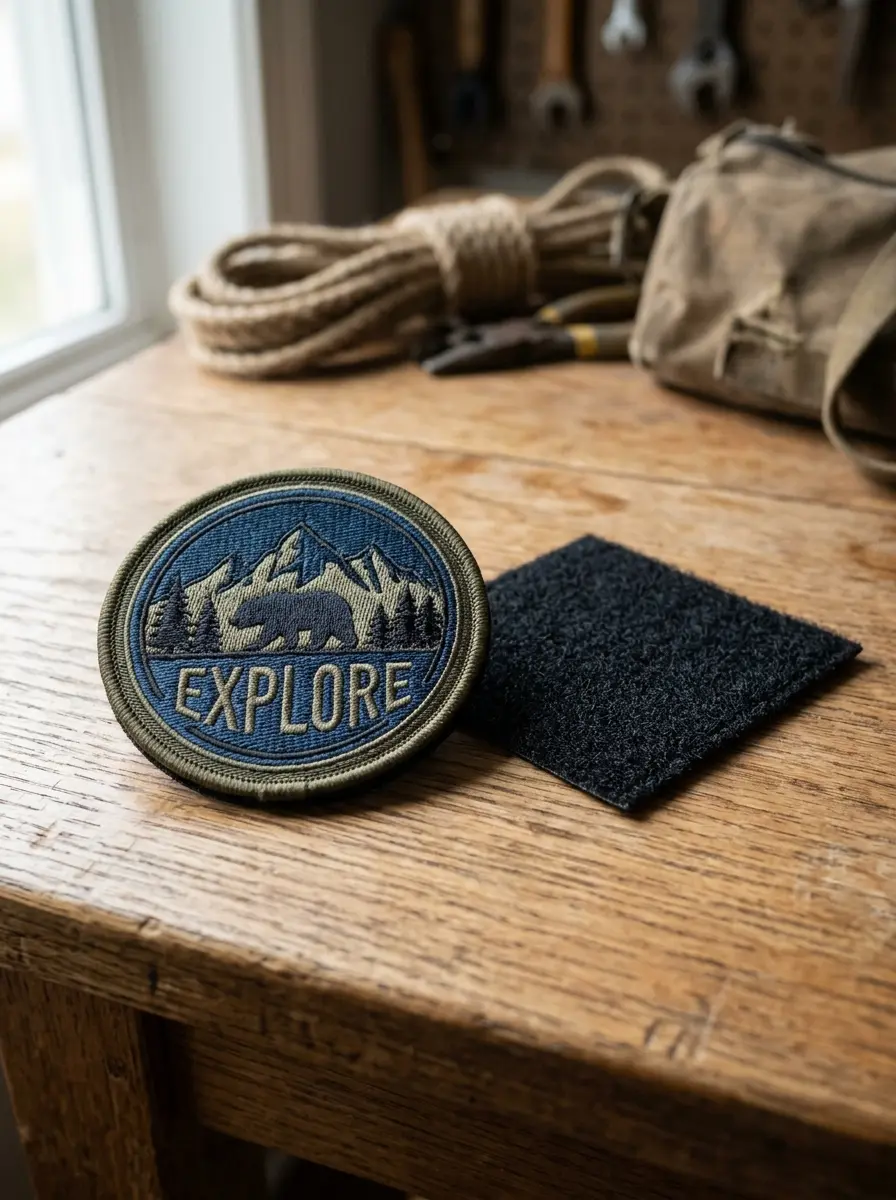
Shapes matter. Rectangles and ovals are easy to align. Odd shapes still work. They need a loop panel cut to match.
- Hook only: thinnest and simplest
- Set: easiest for new gear
- Panel: stitch it for long life
- Patch: made to order from your art
PATCH TYPES
Which Patch Types Take Hook Backing
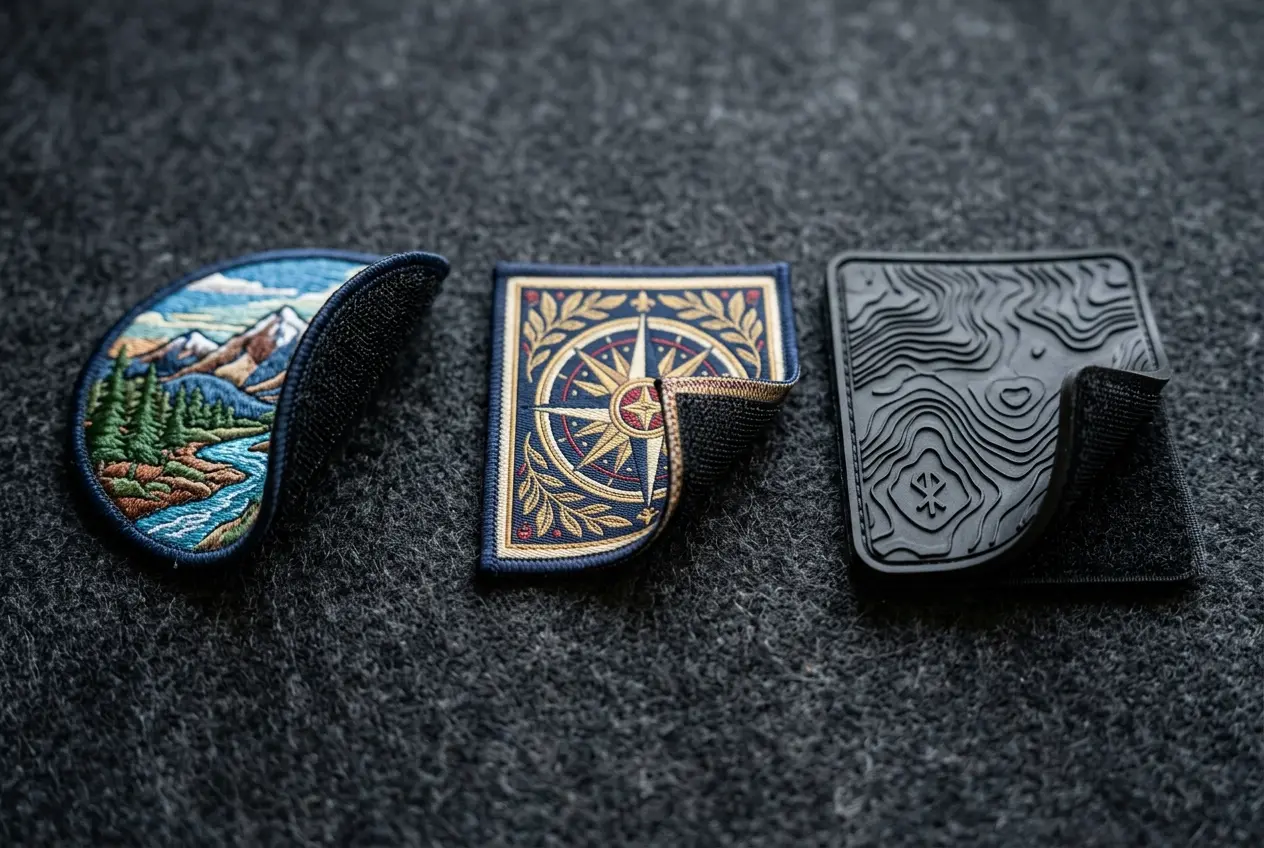
Custom hook and loop patches come in three main types. Custom embroidered patches velcro backing is the most common pairing. Woven and PVC take hook backing too.
| Type | Detail | Weight | Wet use |
|---|---|---|---|
| Embroidered | Good, textured | Medium | Fair |
| Woven | Best for small text | Light | Fair |
| PVC | Bold, flat color | Heavier | Best |
Pros
- Embroidered: textured and bold
- Woven: sharp small text
- PVC: water and wipe resistant
Limits
- Embroidered: heavier than woven
- Woven: flatter face
- PVC: heaviest of the three
- Merrowed border
- A wrapped thread edge that seals an embroidered patch.
- Satin stitch
- Dense, smooth thread used for text and fills.
- Weave
- Interlaced fine thread that forms a woven patch.
- PVC
- Molded rubber with sharp edges and flat color.
Custom Embroidered Velcro Patches: Texture and Fine Detail
Thread builds a raised face. It reads well on a bag or vest. Polyester thread sits on a polyester twill base.
- Great for bold logos
- Texture shows from a distance
- Fine text may need to be larger
The thread face is a little uneven. Hooks sit on the back, so the face stays clean. Raised stitches protect the colors.
Choose a merrowed border for a sealed edge. Pick bold shapes for small sizes.
Woven Patches With Hook Backing for Small Text
Woven patches use fine thread in a tight weave. Small text stays readable. The flat, light build suits bags and caps.
- Best for thin lines
- Light on the loop panel
- Flat face, less texture
The weave is flat and smooth. It keeps small letters sharp. That helps on name tapes and small badges.
Light weight also helps the grip. A light patch puts less strain on the hooks.
PVC Patches With Hook Backing for Wet Gear
PVC is molded rubber. It sheds water and wipes clean. It is heavier, so use a generous loop panel.
- Suits rain gear and boats
- Holds crisp color
- Needs a larger panel
Read more on the PVC patch page.
Rain, mud and spray do not soak into rubber. The patch wipes clean. The loop panel still needs care.
- Wet or muddy use: PVC
- Small text: woven
- Bold logos: embroidered
- Heavy gear: bigger loop panel
Choose it for bold logos and texture.
Choose it for small text and flat faces.
Choose it for wet, muddy gear.
Ask which type suits your gear before you pick a face. Thin cloth gear pairs well with a light woven patch. Heavy gear can carry a bolder one.
ATTACH IT
How to Attach a Hook and Loop Patch
Attaching takes two moves. Fit the loop panel, then press the patch on. A stitched loop panel lasts longest.
- Pick a flat spot on your gear.
- Cut the loop panel to size.
- Pin it over the spot.
- Stitch around the panel edge.
- Press the hook patch onto the loop.
- Pull gently to test the grip.
Take your time on the first patch. After that, swaps take seconds. The panel stays put for good.
- Loop panel
- The soft half. It is stitched to your gear.
- Hook patch
- The patch with hook backing.
- Thread
- Strong thread in a matching color.
- Pins or clips
- Hold the panel while you stitch.
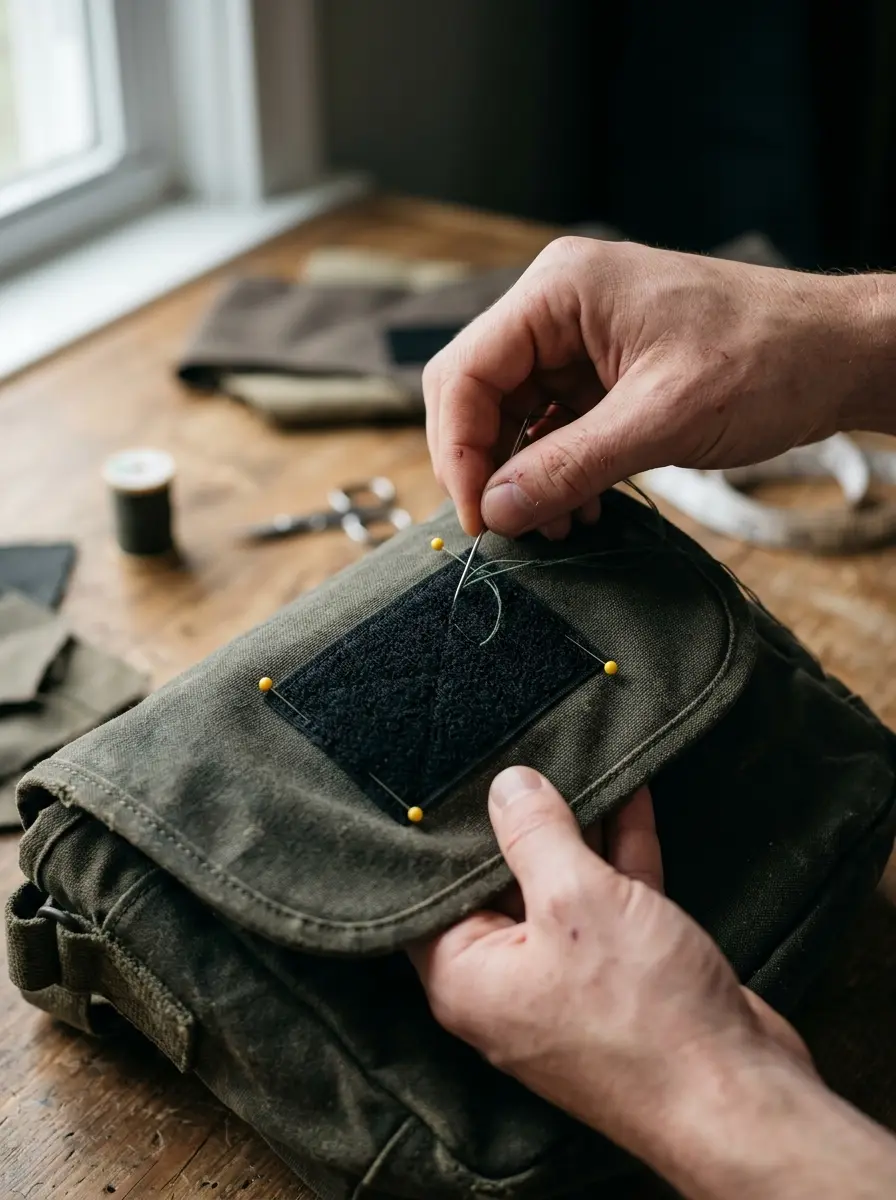
Fit the Loop Panel First
The loop panel is the base. Make it flat and secure. A wavy panel gives a weak hold.
- Cut it slightly larger than the patch
- Stitch all four edges
- Keep the stitches tight and even
Stitch close to the edge. Then add a second line of stitches inside. Two lines resist peeling better.
A machine makes it fast. A needle and thread also works.
Press, Align and Lock the Hook Side
Line the patch up with the panel. Press firmly across the whole back. Then rub the face to seat the hooks.
- Align the top edge first
- Press from the center outward
- Check every corner
Do not slide the patch to adjust it. Lift it and set it down again. Sliding crushes the hooks.
Why the Loop Side Stops Gripping
Lint, worn loops and small panels cause most failures. Check the cause first. Then apply the fix.
| Cause | Sign | Fix |
|---|---|---|
| Lint in hooks | Patch slides | Pick it out with a brush |
| Worn loops | Weak hold | Replace the loop panel |
| Crushed hooks | Edges pop up | Comb the hooks upright |
| Dirt or hair | Poor contact | Brush both sides clean |
| Panel too small | Corners lift | Fit a larger panel |
- Check for lint first
- Look for flattened loops
- Make sure the panel is not too small
Washing and Cleaning Hook and Loop Patches
Dirty hooks lose grip. Keep both sides clean. If you wash the gear, protect the hooks.
- Close hooks against loops first
- Or remove the patch before washing
- Air dry the gear
- Skip fabric softener
- Brush out lint afterward
Clean patches grip better. A soft brush does most of the work. Take your time on the corners.
- Skipping the second line of stitches
- Using a panel smaller than the patch
- Sliding the patch to adjust it
- Ignoring lint in the hooks
- Stitching onto a curved, soft spot
Stitch first, press second. That one rule prevents most failures.
| Do | Avoid |
|---|---|
| Close hooks against loops | Leaving hooks open |
| Brush out lint | Using fabric softener |
| Air dry the gear | Hot tumble drying |
| Spot clean the face | Soaking the patch for hours |
- Gather the loop panel, thread and pins
- Choose a flat spot on the gear
- Clean the spot first
- Mark the panel position
- Keep the patch within reach
Test the grip before you head out. Hang the gear and tug the patch gently. If it shifts, fix the panel now.
SIZES
Velcro Patch Sizes and Loop Panel Matching
No single standard size exists. A personalized velcro patch needs a loop panel at least as big. Heavier patches need more panel and more grip.
| Patch size | Panel guide | Best for |
|---|---|---|
| Small | Same size or larger | Names and roles |
| 2 by 3 inch | Same size or larger | Small logos |
| Large | Wider, with margin | Crests and logos |
| Extra large | Largest panel you can fit | Back panels |
Panel size also depends on weight. A heavy PVC patch needs more grip than a light woven one. Add margin when in doubt.
Heavy use means more shear load. Bigger panels share that load. Add margin when the patch gets bumped often.
Custom velcro patches for backpacks often run larger. Use a wider loop panel there. Check the panel stays flat under load.
- Measure the widest part of the patch
- Add a small margin all round
- Measure the flat area on your gear
- Check the curve of the surface
- Leave room for stitching
| Patch build | Weight | Panel margin |
|---|---|---|
| Woven | Light | Small margin |
| Embroidered | Medium | Medium margin |
| PVC | Heavier | Generous margin |

A velcro patch looks best when the panel edge stays hidden. Keep the margin small and even. Round the panel corners to stop lifting.
- Keep patch and panel edges parallel
- Round panel corners slightly
- Avoid seams under the panel
Large patches carry more weight. They also catch more wind and knocks. A wider panel and a stitched edge give the best hold.
Measure twice. Cut the loop panel once. A clean cut edge sews flat.
Round the corners of the loop panel. Square corners catch on straps and sleeves. A small radius is enough to stop edge lift.
DECISION
When a Removable Hook and Loop Patch Is the Right Call
Custom velcro patches suit anything you rotate. They also suit shared gear and special events. Fixed badges are better sewn.
| Need | Best backing | Why |
|---|---|---|
| Swap patches often | Hook and loop | Quick changes |
| Heavy washing | Sew-on | Stays put |
| Fixed uniform badge | Sew-on | Permanent hold |
| Shared gear | Hook and loop | Each user swaps |
The right call depends on the job. Ask how often you will change the patch. Ask how much washing the gear gets.
Pros
- Swap in seconds
- Reuse the loop panel
- Keep gear clean of stitches
- Rotate designs by event
Limits
- Grip fades with wear
- Panel adds bulk
- Loose patch can fall off
- Washing needs care
Compare more options on the patch backings page. For a permanent choice, see the sew-on versus iron-on guide.
- Sew-on
- Stitched on for a permanent hold. Best for heavy washing.
- Iron-on
- Heat-bonded to the fabric. Good for quick, fixed jobs.
- Hook and loop
- Press on, peel off. Best for patches you rotate.
- Choose hook and loop when you rotate patches
- Choose sew-on for fixed badges
- Mix both on one jacket if needed
Swap badges for each event.
Several people use one bag or vest.
Rotate designs each season.
Fixed uniform badges are different. They stay for years. Sewing them on removes any risk of falling off.
Think about wear too. A sleeve patch gets bumped more than a bag flap patch. High-wear spots need a firm panel and a stitched edge.
Event crews use hook patches for one weekend badges. Clubs use them for rank changes. Both groups value a clean swap over a permanent hold.
ORDER STEPS
How We Make Your Velcro Patch Order From Artwork to Doorstep
You can customize velcro patch size, type and backing in one order. Velcro patches custom made from your artwork follow five steps.
- Send artwork
Upload AI, EPS or PDF. PNG, JPG, SVG, PSD, BMP and TIF also work.
- Approve the proof
Get a free Pantone-matched digital proof in 24 hours. Revisions are free and unlimited.
- We make the patch
We add the hook backing in production. Typical time is 10 to 14 business days.
- Fit your loop panel
Follow the attach steps above, or ask for a set.
- Receive it
Shipping is duty-free worldwide. Rush takes 5 business days from proof approval.
Each step has one goal. Clear artwork gets a clear proof. A clear proof gets a clean patch.
| Stage | Time |
|---|---|
| Free digital proof | 24 hours |
| Production | 10 to 14 business days |
| Rush production | 5 business days from approval |
- Custom velcro patches no minimum, 1 to 100,000
- Free Pantone-matched proof in 24 hours
- Unlimited free revisions
- Production in 10 to 14 business days
- Rush in 5 business days from proof approval
- Duty-free worldwide shipping
- 100% quality guarantee
Revisions stay free until you approve. Your approval starts production. After that, shipping is duty-free worldwide.
- Your artwork file
- Your gear type
- Patch size and shape
- Patch type
- Backing setup
- How many you need
Tell us your gear type with your artwork. We can then suggest a hook-only or set backing. The proof shows size and colors.
READY TO ORDER
Customize a Velcro Patch With a Free Proof
Upload Artwork
Send any common file format.
Approve Your Proof
Free digital proof within 24 hours.
We Ship Worldwide
Standard 10 to 14 business days. Rush in 5.
Upload now to customize velcro patch details. Your free proof arrives in 24 hours.
No minimum. Free proof in 24 hours. Ships to 50+ countries.
COMMON QUESTIONS
Velcro and Hook and Loop Patch Questions, Answered
What does hook and loop mean on patches?
Hook and loop is a two-part fastener. The same idea sits behind every velcro patch. The patch carries the stiff hook side. Your gear carries the soft loop side. They grip when pressed together and release when peeled from one edge.
Which side of Velcro goes on the patch and which goes on the garment?
Hook goes on the patch. Loop goes on the garment. If you order both halves, fit the loop panel to your gear first. Then press the hook patch onto it and test the hold.
Is hook and loop the same as Velcro?
Almost. VELCRO is a brand name owned by one company. Hook and loop is the generic term for the same kind of fastener. Many people use the two names interchangeably in daily speech.
Why do people say hook and loop instead of Velcro?
VELCRO is a trademark, so many brands and sellers use the generic term instead. Hook and loop describes the fastener itself. In daily use it means the same thing as velcro.
How do you attach a velcro patch?
Fit a loop panel to your gear first. Stitch the edges. Then press the hook patch onto the loop. Read the sewing guide for stitching steps and tips.
Why isn't the loop side of my velcro sticking?
Lint, worn loops or a small panel usually cause it. Brush out lint and dirt. Replace worn loops. Fit a panel at least as big as the patch. Press firmly across the back.
What is the standard velcro patch size?
No single standard exists. A 2 by 3 inch size is popular for names and small logos. Make the loop panel at least as large as the patch. Large patches need larger panels.
Where can I order velcro patches custom made from my own artwork?
Right here. We make each patch to order from your artwork. You get a free Pantone-matched proof in 24 hours. Shipping is duty-free to 50+ countries, and there is no minimum order.
Can I get hook and loop on embroidered, woven and PVC patches?
Yes for embroidered, woven and PVC patches. Hook backing works across all three. For other types, ask us before you order. See the PVC patch page for the rubber option in more detail.
Are velcro patches better than sew-on or iron-on?
Each has a role. Hook and loop is removable and quick to swap. Sew-on holds best through heavy washing. See the backing options guide for a fuller comparison.
Can velcro patches go in the washing machine?
Close the hooks against the loops, or remove the patch first. Lint and dirt reduce grip. We have not published a tested wash guide, so check your care label too.
How long do custom velcro patches take?
Production takes 10 to 14 business days. Rush takes 5 business days from proof approval. Your free proof arrives within 24 hours of sending artwork. Shipping is duty-free worldwide.
How many times can I reuse a hook and loop patch?
Many times. We do not publish a cycle count. Grip fades slowly as lint collects and loops wear. Brush both sides clean. Replace the loop panel when the hold feels weak.
Will hook backing snag fleece or knit fabric?
Hooks can grab soft knits and pull the loops. Fleece is the worst case. Sew a woven loop panel onto the gear instead. Keep the patch off bare knit.
KEEP EXPLORING