Custom Chenille Patches
Raised varsity letters, built from your art.
Personalized chenille patches give varsity letters real height. Upload your art. Approve a free proof in 24 hours. Order from one patch.
THE BASICS
What Is a Chenille Patch? Yarn Loops, Felt Base and Raised Texture
A chenille patch is built from yarn loops. The loops sit on a felt base. The face feels like velvet and stands tall.
Chenille is French for caterpillar. The fuzzy yarn earns that name from its soft, rounded look. A chenille machine chain-stitches the yarn into tight loops.
| Feature | Detail |
|---|---|
| Base | Cut felt in your shape |
| Face | Looped chenille yarn |
| Feel | Raised, soft, velvet-like |
| Detail | Embroidered thread on top |
| Classic use | Varsity letters and mascots |
Flat patches work another way. Embroidery lays thread across twill. Woven patches interlace fine thread. Chenille is the style with real pile.
- Raised pile you can feel
- Soft, plush face
- Bold blocks of solid color
- Felt edge frames the shape
- Made for jackets and sweaters
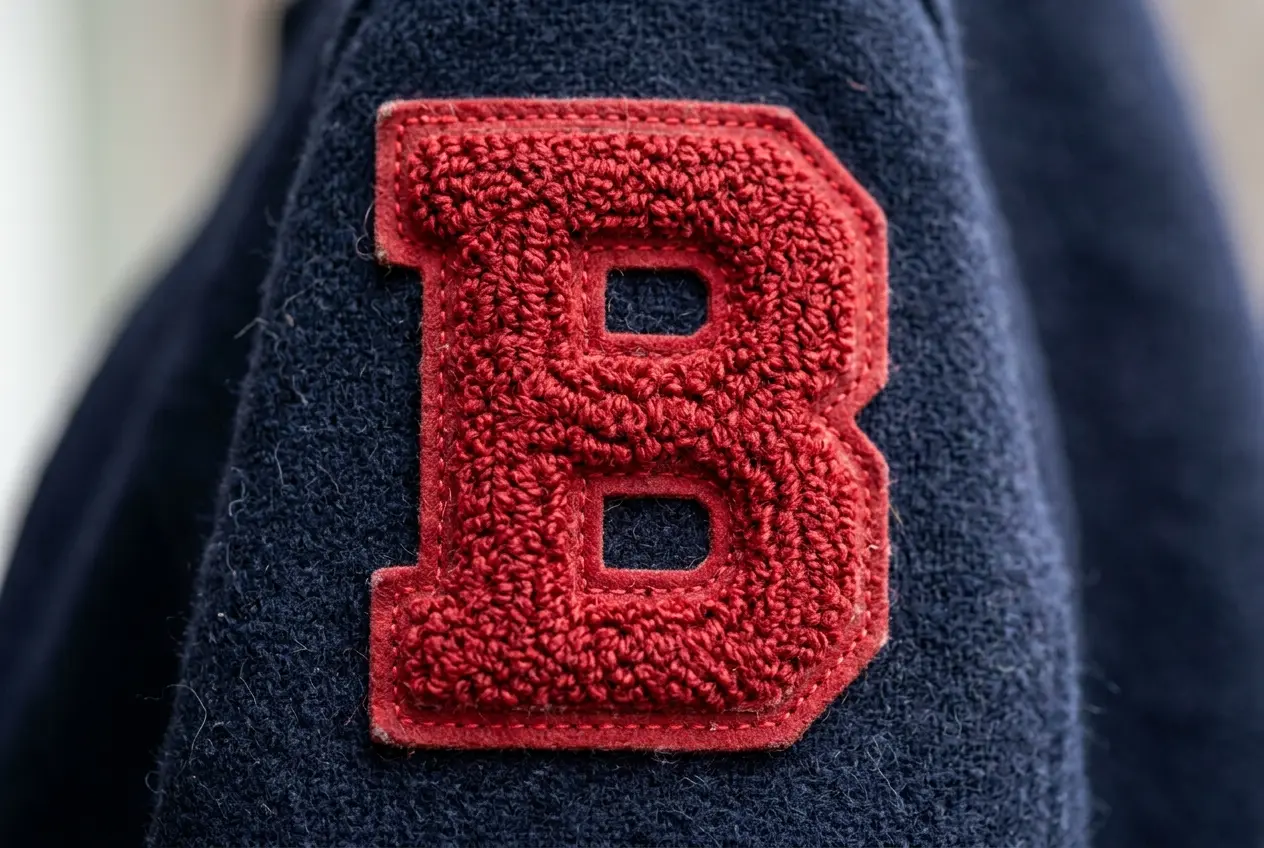
- Pile
- The raised layer of yarn loops.
- Felt
- The soft sheet under the yarn.
- Overlay
- Thread stitched over the pile for detail.
- Chenille yarn
- A fuzzy yarn with a soft core.
| Style | Surface | Best for |
|---|---|---|
| Chenille | Raised, plush pile | Letters and mascots |
| Embroidered | Flat, stitched thread | Logos and fine text |
| Woven | Smooth, tight weave | Small detailed badges |
| Printed | Flat color image | Photo-style art |
Pros
- Big visual depth
- Soft feel on the jacket
- Classic school look
- Reads well from a distance
Limits
- Weak on thin lines
- Weak at tiny sizes
- Thicker than flat patches
Use chenille where you want weight and warmth. Use thread where you want precision. Many teams use both on one jacket.
HOW IT'S MADE
Chenille Patches Custom Made: The Seven Build Steps
Every chenille patch follows the same path. You see each stage below. Each step builds on the one before it.
- Digitize the art
Your file becomes stitch paths. Software maps every loop and every color change.
- Cut the felt
Felt is cut to the shape of each layer. Clean cuts make clean edges.
- Chain-stitch the loops
Yarn loops fill the shape. This step builds the raised pile.
- Add embroidery
Thread adds outlines, small text and fine detail. It sits on top of the pile.
- Finish the edge
The border is trimmed and sealed. Loose ends are removed.
- Add the backing
Sew-on is the usual choice for jackets. Other options exist for other fabrics.
- Check the patch
Each piece is checked against your proof. Color, size and edge must match.
| Stage | Tool | Result |
|---|---|---|
| Digitizing | Software | Stitch file |
| Cutting | Felt cutter | Clean felt shape |
| Looping | Chenille machine | Raised yarn pile |
| Detailing | Embroidery head | Sharp outlines |
Your proof comes first. It shows the shape, size and colors before anything is made. Changes are free until you approve.
| Item | What to look for |
|---|---|
| Shape | Edges match your art |
| Size | Dimensions sit to scale |
| Colors | Pantone numbers are correct |
| Borders | Felt layers are as planned |
| Backing | Method fits your fabric |
- Look at the letter shape first
- Check each color against the Pantone code
- Confirm the border layers
- Read the size in inches
- Ask for changes in writing
Revisions are free and unlimited. Use them. A second look often catches a spacing issue. Then production starts, and it takes 10-14 business days.
Loops come first. Embroidery always goes on top.
Thread laid first would sink into the pile.
A layered, dimensional patch with sharp detail.
Setup happens once per design, which is why groups save time. Changes before approval are free.
Where Embroidery Adds Detail That Chenille Cannot
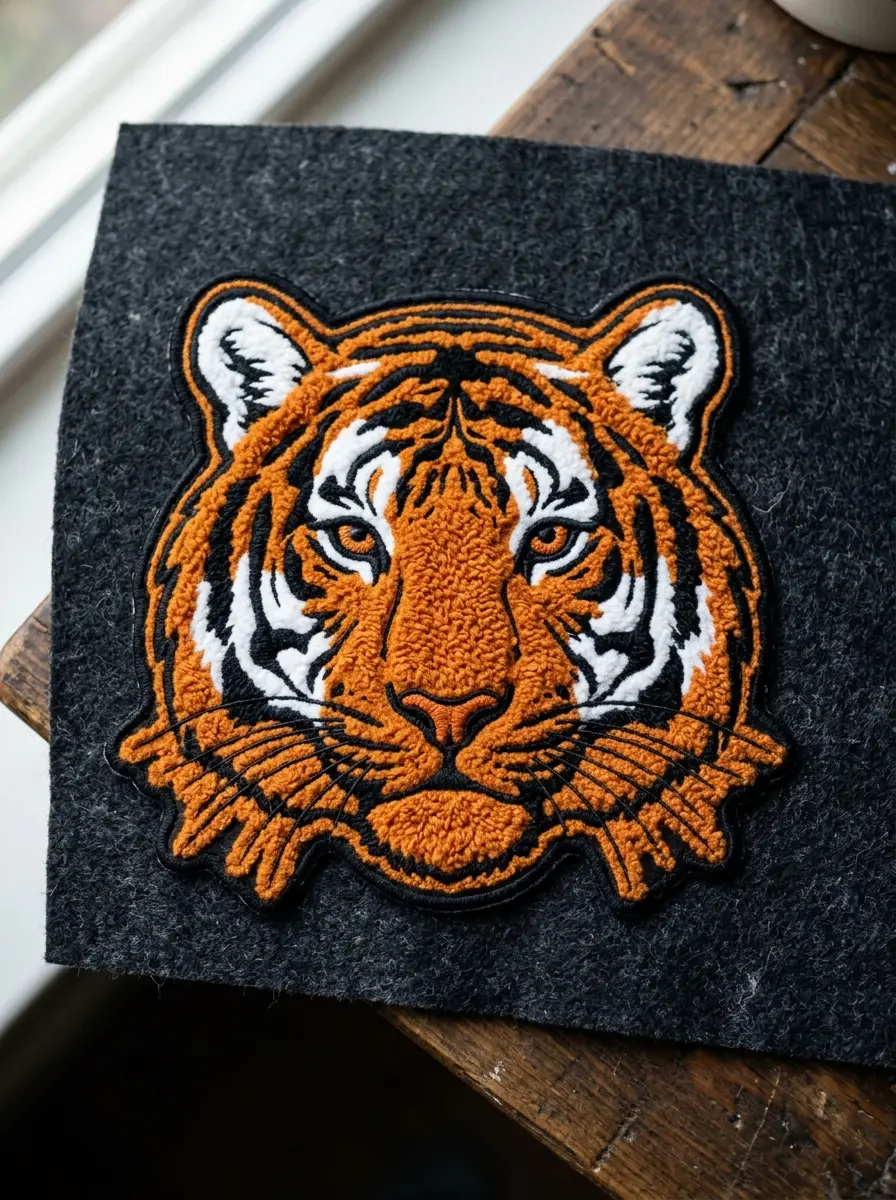
Yarn loops are thick. They cannot draw a hairline or a tiny word. Thread can.
- Thin outlines around letters
- Small text under a mascot
- Eyes and teeth on animals
- Stars and stripes in small spots
- Sport names inside a letter
LETTERMAN JACKETS
Custom Chenille Patches for Letterman Jackets: Letters, Numbers and Mascots
The classic letterman jacket has a wool body and leather sleeves. Chenille is the award on the chest. It marks a season, a sport and a school.
Wool takes a sewn patch well. Leather needs a sharp needle and care. Plan the letter around both.
| Item | Typical size | Where it sits |
|---|---|---|
| School letter | 4 to 8 inches | Left chest |
| Graduation year | 2 to 4 inches | Sleeve or chest |
| Mascot | 6 to 10 inches | Back or sleeve |
| Sport insert | 1 to 3 inches | Inside the letter |
| Name patch | Small, flat | Right chest |
| Award pin | Small, metal | Near the letter |
- School letter in block or script
- Graduation year in numbers
- Mascot with embroidered detail
- Sport insert for each season
- Name or team label
- Award pins and bars
| Jacket part | Common patch | Tip |
|---|---|---|
| Left chest | School letter | Center it above the pocket |
| Right sleeve | Year or sport | Keep clear of seams |
| Left sleeve | Mascot or number | Check the arm bend |
| Upper back | Large mascot | Center on the spine |
| Collar area | Small pin | Keep it flat |
Placement matters as much as size. A letter set too low looks lost. Hold it up before you stitch.
- Center the letter on the chest
- Align numbers with the sleeve seam
- Leave room for award pins
- Check the jacket in a mirror
Soft base. Holds stitches well.
Firm base. Needs a sharp needle.
Keep patches clear of the snaps.
- Block
- Straight, bold letter shapes.
- Script
- Flowing, connected letter shapes.
- Insert
- A small patch set inside a letter.
- Rocker
- A curved strip above or below a patch.
Send your own art or a reference style. The proof shows the result before production.
Custom Chenille Varsity Letters: Block and Script Styles
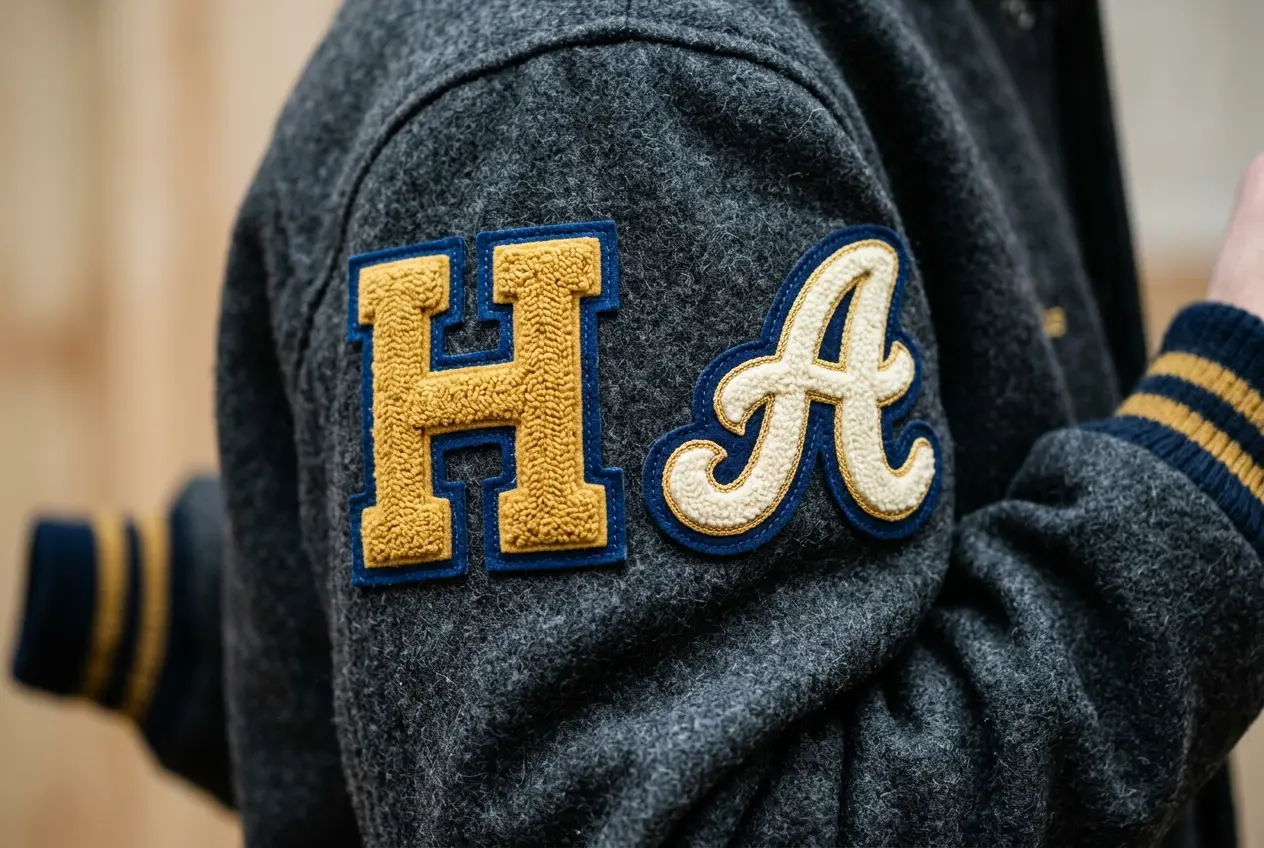
Block letters are thick and easy to read. Script letters flow and look classic. Pick the style that matches your school.
Heavy strokes. Reads fast from far away.
Curved strokes. Needs a larger size to keep the pile.
Year or jersey number. Stays bold in thick type.
Custom chenille lettering can use any school font. Thick, simple fonts hold the pile best. Thin serifs tend to fill in.
Custom Made Letterman Patches: Numbers, Mascots and Graduation Years
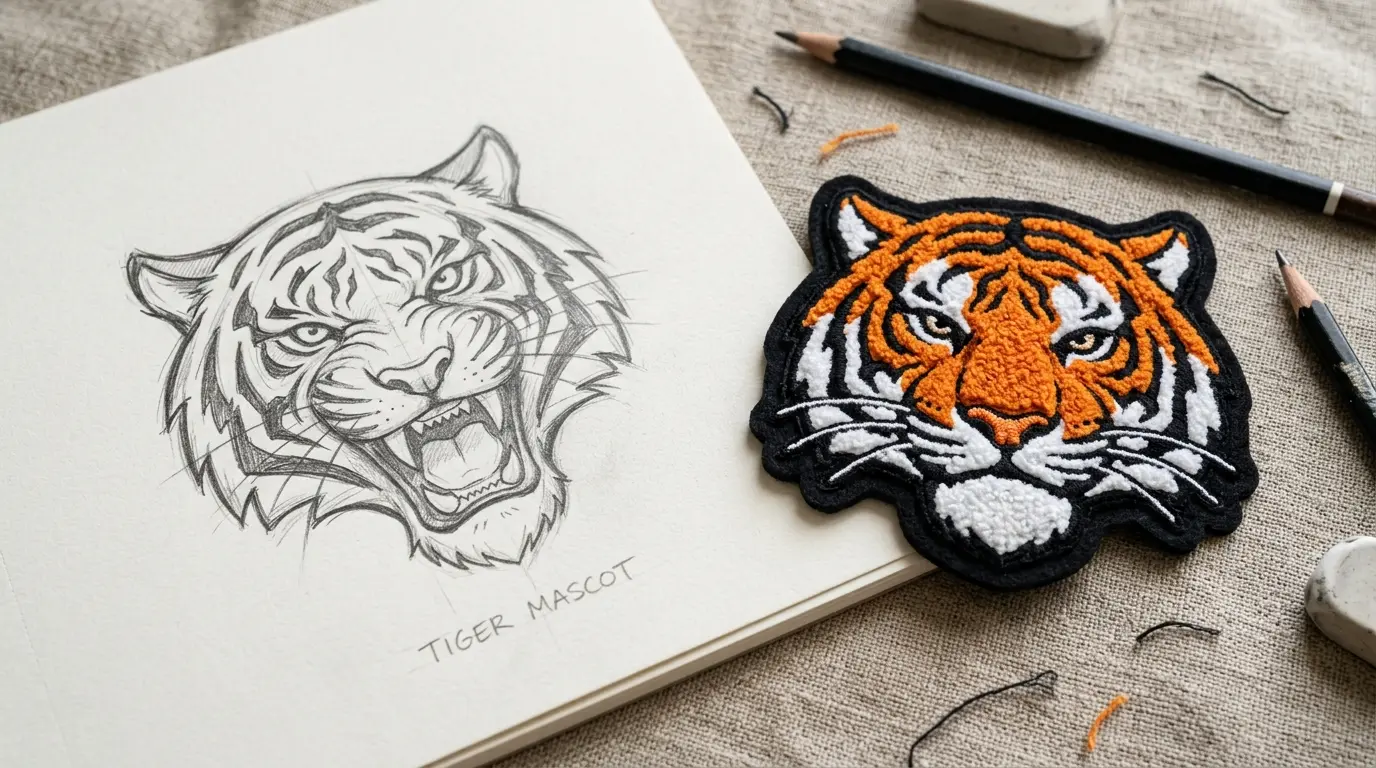
Your own art is the starting point. Send a mascot sketch or a school logo. We build the layers around it.
The award itself, in your school colors.
A class year or a jersey number.
Your team animal with thread detail.
- Add the class year beside the letter
- Place a mascot on the back
- Match jacket and felt colors
- Pair a number with a sport
SIZE CHART
Custom Chenille Letters: Size Chart for Chest, Sleeve and Full Back
Size decides how much pile shows. Small chenille looks flat. Big chenille looks rich.
| Placement | Typical size | Pile effect | Note |
|---|---|---|---|
| Left chest | 4 to 6 inches | Strong | Most common spot |
| Sleeve | 3 to 5 inches | Medium | Keep shapes simple |
| Upper back | 6 to 8 inches | Strong | Room for two layers |
| Full back | 10 to 12 inches | Very strong | Bold type only |
| Cap or small item | Under 3 inches | Weak | Use embroidery instead |
These ranges are common across the trade. Your final size is set on the proof.
- Pick the size before the font
- Thicker strokes keep more pile
- Two letters need more width
- Check the jacket panel first
- Check the size on the proof
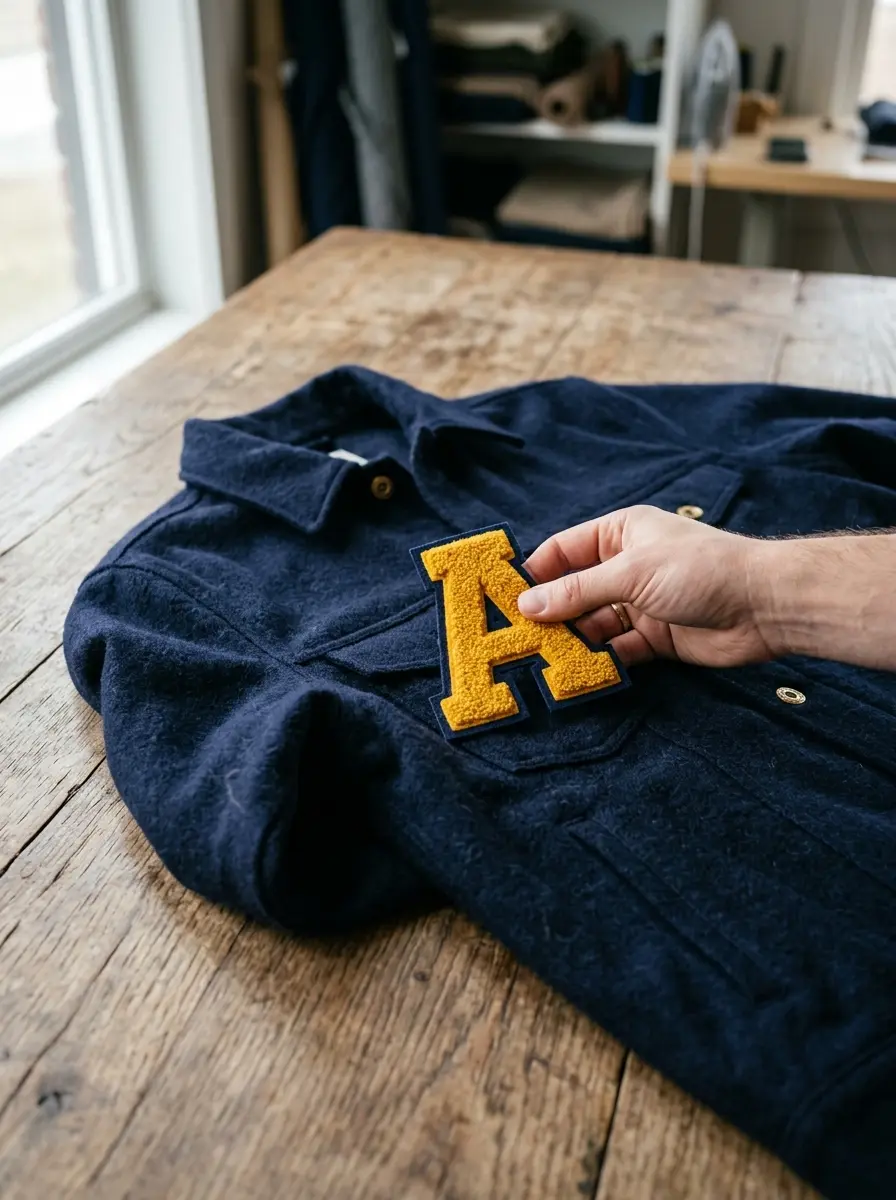
Custom chenille letters should fit the wearer, not just the art. A freshman and a senior may want different sizes. Measure the space before you order.
- Measure the panel
Lay a tape across the chest or back.
- Subtract a margin
Leave about an inch around the edge.
- Pick the letter height
Use the table above as a guide.
- Check the proof
Confirm the size on the mockup.
| Use | Typical size | Tip |
|---|---|---|
| Youth jacket | 3 to 5 inches | Scale to the wearer |
| Adult chest | 4 to 6 inches | The standard range |
| Team back piece | 8 to 12 inches | Keep type bold |
| Hoodie chest | 3 to 5 inches | Avoid seams |
- Letters taller than the panel look cramped
- Wide script needs extra width
- Round letters look smaller than they are
- Tall letters can curl on curved panels
- Leave space for a year patch
The pile crowds the edge and looks squeezed.
The pile flattens and the shape blurs.
The letter overhangs the seam and folds.
Chenille loops catch on rough surfaces. Keep letters away from zippers and snaps. Place them on the flat chest panel. Leave a thumb width of space around each edge. This protects the yarn and keeps the pile soft.
FELT BORDERS
Single, Double and Triple Felt Borders: Choosing the Edge
A border is extra felt layered around the letter. Each layer adds weight. Each layer also adds contrast at the rim.
Think of a border as a frame. A thin frame suits a small letter. A thick frame suits a big back piece.
| Border | Look | Weight | Best for |
|---|---|---|---|
| Single | One clean felt edge | Light | Small chest letters |
| Double | Felt, then a second ring | Medium | Standard chest letters |
| Triple | Three stacked rings | Heavy | Large back letters |
| Combo | Felt plus thread outline | Medium | Sharp small shapes |
Pros
- Frames the letter clearly
- Adds a rich layered look
- Hides small cutting marks
- Gives a team its own style
Limits
- Triple borders add weight
- More layers can raise the cost
- Heavy patches can sag on thin sleeves
- Single edge for light jackets
- Double edge for the classic look
- Triple edge for big statement pieces
- Combo edge for small, busy art
- Match border color to a school color
- Keep the gaps between layers even
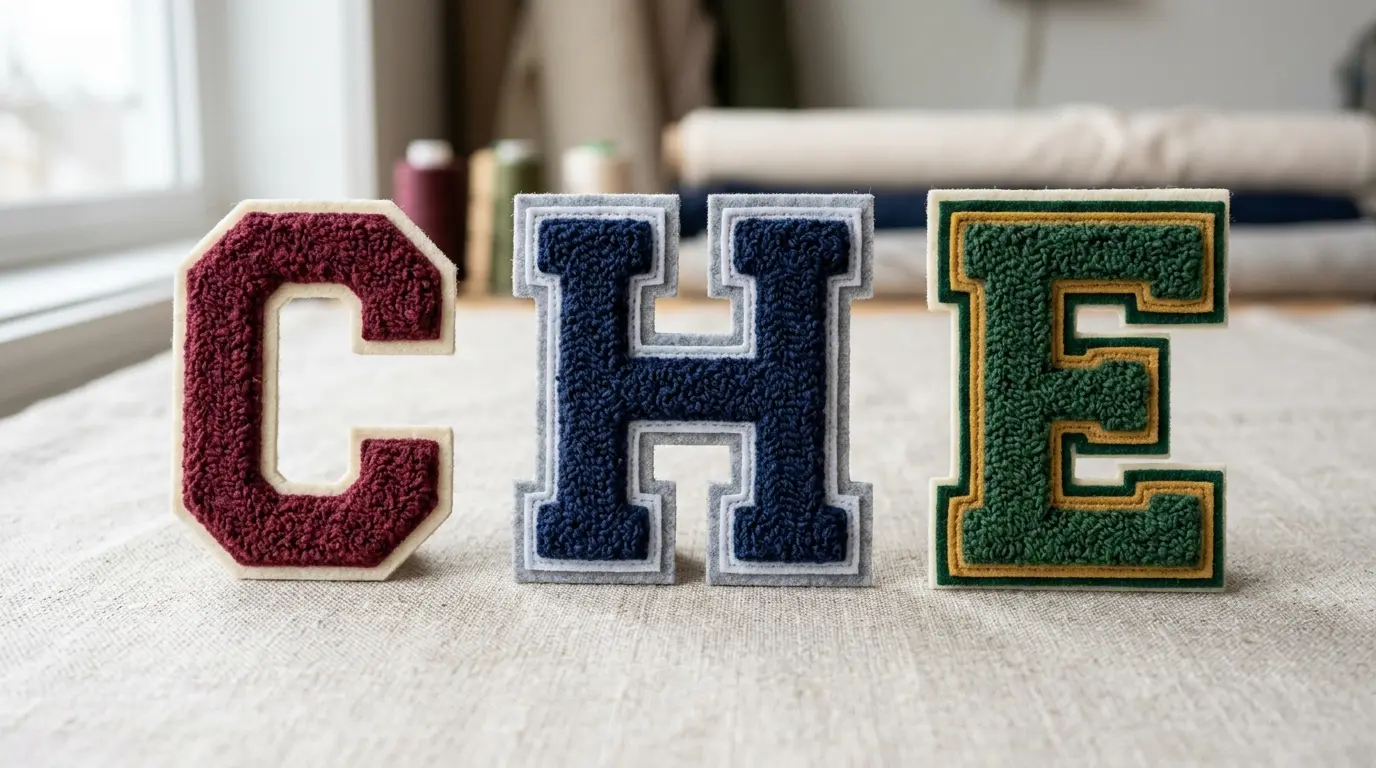
A thread outline over chenille sharpens the edge. Many buyers choose it for small shapes. We make chenille patches custom with this combo. Ask for it on the proof.
- Pick the size first
Border width depends on the letter size.
- Choose the layers
One for small, two for standard, three for big.
- Set the border colors
Use a contrast color against the jacket.
- Check the proof
Confirm the layers on the free mockup.
| Letter size | Suggested border | Reason |
|---|---|---|
| Under 4 inches | Single | Keeps the pile visible |
| 4 to 8 inches | Single or double | Balances weight and frame |
| Over 8 inches | Double or triple | Needs a strong rim |
- Do you want the letter to look light or heavy?
- Is the jacket thick or thin?
- Will the patch sit on a curved area?
- Does the school require a certain look?
Answer these four questions. They point to the right border. The proof then confirms the choice.
COLOR CHOICES
Felt, Yarn and Thread Colors: Two-Tone Letters and School Palettes
Three materials carry color. Felt is the base. Yarn is the pile. Thread is the detail.
Each layer can use a different color. That gives a letter depth. It also lets you echo a school palette in layers.
| Layer | What it does | Example |
|---|---|---|
| Felt | Sets the border and base | Gold rim |
| Yarn | Fills the letter face | Navy pile |
| Thread | Outlines and lettering | White edge |
| Two-tone | Splits yarn in one letter | Red and white |
| Accent | Small insert color | Silver star |
| School color | Matched by Pantone | Maroon |
- Find your school colors.
- Send the Pantone numbers.
- Review the free proof.
- Request changes until it is right.
Two-tone custom chenille varsity letters stand out in a crowd. Pair a dark pile with a bright felt rim. Contrast keeps the letter readable from far away.
- Dark pile with a bright rim
- Light pile with a dark outline
- One accent color, not five
- Keep jacket and patch colors distinct
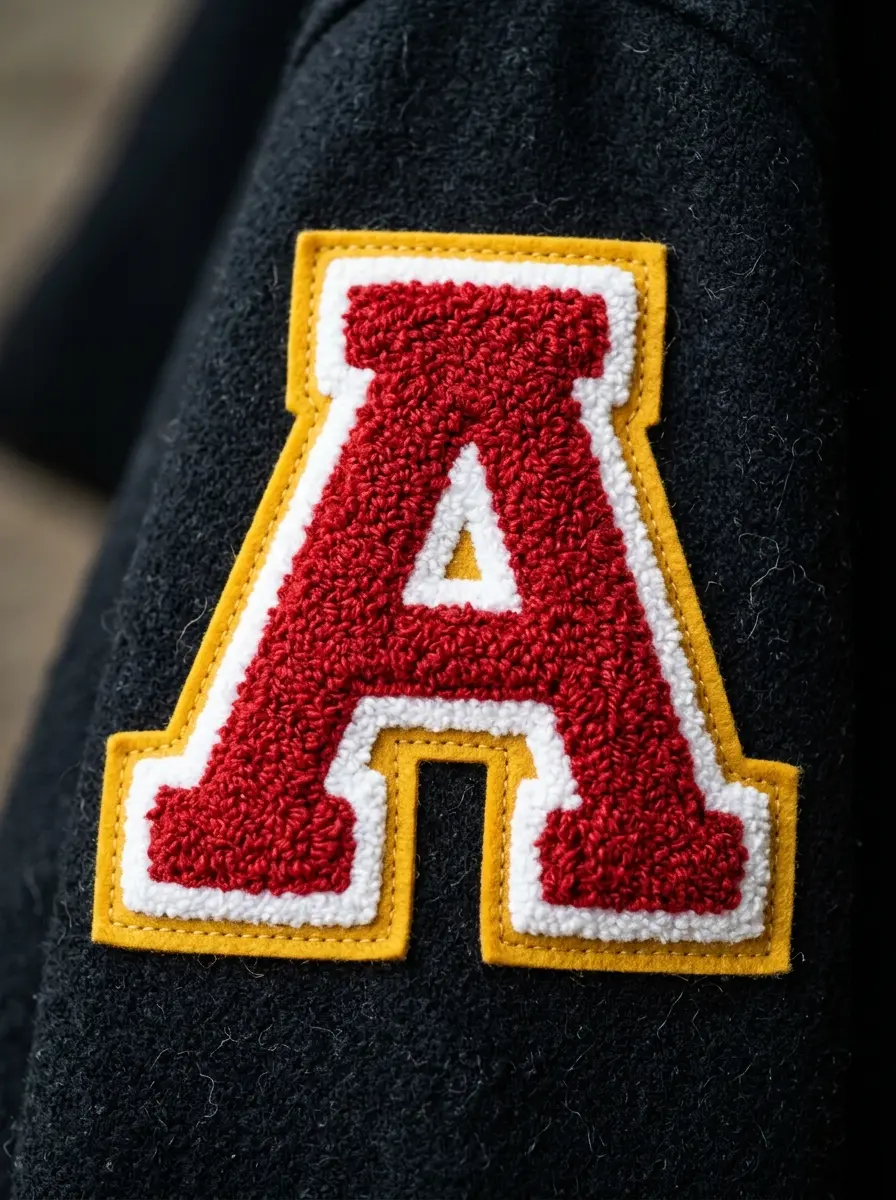
| Pile | Felt rim | Result |
|---|---|---|
| Navy | Gold | High contrast |
| Red | White | Classic and bold |
| Black | Silver | Sharp and modern |
| Green | Gold | Warm and traditional |
Avoid pairs with the same brightness. Gray on gray vanishes. Look at your pairing in black and white. If it still reads, it works.
- Gold and navy for a classic look
- Red and white for strong contrast
- Black and silver for a modern feel
- Green and gold for a warm look
Yarn weight changes the look. Thick yarn gives a plush, rounded letter. Thinner yarn gives crisper edges on small marks. Pick thick yarn for big block letters. Pick thin yarn for script and small numbers. Test the choice against a printed mockup.
ATTACHMENT
Sew-On, Iron-On or Velcro: Custom Patches for Letterman Jackets
Backing depends on the jacket fabric. Wool and leather want stitches. Cotton can take heat.
Chenille is thick, so heat alone may not hold it. Sewing is the safest choice for most jackets. Tell us your jacket fabric when you request a proof.
| Method | Best fabric | Hold | Note |
|---|---|---|---|
| Sew-on | Wool, leather | Permanent | The jacket standard |
| Iron-on | Cotton, twill | Good | Not for leather |
| Hook-and-loop | Any base | Swappable | Needs a sewn panel |
| Adhesive | Smooth fabric | Light | Short-term use |
Pros
- Sew-on lasts for years
- Iron-on is quick at home
- Velcro swaps between jackets
Limits
- Sew-on takes time
- Heat can scorch leather
- Velcro adds bulk
Buyers of custom varsity jacket patches often choose sew-on for the main letter. They use hook-and-loop for swappable pins and bars. Match the method to how often you change things.
- Wool jackets take sew-on well
- Leather sleeves need a sharp needle
- Cotton hoodies can take iron-on
- Thick pile may need stitches anyway
- Test any glue on scrap fabric first
| Fabric | Suggested backing | Why |
|---|---|---|
| Wool | Sew-on | Holds under strain |
| Leather | Sew-on | Heat can damage hide |
| Cotton | Sew-on or iron-on | Both can work |
| Nylon | Sew-on | Heat can melt fibers |
- Cover the patch with a thin cloth.
- Press with firm heat for several seconds.
- Flip the jacket over.
- Press the back for several more seconds.
- Let the patch cool fully.
- Do not iron directly on yarn
- Do not use heat on leather
- Do not peel while warm
- Do not skip pinning first
Hook-and-loop works for swaps. Sew the soft side to the jacket. Attach the hook side to the patch. You can change pieces each season.
Sewing Custom Letterman Jacket Patches Onto Wool and Leather
- Pin the letter in place.
- Check the position in a mirror.
- Use a thick needle for leather.
- Sew small stitches around the edge.
- Knot the thread on the inside.
Sew all the way around the border. Skip the pile itself. Stitches in the pile show and flatten it. For more detail, read our sewing steps.
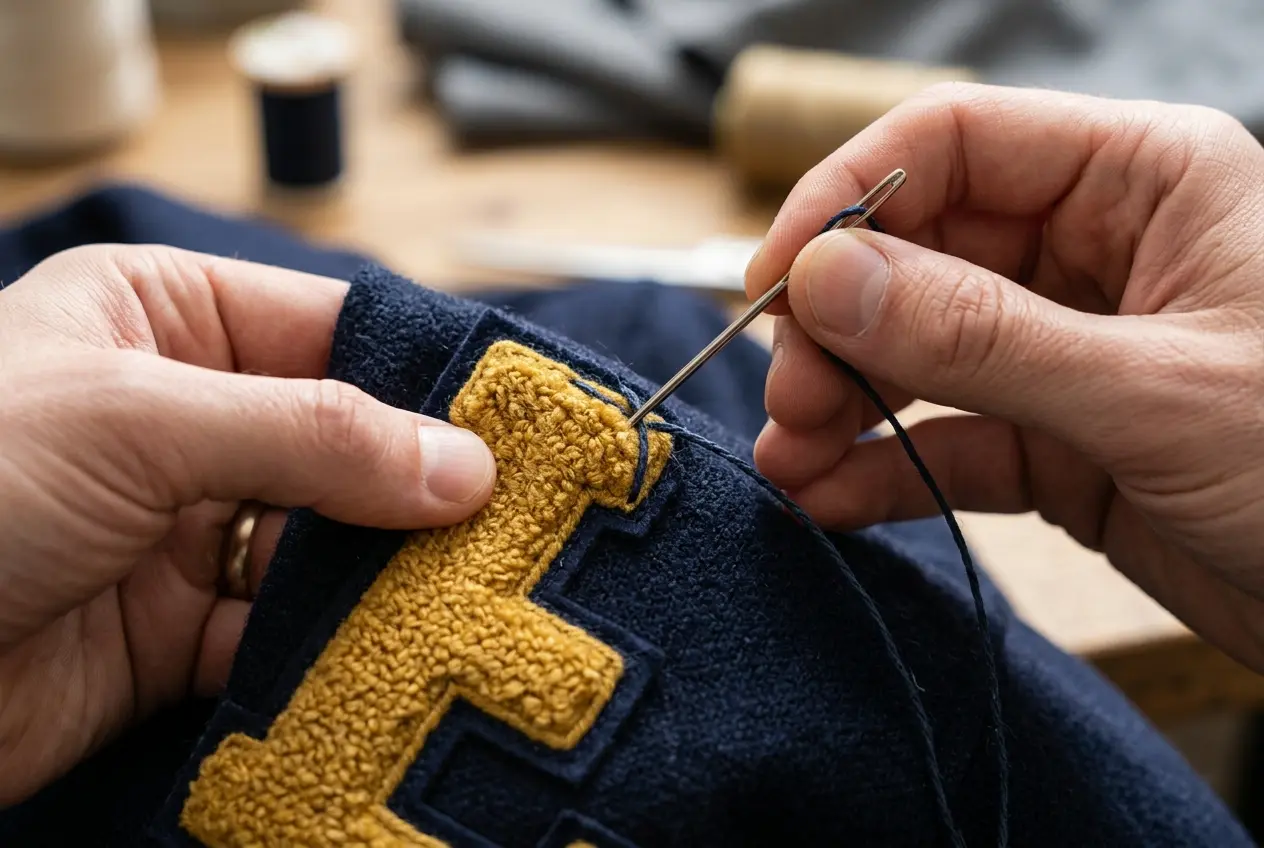
Hold the letter with pins before any stitch.
Sew through felt, not through the pile.
Hide the knot under the lining.
A hand-sewn letter can last for decades with care. Take your time. A tailor can also do the job for a small fee.
- Choose thread that matches the felt rim
- Use two strands for extra strength
- Space stitches evenly around the edge
Taking a Chenille Letter Off Without Damaging the Jacket
A letter that has to move needs a slow hand. Wool forgives. Leather does not.
- Turn the jacket inside out.
- Find the stitches around the edge.
- Cut them one at a time.
- Lift the letter slowly.
- Pick out the leftover thread.
- Seam ripper
- Small sharp scissors
- Tweezers
- Soft cloth
CHENILLE CARE
Caring for Chenille: Washing, Brushing and Storing the Pile
Pile is soft, so it needs gentle care. A few habits keep it plump for years.
Dirt sits between the loops. Heat flattens them. Gentle handling solves both.
- Spot clean small marks first.
- Wash cold on a gentle cycle.
- Turn the jacket inside out.
- Air dry flat or on a hanger.
- Brush the pile with a soft brush.
- Hang the jacket to store it.
| Do | Avoid |
|---|---|
| Wash cold | Hot water |
| Air dry | High dryer heat |
| Brush softly | Hard scrubbing |
| Hang to store | Folding tight for months |
| Check the label | Bleach |
- Brush in one direction
- Use a soft clothes brush
- Store the jacket on a wide hanger
- Keep it out of direct sun
- Wool jackets often need dry cleaning
Wool and leather have their own rules. Follow the jacket label first. Our tips cover the patch only.
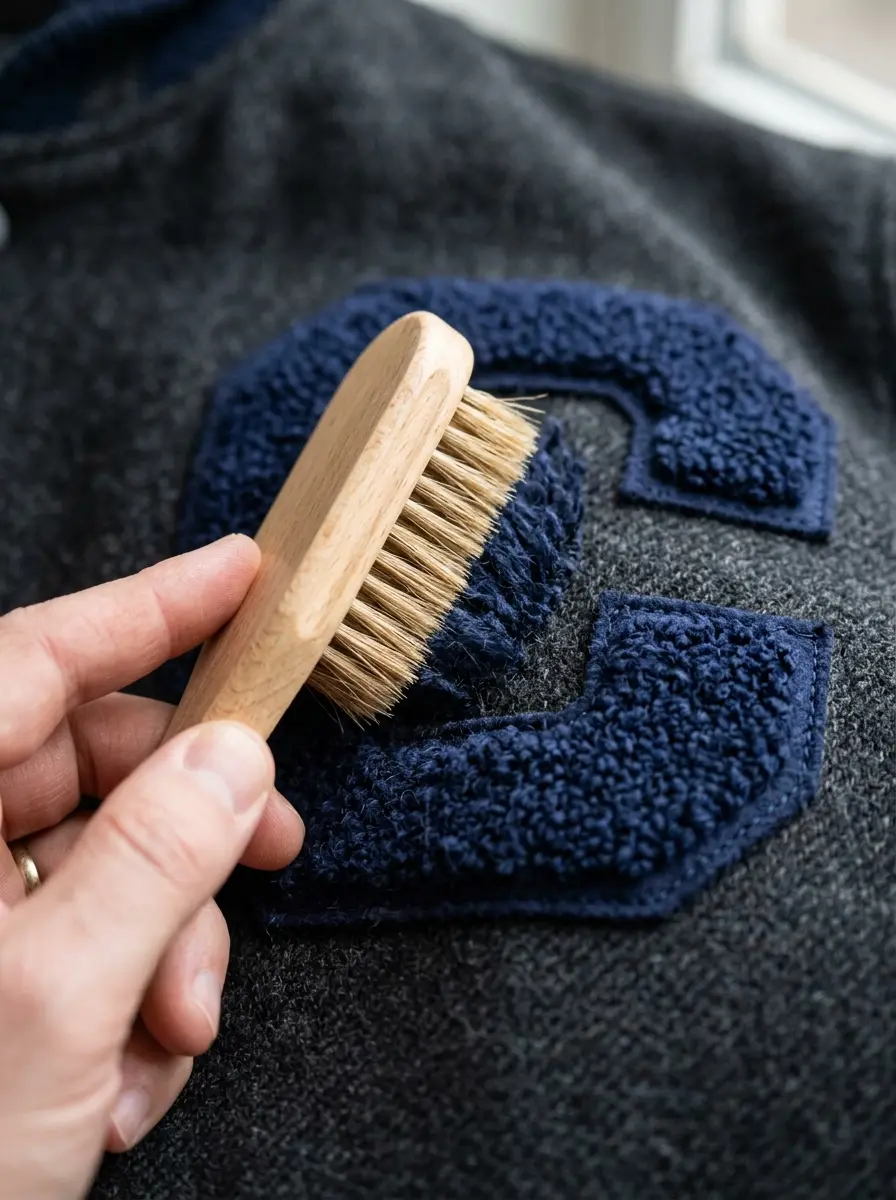
| Risk | Effect on pile | Fix |
|---|---|---|
| Heat | Flattens loops | Air dry only |
| Friction | Mats the yarn | Brush gently |
| Folding | Creases the pile | Hang the jacket |
| Sun | Fades color slowly | Store in shade |
Brush the pile lightly.
Spot clean any marks.
Hang on a wide hanger.
- Brush the pile before you wash.
- Check the label on the jacket.
- Spot clean only where needed.
- Rinse well and squeeze gently.
- Reshape the letter while damp.
- Let it dry away from heat.
Store jackets on a wide hanger. Narrow hangers press the pile flat on the shoulders. Keep sleeves from folding over letters. A garment bag stops dust from settling in the loops. Brush lightly before wearing.
Never wring the jacket. Twisting crushes the pile. Press water out with a towel instead.
PRICE FACTORS
What Moves the Price of a Chenille Patch
Chenille costs more than flat embroidery. It uses more yarn and more felt. Six things set your price.
| Factor | Effect | Tip |
|---|---|---|
| Size | Bigger uses more yarn | Right-size the letter |
| Letter count | More pieces, more setup | Group them in one order |
| Felt layers | Each border adds cost | Choose single or double |
| Thread colors | More changes take time | Limit the palette |
| Backing | Some need extra steps | Pick it early |
| Quantity | Larger runs cost less each | Order the full roster |
- Simple shapes cost less
- Fewer colors cost less
- Bigger orders lower the unit price
- Rush work costs more
- Exact numbers live on the pricing page
We make chenille patches custom to your size and layers. That means your quote follows your art. For current numbers, open our pricing page.
Drop one border layer.
Use fewer thread colors.
Order the whole team at once.
- Letter count
- Border layers
- Letter size
- Thread colors
Each item changes machine time. Machine time drives the price. That is why two letters can quote very differently.
Custom Chenille Patches No Minimum: One Letter or a Whole Roster
You can order one patch or 100,000. There is no minimum order. A single senior letter is welcome.
Team orders still save time. Group your letters in one order and review them together.
| Order | What to expect |
|---|---|
| One patch | Full price per piece |
| Small team | Shared proof and setup |
| Full roster | Lower price per piece |
Prices move with your design. Open the pricing page for the factors. Then send your art for a free proof.
VARSITY RULES
Who Earns a Varsity Letter? Typical Rules by Sport and School
No single rule exists. Each school sets its own. A coach or athletic director has the final word.
| Sport | Typical rule | Note |
|---|---|---|
| Football | Play a set share of games | Varies by school |
| Track | Score points or hit a mark | Often by event |
| Swimming | Meet a time standard | Set by the coach |
| Band or debate | Earn points over a season | Not every school |
- Play a minimum share of games
- Finish the full season
- Meet team and grade rules
- Earn points at meets
- Check the school handbook
Custom letterman patches are earned, so orders often follow awards night. Plan your proof ahead of that date. Allow 10-14 business days for production.
Some schools give a letter for each sport. Others give one letter plus inserts. Custom varsity jacket patches then mark each extra honor.
- Ask the coach for the rules
- Check the athletic handbook
- Confirm awards night dates
- Order after the list is final
Parents and players should not guess. A wrong order wastes money. Wait for the official list.
Custom Varsity Patches for Awards, Pins and Sport Inserts
The first letter is only the start. Each year can add a new honor.
A small icon that sits inside the letter.
A strip for an honor or captain role.
A mark for each season earned.
- Pins and awards often order separately
- Seniors may want a year patch too
- Some teams reorder every season
- Plan extra pieces for new members
BUYER CHECKLIST
Buying Chenille Patches: Wholesale, Legit Makers and What to Check
Wholesale chenille here means made-to-order batches. We do not sell ready-made stock. Every patch is built from your art.
- Ask for a free proof.
- Check the size on the proof.
- Confirm the felt and yarn colors.
- Confirm the backing type.
- Ask about turnaround.
- Ask about minimums.
- Read the return terms.
| Question | Stock wholesale | Made to order here |
|---|---|---|
| Your design | No | Yes |
| Minimum | Often a floor | None |
| Proof | Rare | Free in 24 hours |
- Production takes 10-14 business days
- Rush takes 5 business days
- Shipping is duty-free worldwide
- Revisions are free and unlimited
A legit maker shows a proof before you pay for production. Chenille patches custom built for a team should match that proof. Compare any quote against this list.
Ask about custom letterman patches in bulk too. Bigger runs often cost less per piece. See the pricing page for how quantity moves the total.
See the design before production.
Ask for size, layers and backing.
Confirm 10-14 business days.
Never pay for production before you see a proof. That one rule filters out most problems.
- Order quantity needs
- Proof timing
- Backing choice
- Shipping address
These four details speed everything up. Send them with your art. We reply with the proof within 24 hours.
FASHION USES
Chenille on Hoodies, Bags and Fashion Pieces
Chenille also suits casual wear. Fashion brands use it on hoodies and bags. We make patches only, not garments.
- Hoodies and sweatshirts
- Bomber jackets
- Tote bags
- Baseball caps
- Backpacks
- Denim jackets
| Garment | Size range | Backing |
|---|---|---|
| Hoodie chest | 3 to 6 inches | Sew-on |
| Tote bag | 4 to 8 inches | Sew-on |
| Bomber jacket | 4 to 8 inches | Sew-on |
Custom patches for varsity jackets suit hoodies as well. Keep the pile away from seams and zippers. A flat fold hides nothing.
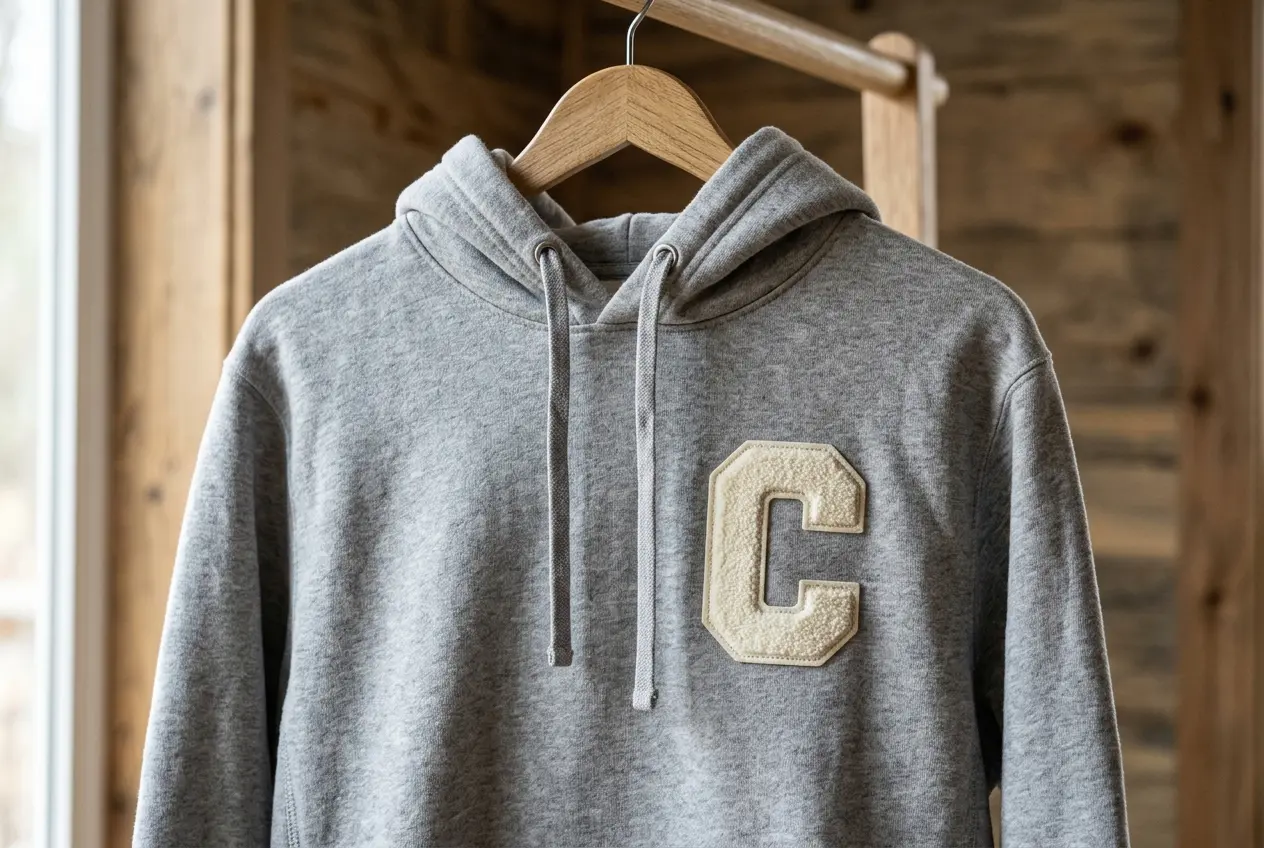
| Piece | Why it works |
|---|---|
| Hoodie | Soft pile suits cotton fleece |
| Tote bag | Bold look on canvas |
| Cap front | Small size, strong style |
Fashion pieces change fast. Keep the design simple. Bold chenille shapes age well.
Soft fabrics sag under heavy letters. Back a hoodie patch with a light stabilizer inside. This keeps the shape flat and the hood hanging right.
ARTWORK TIPS
Prepare Chenille Artwork: Why Simple Shapes Win
Chenille fills space with yarn. Thin lines fill in and vanish. Bold shapes win.
- Draw the shape in solid color.
- Keep strokes thick.
- Limit the colors.
- Send a vector file if you can.
- Approve the free proof.
- Use AI, EPS or PDF for best results
- PNG, JPG, SVG, PSD, BMP and TIF also work
- Outline your fonts
- Mark your Pantone colors
- Avoid gradients and shadows
- State the size you want
Not sure about your art? Send it anyway. Your free proof arrives in 24 hours and revisions are free.
Ready? Send your file for custom chenille patches today.
| Do | Avoid |
|---|---|
| Bold solid shapes | Hairline strokes |
| Few colors | Gradients |
| Vector files | Low-resolution images |
| Pantone numbers | Screen colors only |
- Send the biggest file you have
- Name each color you need
- State the final size
- Add notes for borders and backing
AI, EPS or PDF files scale cleanly.
PNG, JPG, PSD, BMP and TIF also work.
Say how big the finished patch should be.
Send what you have, even a rough sketch. The free proof shows the result before production.
READY TO ORDER
Get Your Free Chenille Proof
Upload Artwork
Send any common file format.
Approve Your Proof
Free digital proof within 24 hours.
We Ship Worldwide
Standard 10 to 14 business days. Rush in 5.
Upload your art and see a free Pantone-matched proof in 24 hours.
No minimum. Free proof in 24 hours. Rush in 5 days.
COMMON QUESTIONS
Chenille and Letterman Patch Questions
What is a chenille patch?
A chenille patch has a raised face of looped yarn on a felt base. It feels soft like velvet. Letterman jackets use it for varsity letters, numbers and mascots.
How are custom chenille patches made?
Artwork is digitized and felt is cut. Yarn loops are chain-stitched across the felt. Embroidery adds detail. Finishing adds the edge and backing. Each patch is checked against your proof.
Where do I order chenille letter patches made to my design?
You can order made-to-order custom chenille letter patches right here. Upload your art and approve a free proof in 24 hours. Making them yourself would need a chenille machine.
Where can I get custom patches for letterman jackets?
Order them here, made to order from your art. Upload your design and approve a free proof in 24 hours. There is no minimum order, so one letter is fine.
How do you get patches for a letterman jacket?
Send your art and approve the free proof. Then sew the finished patch on. Size, felt layers and quantity set the price. Open our pricing page for details.
How do you apply chenille patches to a letterman jacket?
Sew them on for wool and leather. Pin the patch in place first. Use small, even stitches around the edge. That keeps the pile flat and the patch secure.
Do you have to iron on chenille patches?
No. Sew-on is the usual choice for jackets. Iron-on can work on cotton garments. Thick pile and leather prefer thread, because heat can damage both.
Can you take chenille patches off a letterman jacket?
Yes. Cut the stitches slowly with a seam ripper. Never pull the patch. Leather keeps needle holes after removal, so work carefully.
What type of patches go on letterman jackets?
Chenille letters, numbers and mascots are the classics. Award bars, pins and sport inserts often join them. Each piece marks a season, a sport or an honor.
How long does it take to get custom chenille patches?
Production takes 10-14 business days after proof approval. Rush orders take 5 business days from proof approval. Shipping is duty-free worldwide, so there are no import surprises.
How do I wash and care for a chenille patch?
Wash cold on a gentle cycle, inside out. Air dry the jacket. Brush the pile softly to lift it. Avoid high dryer heat, which flattens the loops.
Is a custom chenille patch legit and worth it?
Judge any maker by the proof, the specs and the reviews. You see a free proof first here. Revisions are free and unlimited until you approve the design.
Does every senior get a letterman jacket?
No. Schools set their own rules. Some give jackets for sports only. Check with your athletic department or coach before you order anything.
How do I add patches to a letterman jacket?
Place the patch, pin it, then sew it by hand. Use a leather needle on sleeves. Hand sewing is the usual way to attach custom letterman jacket patches.
How much does a high school letterman jacket typically cost?
Prices vary by school and maker. Patches are priced separately from the jacket. We do not quote jacket prices, so ask your school or jacket supplier.
How much does it cost to put patches on a letterman jacket?
The cost is the patch price plus sewing, if a tailor does the work. Patch price depends on size, felt layers and quantity. Tailor fees vary by shop.
Where can I buy chenille patches wholesale?
We make bulk orders to your design. There is no minimum order. Every patch is custom made to order, not ready-made stock.
Who qualifies for a letterman jacket in high school?
Usually sport participation or earned points. Each school sets its own rules. Check the handbook or ask the coach. Rules can change from year to year.
Can chenille letters use metallic yarn trim?
Yes. Metallic yarn can outline letters and mascots. It adds shine. Use it on small areas so the loops stay clean.
KEEP EXPLORING