Custom Patch Backings
Pick the backing before you order. Match it to the fabric.
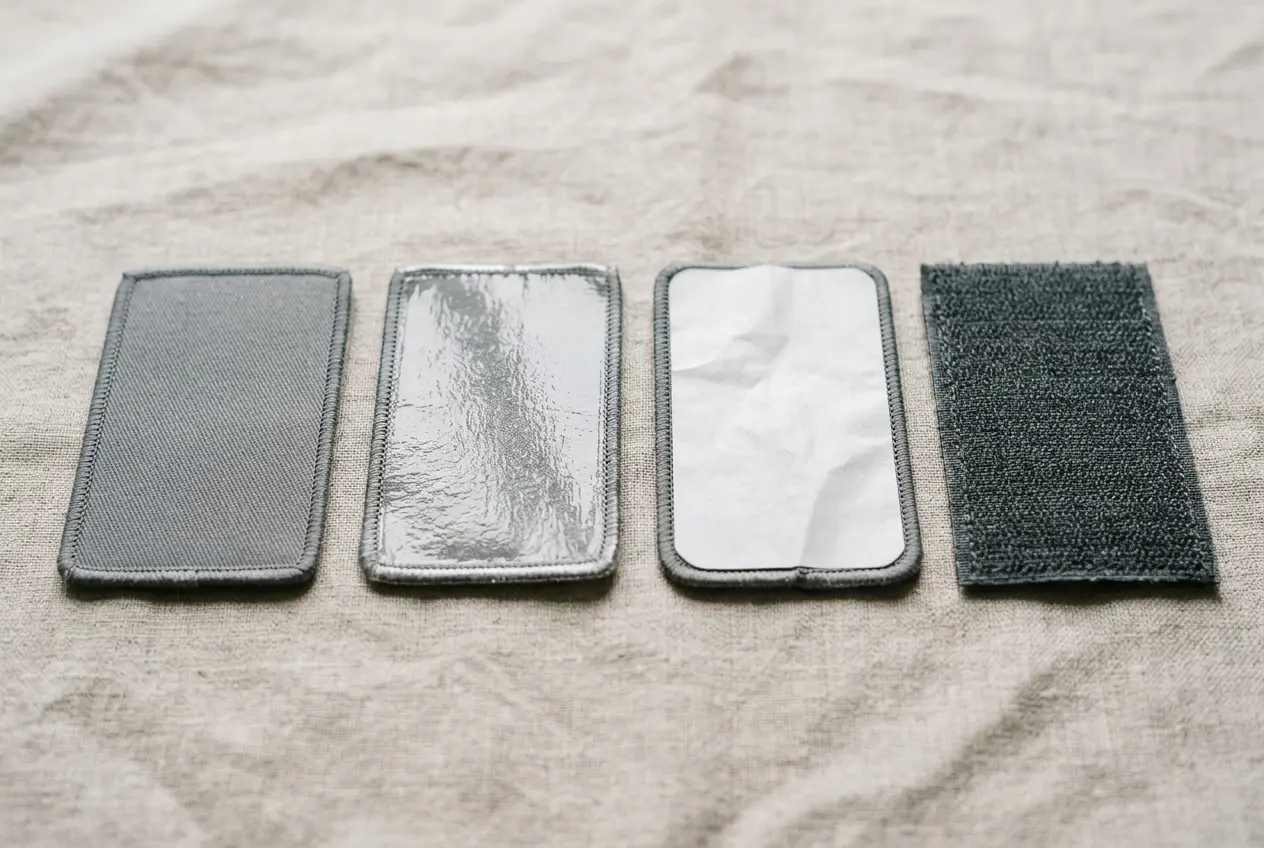
Every patch ships with the backing you choose. Here is how adhesive backing works, and how sew-on, iron-on and hook backings compare.
AT A GLANCE
Patch Backing Types at a Glance
A backing is the back of your patch. It decides how the patch attaches. It also sets how long the patch lasts and whether you can remove it.
| Backing | Attaches by | Best for | Lasts | Removable? |
|---|---|---|---|---|
| Sew-on | Needle and thread | Long wear on any fabric | 5-10+ years | With effort |
| Iron-on | Heat | Cotton and denim | 3-5 years | Hard once bonded |
| Adhesive | Pressure | Flat, smooth surfaces | Short to medium | Often |
| Hook-and-loop | Press together | Swappable gear | Long, with care | Yes |
Not sure where to start? Answer three questions. What fabric is it? How often will it be washed? Do you want to swap it later?
Your answers point to one backing. Fabric matters most. Wash habits come second. Swap needs come third.
- Fabric first
- Washing second
- Swapping third
- Liner
- The paper that covers an adhesive layer.
- Pressure-sensitive adhesive
- Glue that bonds when you press it.
- Hook
- The rough side of hook-and-loop.
- Loop
- The soft side that the hook grips.
ADHESIVE
Custom Adhesive Patches: How Self-Adhesive Backing Works
Self-adhesive backing is a sticky layer under a paper liner. You peel the liner and press the patch down. It is the quickest way to attach a patch.
It does not replace stitching. It suits flat, clean, dry surfaces. Moisture and flexing weaken it.
Custom Stick On Patches: Do They Survive the Wash?
Usually not. Moisture weakens the adhesive. Remove stick-on patches before washing. Residue can stay on the fabric.
Adhesive is a convenience. It saves time, not wash cycles. Treat it as a short-term hold on fabric.
Custom Peel and Stick Patches: Four Steps to Apply
- Clean the surface
Wipe away dust and oil. Let it dry.
- Peel the liner
Pull back the paper. Touch only the edges.
- Press down firmly
Hold firm pressure across the whole patch.
- Wait before use
Give the bond time to set.
Press from the center outward. Push the edges down last. Edges lift first, so give them extra attention.
Custom Self Adhesive Patches: Which Surfaces Hold
Custom adhesive patches hold best on smooth, clean surfaces. Fabric and curves are harder.
| Surface | Hold | Note |
|---|---|---|
| Smooth plastic | Good | Wipe clean first |
| Glass | Good | Dry, smooth only |
| Painted metal | Good | Skip rough paint |
| Bag panel | Fair | Flexing loosens it |
| Cotton fabric | Fair | Short term only |
| Nylon | Poor | Slick and flexible |
- Smooth plastic cases
- Laptop lids
- Glass displays
- Painted metal signs
Adhesive patches suit short projects. Think events, displays and trials. They are poor choices for daily wear.
FABRIC GLUE
Fabric Glue and Patches: When Glue Helps and When It Fails
Fabric glue can hold a patch for a short time. It is a stopgap, not a fix. Stitching lasts longer.
| Surface | Glue result | Better choice |
|---|---|---|
| Cotton | Short-term hold | Sew on |
| Denim | Peels at seams | Stitch the border |
| Backpack nylon | Slips and flexes | Sew or hook |
| PVC | Weak bond | Sew a border |
| Leather | Light use only | Stitch |
- Use fabric glue only as a stopgap
- Follow the glue label exactly
- Test on a hidden corner
- Skip hot glue and super glue
Hot glue and super glue go stiff. They can crack when the fabric flexes. They can also stain thin fabric.
Glue works best as a helper. Use a dot to hold a patch in place. Then stitch the border for the real hold.
| Do | Do not |
|---|---|
| Test a hidden corner | Glue stretchy fabric |
| Use thin, even layers | Use hot glue |
| Let it dry fully | Wash before curing |
OTHER BACKINGS
The Other Backings in Brief: Heat, Thread and Hook-and-Loop
Each type has its own page. This page only compares them.
| Backing | Heat? | Tools |
|---|---|---|
| Iron-on | Yes | Iron or heat press |
| Sew-on | No | Needle and thread |
| Hook-and-loop | No | Needle, thread, loop panel |
| Adhesive | No | Clean hands |
Each backing needs different effort. Sew-on takes the most time. Adhesive takes the least. Pick the effort you can give.
Short on time? Hook-and-loop swaps fastest. Short on skill? Adhesive needs none. Short on budget? Thread costs almost nothing.
- Compare effort
- Compare hold
- Compare cost
Heat melts the glue into fabric. Best on cotton and denim. See iron-on options.
Needle and thread give the strongest hold. See sew-on options.
Hook on the patch, loop on the gear. See velcro options.
- Heat for quick cotton jobs
- Thread for a lifelong hold
- Hook for swappable gear
Heat can scorch some fabrics. Thread never does. Hook-and-loop needs a loop panel sewn on the gear first.
FABRIC MATCH
Match the Backing to Your Fabric or Surface
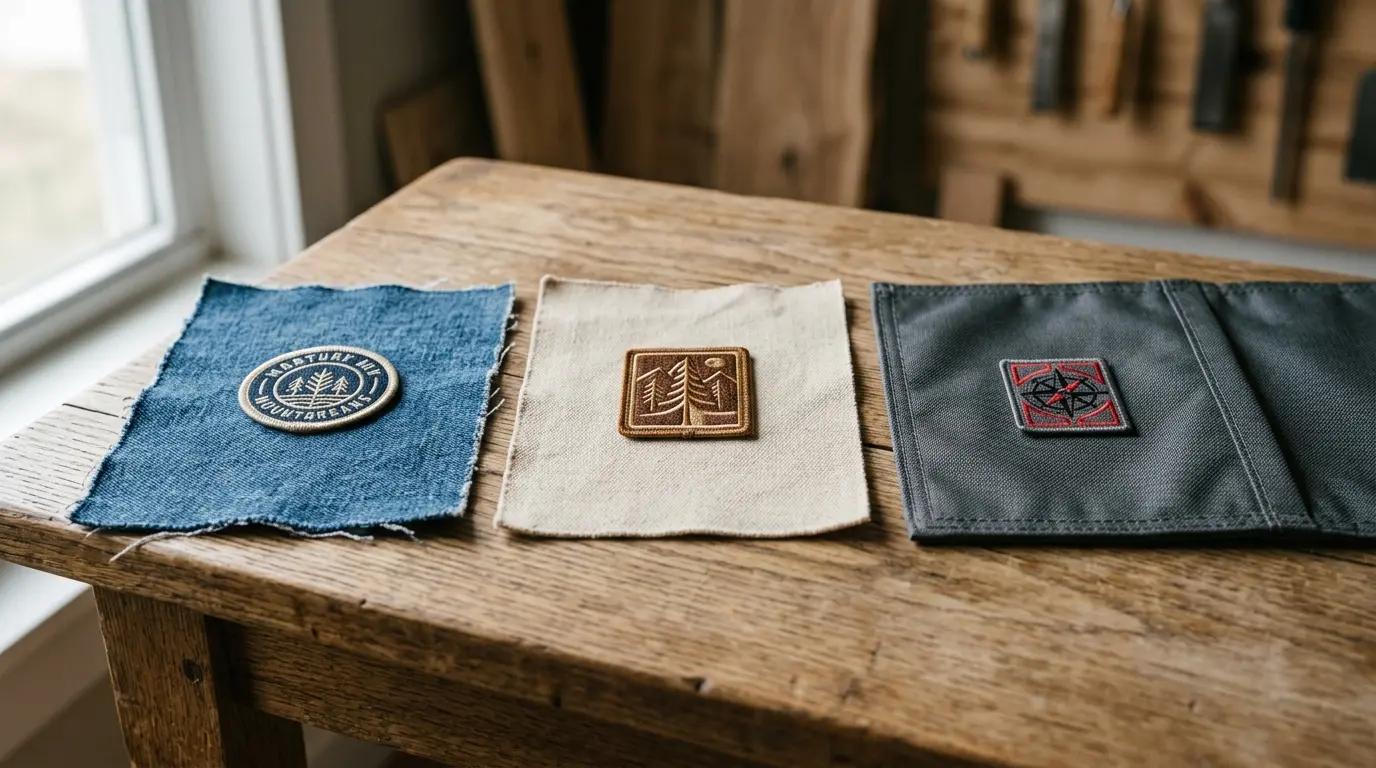
The right patch backing depends on what you attach it to. Start with the fabric.
| Fabric | Best backing | Also works | Avoid |
|---|---|---|---|
| Cotton | Sew-on | Iron-on | Glue |
| Denim | Sew-on | Iron-on | Adhesive |
| Polyester | Sew-on | Hook-and-loop | Iron-on |
| Nylon | Sew-on | Hook-and-loop | Adhesive, iron-on |
| Leather | Sew-on | Hook panel | Iron-on |
| Canvas | Sew-on | Iron-on | Adhesive alone |
| Baseball cap | Sew-on | Heat press | Loose glue |
| Backpack | Sew-on | Hook-and-loop | Glue |
| Smooth plastic | Adhesive | Hook panel | Sew-on |
| Glass | Adhesive | None | Sew-on |
Pros
- Longest hold
- Works on any fabric
- No heat damage
Limits
- Takes more time
- Needs needle and thread
Pros
- Fast to apply
- Swappable with hook
Limits
- Weaker hold
- Moisture can loosen it
Fabric type drives the choice. Stretch, weave and finish all change the grip. Test a small spot when unsure.
Leather needs extra care. Heat can mark it. See leather patches for the full story.
Custom Patch Backing Options for Hats, Bags and Hard Surfaces
The best backing for patches on a hat is usually sew-on. Bags take sew-on or hook. Hard surfaces take adhesive.
- Hats: sew-on, heat press optional
- Bags: sew-on or hook
- Hard surfaces: adhesive
Hats follow the same rule as other fabrics. Check the crown and bill for stiffness. A firm front panel takes a patch well.
STAYING POWER
How Long Each Backing Lasts and How to Keep a Patch On
Lifespans below are general vendor estimates. Real life depends on fabric, washing and wear.
- Match the backing to the fabric
- Stitch the border for extra hold
- Follow the care label
- Wash inside out on cool
- Fix a lifting edge early
| Habit | Why it helps |
|---|---|
| Wash inside out | Protects the patch face |
| Use cool water | Protects glue and thread |
| Air dry | Heat loosens glue |
| Check edges | Catch lifting early |
- Mix methods for hard jobs
- Heat the patch on first
- Then stitch the border
- Backpacks earn that extra step
- Work jackets do too
Browse every patch type on our home page.
Still unsure? Send us your fabric and use. We will point you to the right backing on your free proof.
- Share the fabric type
- Share how often you wash
- Say if you want to swap it
Fabric, washing habits and wear are all we need. Those three facts pick the backing for you.
READY TO ORDER
Choose Your Backing and Get a Free Proof
Upload Artwork
Send any common file format.
Approve Your Proof
Free digital proof within 24 hours.
We Ship Worldwide
Standard 10 to 14 business days. Rush in 5.
Tell us the fabric. We confirm the backing on your free proof.
No minimum. Free proof in 24 hours. Rush is 5 business days after proof approval.
COMMON QUESTIONS
Questions About Patch Backings
Do custom patches with adhesive backing stay on?
They stay best on flat, clean, dry surfaces. They hold less well than sewn patches. Flexing and washing weaken them. For long wear, sew the patch on instead.
How do peel and stick patches work?
A sticky layer sits under a paper liner. Clean the surface. Peel the liner. Press the patch down firmly and hold it. Give the bond time to set before use.
How long do peel and stick patches last?
It depends on the surface and moisture. On smooth, dry surfaces they can last a while. Heat and humidity shorten that. On fabric, expect short to medium term. Washing cuts that life sharply.
Do stick-on patches come off in the wash?
Often, yes. Moisture weakens the adhesive. Remove stick-on patches before washing. Or sew the patch on for a wash-proof hold. Hand wash is gentler than a machine cycle.
Are adhesive patches removable?
Often from smooth surfaces. Peel slowly and warm gently if needed. Fabric may keep residue, so test first. Results vary by surface, age and how long the patch sat there.
Does heat activate a self-adhesive backing?
No. Self-adhesive backing works by pressure, not heat. Iron-on backing is the heat method. For a permanent hold, sew the patch on.
Which backing should I pick for my garment?
Sew-on for permanence. Iron-on for quick cotton jobs. Hook-and-loop for swappable gear. Adhesive for a short-term fix on flat surfaces. When unsure, choose sew-on. It suits every fabric.
What is the best glue for patches?
Fabric glue is a stopgap. Follow the label and test a hidden corner first. Stitching lasts far longer. Sew the border if you want the patch to stay put. Heavy wear needs thread, not glue.
How do I keep my patch from falling off?
Match the backing to the fabric. Stitch the border, even on iron-on patches. Wash inside out on a cool cycle and check the edges often.
Are glueless patches any good?
Yes. Sew-on and hook-and-loop need no glue and hold well. Sew-on lasts longest. Hook-and-loop lets you swap patches between gear.
Can I get two backings on one design?
Ask us before you order. We will confirm what is possible. Your free proof shows the result, and the quote follows. Share your fabric and use.
Does choosing a backing change the order size I need?
No. There is no minimum order, from 1 to 100,000 patches. You choose the backing when you order.
KEEP EXPLORING