Custom PVC Patches
Waterproof molded rubber patches in 2D or 3D.
Personalized PVC patches molded in 2D or 3D rubber from your art. Waterproof and color-filled. Free proof in 24 hours. No minimum.
THE BASICS
What Are Custom Rubber Patches? PVC Meaning, Material and Names
PVC stands for polyvinyl chloride. It is a tough, flexible plastic. Rubber patches are PVC patches in this trade.
Custom PVC patches are molded, not stitched. Colored PVC fills a shaped mold. Heat cures it into a soft, rubbery badge.
- PVC
- Polyvinyl chloride, a flexible plastic.
- Rubber patch
- The common name for a PVC patch.
- PVC badge
- Another name for the same product.
- 2D
- A flat face with crisp color areas.
- 3D
- A face with raised, layered depth.
| Feature | Detail |
|---|---|
| Material | Polyvinyl chloride |
| Surface | Smooth, rubbery, wipe-clean |
| Color | Filled into the mold |
| Depth | Flat 2D or raised 3D |
| Water | Does not absorb it |
- Waterproof and wipe-clean
- Sharp edges and clear text
- Strong, bright colors
- Made from your artwork
- Free proof in 24 hours
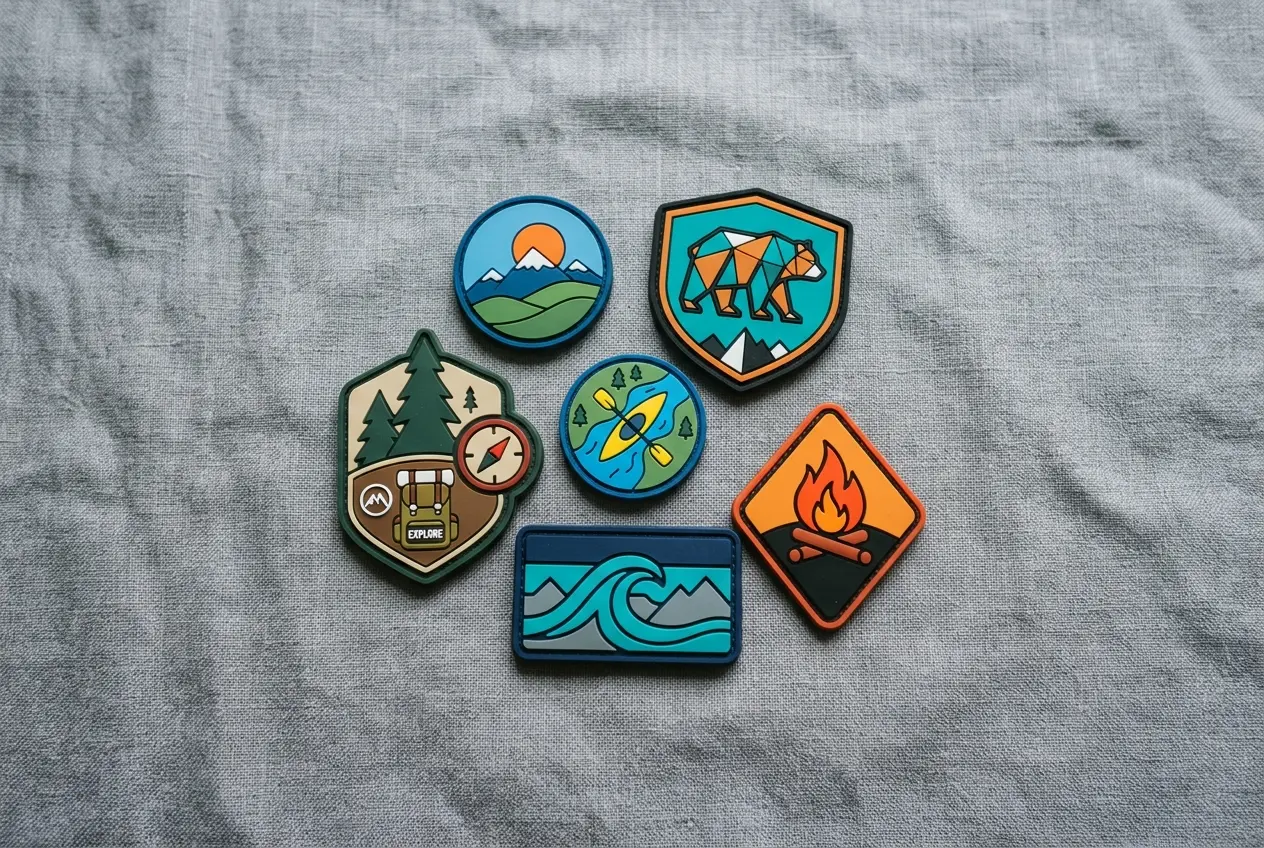
Embroidered patches are woven from thread. PVC patches are poured and cured. That single difference explains almost everything else on this page.
| Type | Made by | Surface |
|---|---|---|
| PVC | Molding and curing | Smooth, rubbery |
| Embroidered | Stitching thread | Textile, flat |
| Woven | Weaving fine thread | Smooth, tight |
| Chenille | Looping yarn | Raised, plush |
Pros
- Sharp, glossy color areas
- Waterproof and wipe-clean
- Raised 3D detail possible
- Strong edges that resist fraying
Limits
- Feels stiff on soft fabric
- Cannot show thread texture
- Needs a new mold for each design
PVC edges do not fray. There are no threads to loosen. That makes the patch a good fit for rough gear.
Clean color blocks. Great for logos.
Layered depth. Great for mascots.
Charges in light. Glows in the dark.
People search for rubber badges, PVC badges and rubber patches. They all mean the same product.
HOW IT'S MADE
PVC Patches Custom Moulded: The Seven Build Steps
A mold gives PVC its shape. Every PVC custom patch starts with your art. Seven steps turn that art into a finished badge.
- Make the mold
Your art is cut into a steel or aluminum plate.
- Fill with color
Colored PVC is placed into each cavity.
- Cure the patch
Heat sets the PVC into a solid, rubbery shape.
- Release it
The patch is lifted out of the mold.
- Trim the flash
Extra PVC around the edge is cut away.
- Add the backing
Velcro, adhesive or a sewn edge is added.
- Check the patch
Each piece is checked against your proof.
| Stage | Tool | Result |
|---|---|---|
| Molding | CNC-cut metal plate | Reverse-image cavity |
| Filling | Hand or machine | Colors in each area |
| Curing | Heat press or oven | Solid rubbery body |
| Trimming | Blade or die | Clean outer edge |
Flash is the thin extra rim PVC leaves at the mold edge. It must be trimmed. Clean trimming gives crisp outlines.
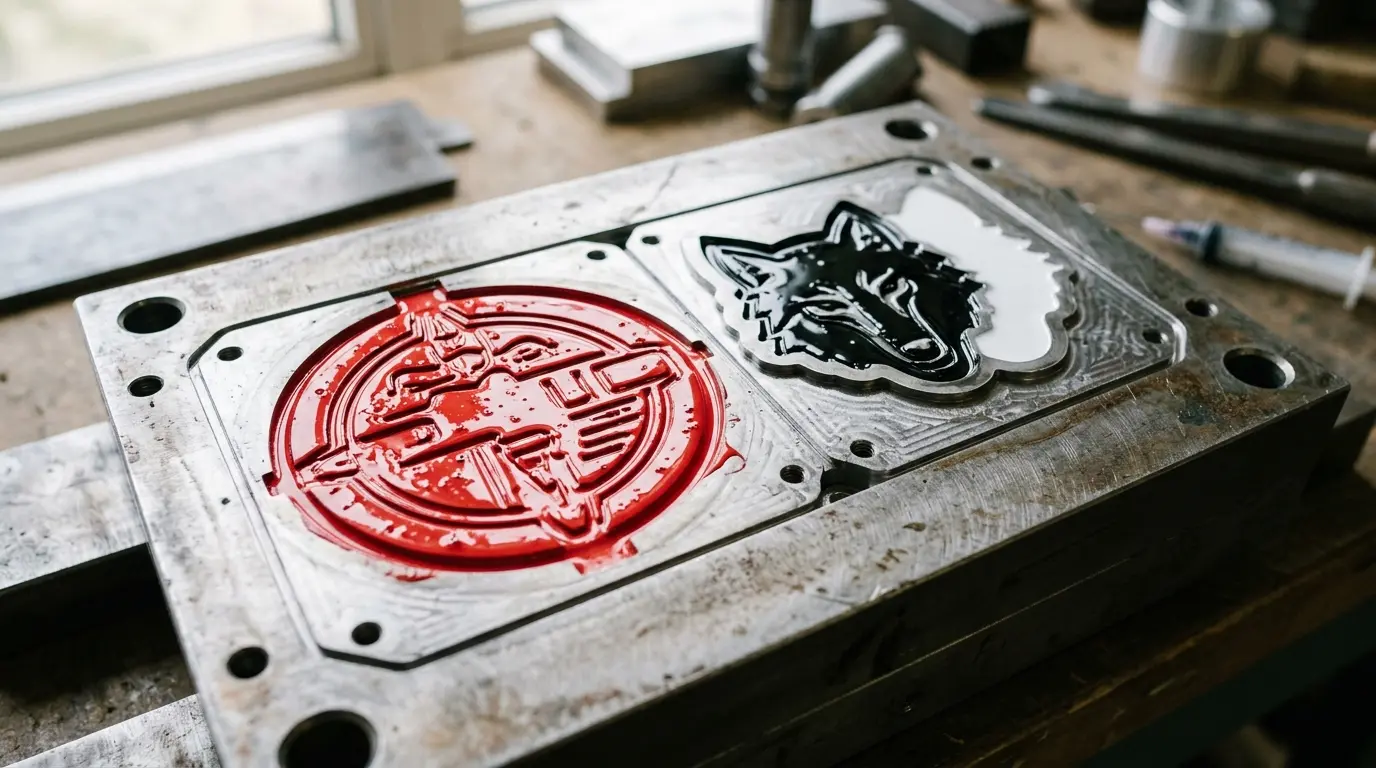
- Reverse-image molds make raised shapes
- Each color is filled by area
- Curing sets color and shape
- Trimming removes the extra rim
- Backing is added last
| Material | Strength | Common use |
|---|---|---|
| Steel | Very durable | Long runs |
| Aluminum | Lighter, easy to cut | Shorter runs |
Both metals are cut by CNC machines. The cut follows your art. Fine lines need steady depth in the plate.
Nothing to fray or snag on gear.
Each zone holds one solid color.
3D molds add steps to the surface.
| Stage | What gets checked |
|---|---|
| Mold | Lines match the art |
| Fill | Colors sit in the right zones |
| Cure | Patch is firm and even |
| Trim | Edge is smooth and clean |
- Colors are matched to your proof
- Edges are checked by eye
- Backing is tested for grip
Cure time and heat are set by the maker. Rules differ by compound. We do not publish numbers here.
- Make the mold from the approved proof
- Fill each color zone separately
- Cure under controlled heat
- Cut the flash by hand or die
- Pack with the backing facing up
2D OR 3D
2D or 3D PVC: Which Depth Fits Your Artwork
Depth is the first choice you make. A flat face suits clean graphics. A raised face suits layered detail. Each pvc custom patch uses one or the other.
| Feature | 2D PVC | 3D PVC |
|---|---|---|
| Surface | Flat color areas | Raised, layered areas |
| Best art | Logos, large text | Mascots, badges, maps |
| Detail | Crisp outlines | Shaded depth |
| Look | Graphic and bold | Sculpted and rich |
| Weight | Lighter | Slightly heavier |
Pros
- 2D keeps text easy to read
- 3D adds shadow and depth
- Both are waterproof
- Both keep sharp edges
Limits
- 2D has no raised detail
- 3D can hide very small text
- 3D needs a clear layer plan
- Choose 2D for simple logos
- Choose 3D for mascots and animals
- Choose 2D for small text
- Choose 3D for textured scenes
- Test your art on the free proof
- Ask for both views if unsure
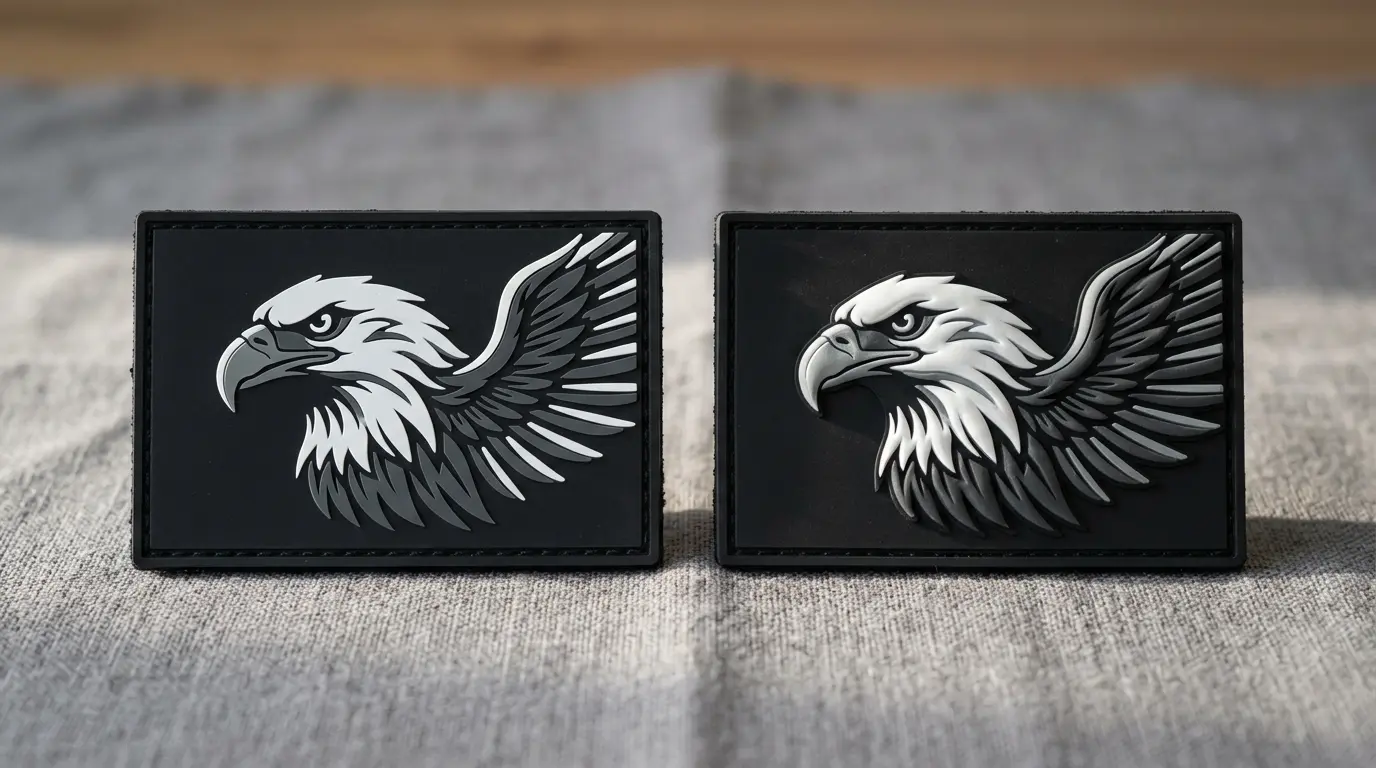
Raised layers catch light. Flat areas do not. Think about where the patch will sit and how it will be seen.
- Look at your art for fine lines.
- Decide how much depth you want.
- Pick 2D for crisp and simple.
- Pick 3D for layered and rich.
- Confirm the choice on the proof.
| Art type | Best depth | Reason |
|---|---|---|
| Simple logo | 2D | Crisp, clean shapes |
| Large text | 2D | Reads clearly |
| Mascot | 3D | Layers add life |
| Map or crest | 3D | Texture adds meaning |
| Badge with fine text | 2D | Small text stays legible |
Flat color areas read fast on hats and bags.
Raised layers add shadow and presence.
Raise some layers, keep text flat.
Test with the free proof. It shows your art in the chosen depth. Changes cost nothing until you approve.
- Rounded corners wear better
- Wide gaps between layers show best
- Small dots can fill in
- Text under 3 millimeters can blur
Some designs mix both. Text stays flat and the mascot rises. Ask us on the proof if you want this.
- Send the art
Upload your file with any notes on depth.
- See the proof
Check flat and raised areas on the mockup.
- Adjust
Ask for changes. Revisions are free.
- Approve
Production starts after approval.
SPEC TABLE
PVC Patch Specs: Thickness, Colors, Size and Edge
Specs shape how a patch looks and wears. Exact numbers are set per order. The table shows what each spec means.
| Spec | What it means | Status |
|---|---|---|
| Thickness | How tall the patch stands | Confirmed on your proof |
| Hardness | How soft or stiff it feels | Confirmed on request |
| Color count | How many fills it uses | Confirmed on your proof |
| Size range | Smallest to largest patch | Confirmed on request |
| Edge | Straight cut or shaped outline | Set by your art |
| Tolerance | Small size variation per piece | Confirmed on request |
- Makers across the trade often quote 2 to 4 millimeters
- Thicker patches feel more premium
- Thin patches bend with the fabric
- Small sizes limit fine text
- List your sizes in inches.
- Mark where the patch will sit.
- Note the color count.
- Ask us for the exact figures.
- Check them on the proof.
Keep text above a readable size. Tiny letters fill in during molding. Bold text survives.
Bends better on soft fabric.
Feels heavier and more premium.
Limits fine detail.
- Small patches look sharper in 2D
- Large patches suit 3D relief
- Ask for a thickness check on the proof
SPECIAL FINISHES
Glow, Transparent and Other PVC Finishes
Special finishes change how a patch behaves in light. Glow-in-the-dark is a finish we publish. Others depend on confirmation.
| Finish | What it does | Status |
|---|---|---|
| Glow-in-the-dark | Glows after light exposure | Offered |
| Reflective | Bounces headlight beams | Ask us |
| Transparent | Lets color show through | Ask us |
| Glitter | Adds sparkle to fills | Ask us |
- Glow suits night events and safety
- Reflective suits road and trail gear
- Transparent suits layered designs
- Glitter suits fashion pieces
- Ask us before you design around a finish
- Proof shows the final result
- Check glow under bright light first
- Ask about reflective before design
- Ask about transparent fills early
- Keep designs simple with special finishes
A finish changes how colors look in the dark. A glow patch needs light first. Then it lights itself for a while.
Charges in light, then glows in the dark.
Ask us. Useful for road and trail gear.
Ask us. Color shows through the patch.
| Finish | Best place |
|---|---|
| Glow | Night events, camping |
| Reflective | Road, trail, safety |
| Transparent | Layered logos |
| Glitter | Fashion and kids' gear |
- Choose the finish you want.
- Ask us if it is available.
- Adjust the art if needed.
- Confirm it on the proof.
BACKINGS
Custom PVC Velcro Patches and Other Backings
Backing decides how a patch lives on your gear. Hook-and-loop lets you swap patches. Adhesive and stitches make them fixed.
Want PVC velcro patches custom sized for a vest panel? Tell us. The backing goes on during finishing.
| Backing | Best for | Hold | Note |
|---|---|---|---|
| Hook-and-loop | Tactical gear, morale swaps | Removable | Needs a loop panel |
| Heat-applied adhesive | Fixed fabric use | Strong | Needs heat and time |
| Sew-in edge | Jackets and bags | Permanent | Needs a sewn border |
| Plain back | Glue-on or display | Varies | Add your own fixing |
Pros
- Velcro swaps in seconds
- Velcro suits changing gear
- Sewn edge survives rough use
- Adhesive keeps a flat profile
Limits
- Velcro needs a matching panel
- Adhesive is harder to undo
- Sewing adds time
- Pick velcro for morale patches
- Pick sew-in for bags that get hauled
- Pick adhesive for flat fabric
- Match the backing to the garment
- Tell us the surface on your order
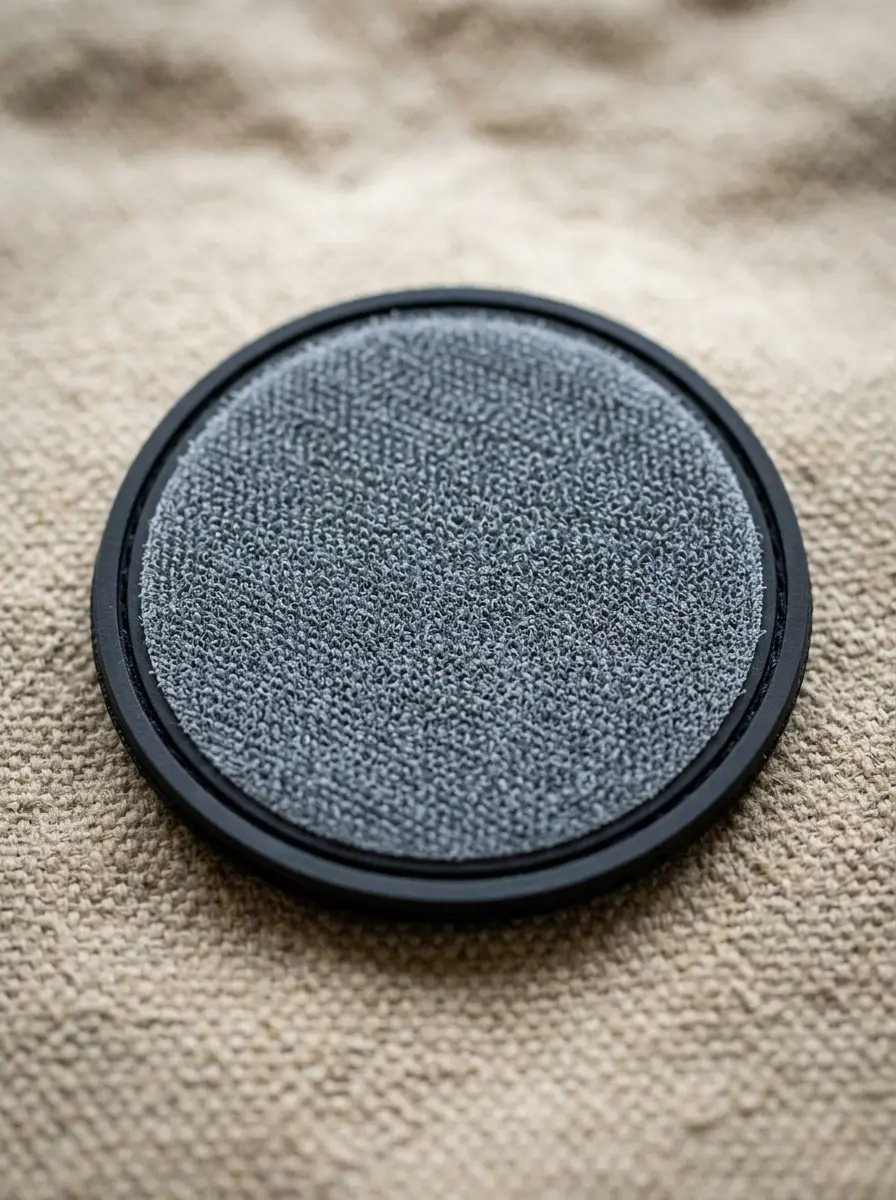
Panels need the loop side. Many tactical vests already have one. Check yours before you pick a backing.
| Gear | Backing | Why |
|---|---|---|
| Plate carrier | Hook-and-loop | Panels are ready |
| Backpack front | Hook-and-loop | Swap patches easily |
| Jacket sleeve | Sew-in edge | Holds under strain |
| Cap front | Velcro or sewn | Depends on the cap |
- Check the panel on your gear.
- Pick velcro or a fixed backing.
- Match patch size to the panel.
- Tell us when you order.
- Confirm it on the proof.
Backings change how a patch ages. Velcro loops can fill with lint. A sewn edge can loosen if the thread is weak. Choose with use in mind.
Swap in seconds. Brush the loops clean.
Needs a firm press. Use scrap fabric first.
Long-lasting. Use strong thread.
- Do not sew through the middle of the face
- Sew along the border only
- Use a heavy needle for thick PVC
Think about the next owner of the gear. A velcro patch moves with you. A sewn patch stays with the jacket.
- Velcro fits gear you resell or reissue
- Sewn edges fit gear you keep
- Adhesive fits flat display pieces
How to Attach a PVC Patch and What Glue Works
Match the method to the surface. For custom PVC velcro patches, sew the loop side onto the garment first. Then press the hook side on.
- Choose the method for your surface.
- Clean and dry the area.
- Position the patch and mark it.
- Attach with velcro, heat or stitches.
- Test the hold before use.
| Method | Surface | Note |
|---|---|---|
| Velcro | Vest, bag panel | Sew loop side first |
| Heat apply | Cotton, canvas | Follow the guide closely |
| Sew edge | Jackets, packs | Use strong thread |
Heat settings vary by backing and fabric. Ask us before you press.
- Check the loop panel on your gear first
- Choose hook-and-loop for flexible looks
- Choose sewn edges for fixed use
- Ask about backing before you design
- Keep patch size inside the panel
HAT USE
Custom PVC Patches for Hats: Crown, Front Panel and Weather
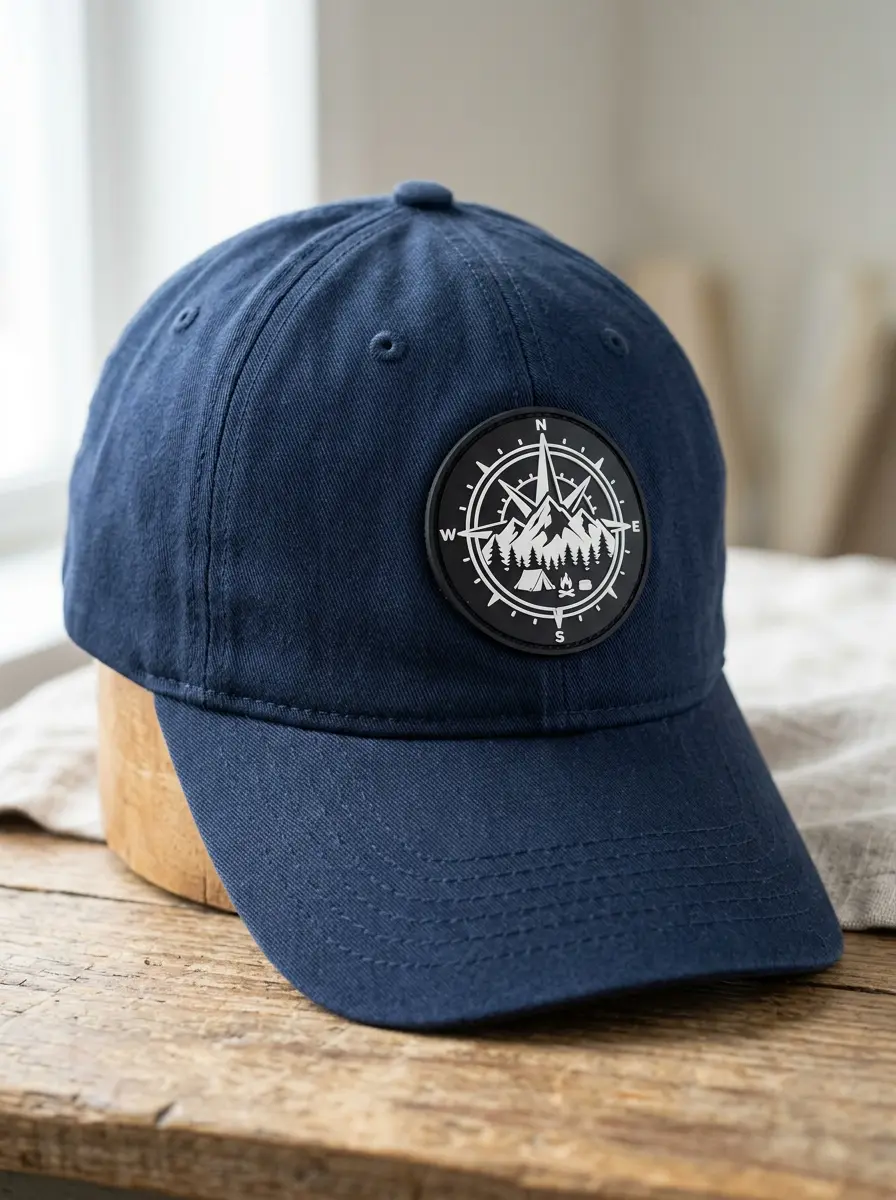
PVC suits outdoor caps. Rain and sweat do not soak it. Keep the size small enough for the crown.
- Keep the width inside the front panel
- Pick a thin profile so the brim sits right
- Use velcro for swappable looks
- Avoid seams in the patch area
| Cap type | Typical size | Backing |
|---|---|---|
| Baseball cap | 2 to 3 inches wide | Velcro or sewn |
| Snapback | 2 to 3 inches wide | Velcro |
| Trucker cap | 2 to 3 inches wide | Sewn edge |
| Bucket hat | Up to 3 inches | Sewn or velcro |
Cap wearers like the clean, glossy look. It reads well from across a trail. A velcro front panel lets you swap patches fast.
A custom PVC patch hats order works best with simple shapes. Fine text gets lost on a curved crown. Aim for bold lines.
- Measure the front panel width.
- Pick a size that fits inside it.
- Choose velcro or a sewn base.
- Check the brim clearance.
- Approve the proof.
- Round shapes sit well on curved crowns
- Flat PVC beats thick PVC on small caps
- Light colors show on dark caps
- Keep edges away from seams
Curves strongly. Keep patches small.
Flattest area. Best place for PVC.
Hard to read. Use bold shapes.
| Condition | Effect on PVC | Tip |
|---|---|---|
| Rain | Runs off the face | Wipe the brim area |
| Sweat | Does not soak in | Rinse the cap band |
| Sun | UV-resistant per our page | Store out of sun |
| Cold | Stays flexible in daily use | Avoid sharp bends |
TACTICAL USE
Tactical, Morale and Bag PVC Patches
Gear takes rain, mud and sweat. PVC shrugs most of it off. A quick wipe cleans the face.
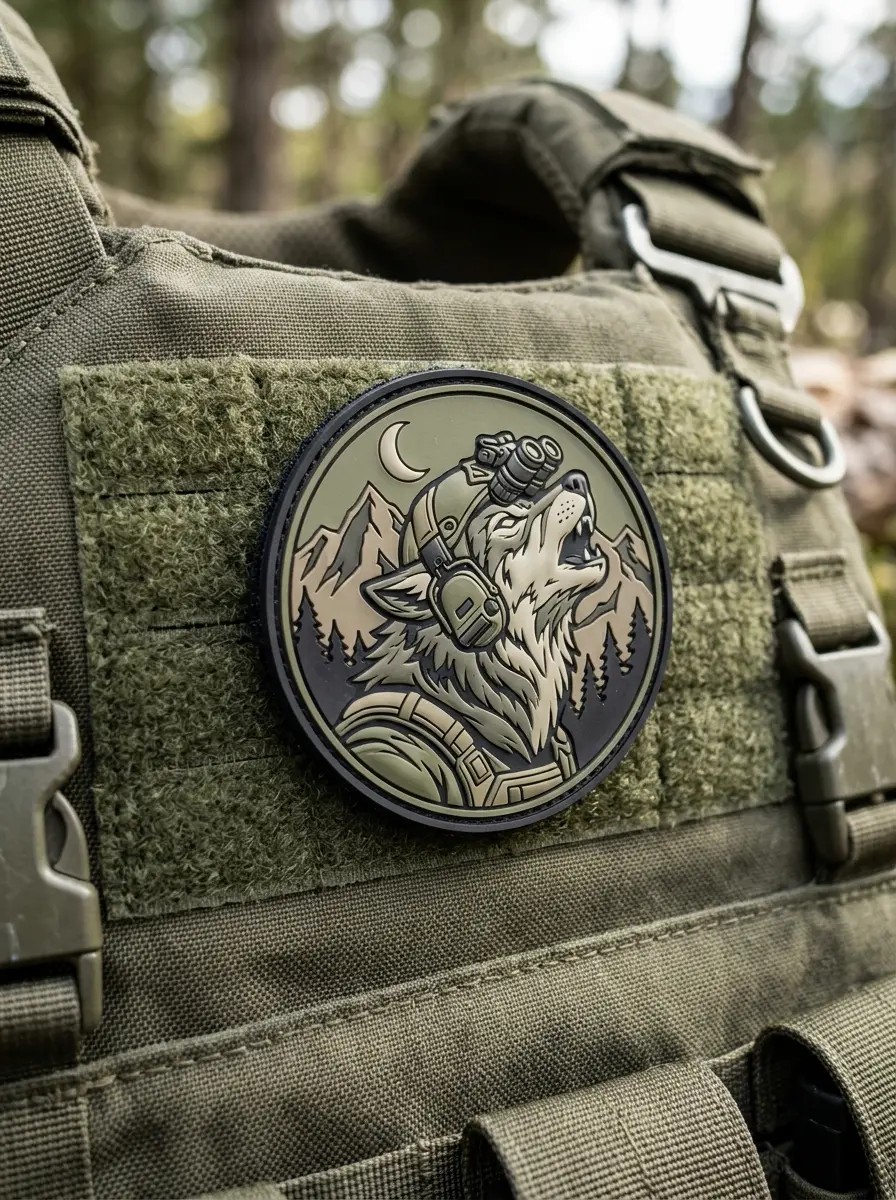
Vests and plate carriers carry loop panels for velcro.
Swappable patches show humor, rank or a crew.
Mud and rain wipe off a PVC face.
Soft rubber logos suit hats, bags and jackets.
- Rain and splashes wipe off
- Mud rinses clear
- Velcro swaps in seconds
- Colors stay bold outdoors
- Edges stay sharp on packs
- Raised logos survive rough handling
Personalized PVC patches suit crews, clubs and outdoor brands. They work when fabric patches would soak up water.
| Use | Why PVC fits | Backing |
|---|---|---|
| Tactical vest | Wipes clean | Velcro |
| Backpack | Handles rain and mud | Velcro or sewn |
| Morale swap | Easy to change | Velcro |
| Brand merch | Raised, glossy logos | Sewn or adhesive |
- Plate carrier loop panels
- Pack shoulder straps
- Jacket sleeves
- Range bags
- Crew name badges
- Camp gear
Match patch size to the panel. Oversize patches peel at the edges. Rounded corners hold better than sharp ones.
- Pick the gear panel.
- Measure the free space.
- Choose the backing.
- Pick a bold design.
- Approve the proof.
Simple art survives mud and glare. Fine text blurs from far away. Bold shapes win outdoors.
| Item | Check | Fix |
|---|---|---|
| Loop panel | Is it clean and flat? | Brush it clean |
| Patch size | Does it fit inside? | Reduce the size |
| Backing | Does it match? | Order hook-and-loop |
- Clean the loop panel first
- Press the patch firmly for several seconds
- Check the grip by tugging gently
- Remove patches before washing gear
PVC OR THREAD
PVC or Embroidered: Which Survives Your Use
Both styles last. They fail in different places. Pick based on water, texture and detail.
| Point | PVC | Embroidered |
|---|---|---|
| Water | Waterproof | Absorbs water |
| Texture | Smooth, rubbery | Soft, textile |
| Detail | Crisp color areas | Fine thread detail |
| Weight | Slightly heavier | Lighter |
| Edge | Sharp cut or molded | Stitched border |
| Best use | Wet, rough gear | Uniforms, casual wear |
Pros
- PVC wipes clean
- PVC edges stay sharp
- Embroidery feels soft
- Embroidery suits fine text
Limits
- PVC feels stiff on fabric
- Embroidery soaks up rain
- PVC cannot show thread texture
- Choose PVC for wet gear
- Choose thread for uniforms
- Choose PVC for sharp color blocks
- Choose thread for small, fine text
Some buyers use both. A thread patch handles the name. A PVC patch handles the logo. See the full three-way comparison.
- Wet gear points to PVC
- Uniforms with a soft look point to thread
- Small text favors thread
- Bold logos favor PVC
PVC and embroidery can sit side by side. They suit different parts of a kit. Pick each by job.
- Check where the patch will live.
- Check how it will get wet.
- Check how it will be washed.
- Pick the style that survives.
Water, mud and scuff resistance.
Soft feel and fine text.
- PVC patches add a bit of weight
- Thread patches add a soft hand
- Both work with velcro
| Style | Care note |
|---|---|
| PVC | Wipe clean with a damp cloth |
| Embroidered | Wash gently, air dry |
| Both | Avoid harsh heat |
PVC OR SILICONE
Custom Silicone Patches vs PVC: Real Differences
Silicone and PVC look alike at first. Silicone is softer and handles temperature swings better. PVC is usually cheaper and tougher against abrasion.
| Point | PVC | Silicone |
|---|---|---|
| Feel | Firm and rubbery | Softer, more flexible |
| Heat | Fine for daily use | Handles extremes better |
| Abrasion | Resists scuffing well | Wears faster |
| Cost | Usually lower | Usually higher |
| Uses | Gear, hats, bags | Extreme climates |
| Detail | Sharp edges | Soft, smooth edges |
- Pick PVC for scuffs and mud
- Pick silicone for extreme heat or cold
- Compare cost before you decide
- Ask us about the material you need
Many sources describe a custom rubber patch as PVC. Silicone is a separate material. Do not assume they are the same.
- List the temperatures your patch will see.
- Check how much rubbing it will get.
- Compare cost with your budget.
- Pick PVC for most daily gear.
- Ask us about special cases.
Most gear never needs silicone. Daily wear, rain and mud suit PVC well. Extreme heat or cold changes the answer.
| Situation | Likely pick |
|---|---|
| Extreme heat | Silicone |
| Extreme cold | Silicone |
| Daily scuffs | PVC |
| Tight budget | PVC |
| Point | PVC | Silicone |
|---|---|---|
| Price level | Lower | Higher |
| Everyday gear | Great fit | Fine |
| Extreme climate | Usually fine | Better |
DURABILITY
Waterproof, Sun and Wash Durability of PVC Patches
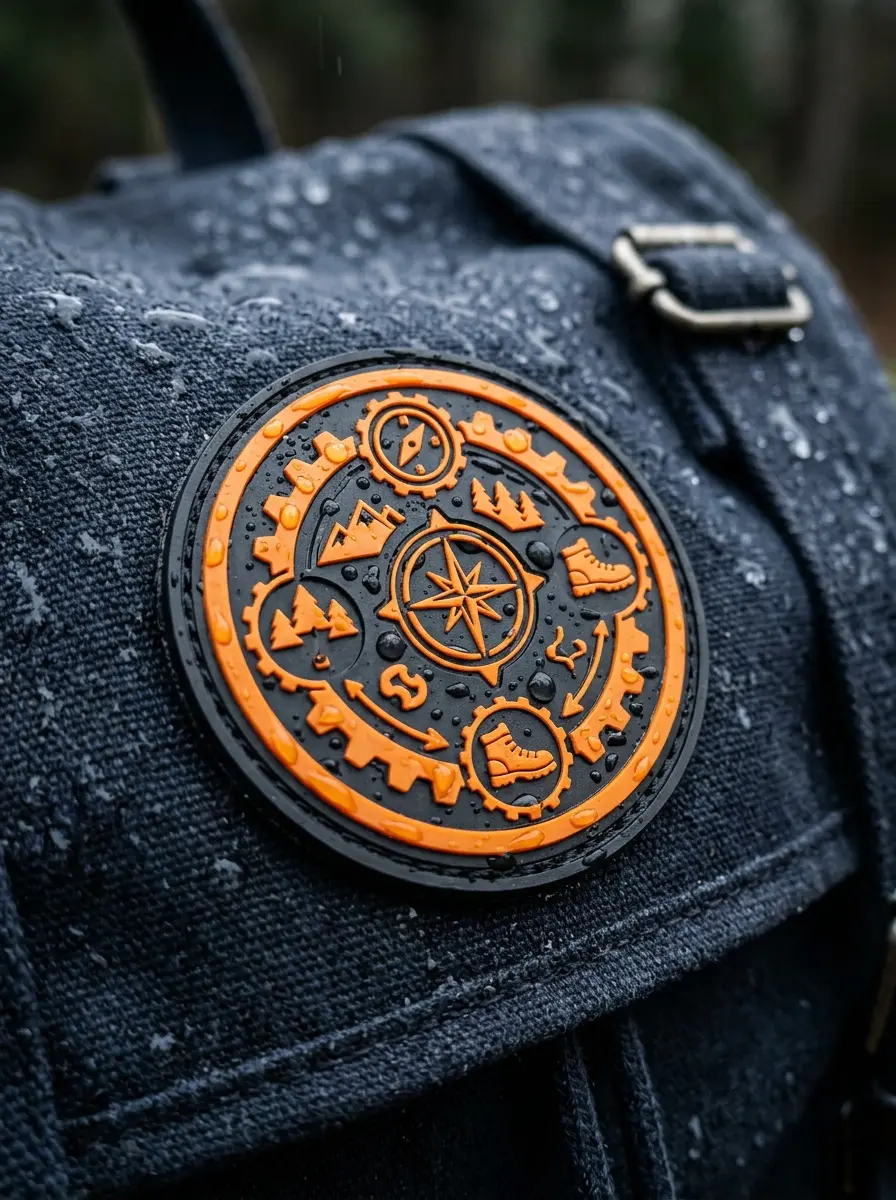
PVC does not absorb water. It resists UV light. It stays flexible with normal use.
- Rain runs off the face
- Sweat does not soak in
- Sunlight does not fade it fast
- Mud wipes off with a damp cloth
- Cold flex is fine for daily use
- Heavy abrasion will scuff any surface
| Do | Avoid |
|---|---|
| Wipe with a damp cloth | Strong solvents |
| Air dry the patch | Direct flame |
| Remove velcro patches before washing | Machine washing loose |
| Store flat | Hot car dashboards |
Treat a PVC patch like a good phone case. It handles daily wear well. It does not love extreme heat.
| Condition | Effect | Tip |
|---|---|---|
| Rain | Runs off the face | Wipe dry |
| Sun | UV-resistant per our page | Store shaded |
| Mud | Wipes off | Use a damp cloth |
| Cold | Stays flexible in normal use | Avoid hard bending |
- Wipe, do not scrub
- Store flat
- Keep it away from solvents
- Check velcro loops for dirt
Does not soak in.
UV-resistant per our page.
Wipes clean. Scuffs under heavy abrasion.
Heat and chemicals are the main enemies. A hot car and a harsh cleaner do more harm than rain. Treat the patch gently.
DIY LIMITS
Why a PVC Patch Is Not a Home Project
Craft molds exist. They make soft, uneven results. A factory mold is a different tool.
- A steel or aluminum mold
It is cut to match your art.
- Precise color fill
Each color sits in its own cavity.
- Controlled curing
Heat and time must stay even.
- Clean trimming
Flash must be removed neatly.
| Route | Limit | Result |
|---|---|---|
| Craft mold | Soft edges, weak detail | Uneven patch |
| Resin or hot glue | No true PVC cure | Brittle or sticky |
| Factory mold | Needs tooling | Sharp, repeatable patch |
Searching for custom rubber patches to make yourself is a long road. You need tooling, curing gear and practice. We make them to order instead.
| Item | Role |
|---|---|
| CNC machine | Cuts the mold |
| Metal plate | Holds the shape |
| PVC compound | Fills the cavity |
| Curing heat | Sets the patch |
- A cutting machine
- A metal plate
- A color-fill setup
- A curing setup
Molds take skill and testing.
Tooling is a real cost.
Home attempts rarely match.
- Resin sets without a true cure
- Hot glue stays tacky
- Silicone craft molds lose detail
Time matters too. A home test might take a weekend and still fail. A mold shop repeats the same result every time.
CUSTOM SHAPES
Custom Made PVC Patches: Shapes, Outlines and Cutouts
The mold follows your outline. Any clear shape can work. Text can be cut out as well.
- Round and oval shapes
- Shield and badge shapes
- Letter outlines
- Animal silhouettes
- Logo contours
- Cutout text and gaps
| Shape | Good for | Note |
|---|---|---|
| Round | Club or event logos | Simple mold |
| Shield | Teams and crews | Classic badge look |
| Contour cut | Mascots and logos | Follows the art |
The edge follows your art outline.
Open areas show the garment.
Round, square or shield.
| Option | Look | Best for |
|---|---|---|
| Outline cut | Edge follows the logo | Mascots and logos |
| Cutout text | Letters open to fabric | Bold fonts only |
| Standard shape | Round or square | Simple badges |
- Circle
- Shield
- Rectangle
- Custom outline
Pick the outline that suits your art. Round suits seals. Shield suits teams. Contour suits mascots.
Seals, clubs, events.
Teams and crews.
Mascots and animals.
Custom PVC Badges for Brands and Teams
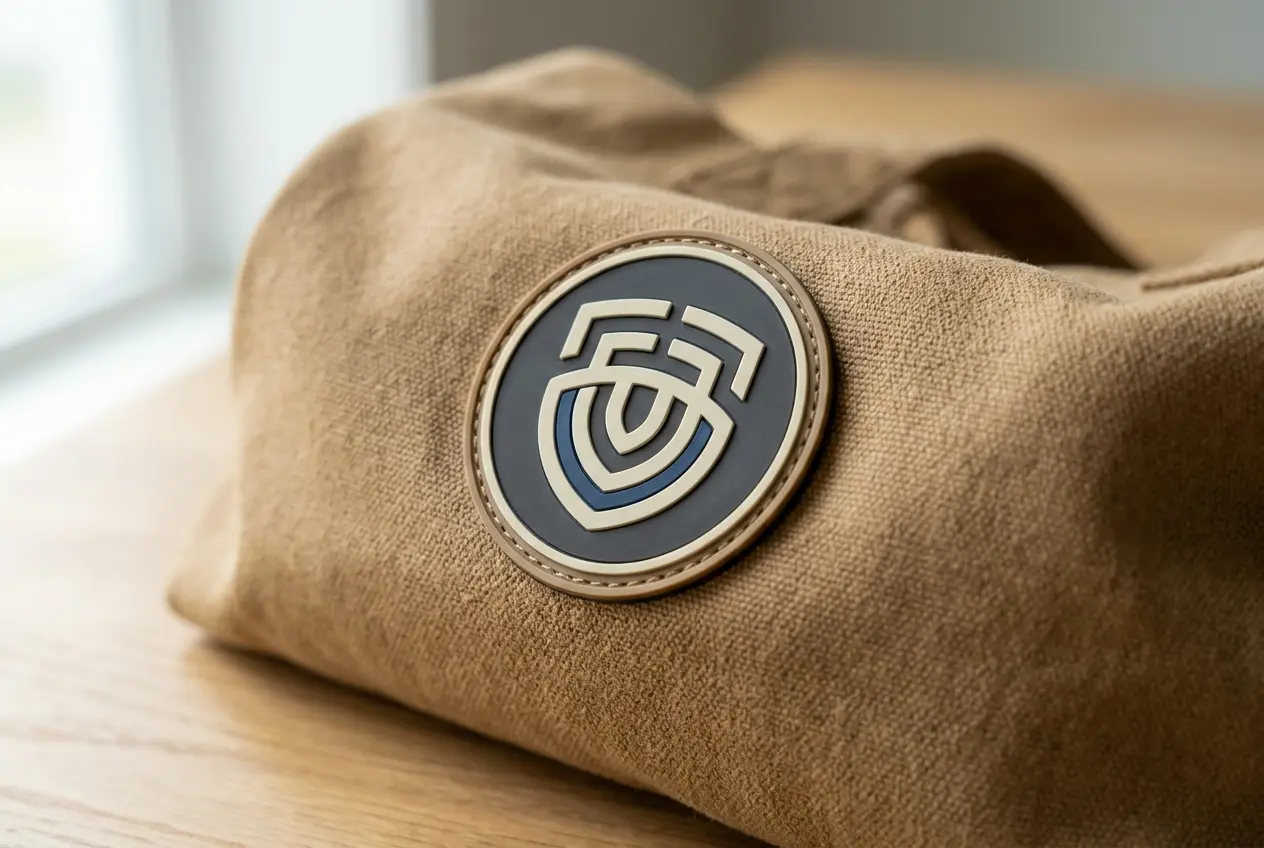
A PVC badge gives a brand a tough, glossy mark. They suit teams, clubs and outdoor labels.
- Brand logos in raised 3D
- Team crests on gear
- Club badges for events
- Event patches that survive rain
ORDERING
Order PVC Patches: Files, Proof and Moulding Time
Ordering is simple. You send art. You approve a free proof. We make the mold after approval.
- Upload your art file.
- Pick 2D or 3D.
- Tell us the backing you want.
- Approve the free proof.
- Receive your order.
| Stage | Time | Note |
|---|---|---|
| Proof | 24 hours | Free, Pantone-matched |
| Production | 10-14 business days | After proof approval |
| Rush | 5 business days | After proof approval |
| Shipping | Duty-free | Worldwide |
- AI, EPS or PDF files are best
- PNG, JPG, SVG, PSD, BMP and TIF also work
- Free unlimited revisions
- Free proof before any mold is made
- Ships to 50+ countries
We make PVC patches custom to your art. Order a single custom PVC patch or a full batch.
- Send the art file
- Name the backing
- Pick 2D or 3D
- Add size and quantity
Send these four things with your request. The proof arrives within 24 hours.
Send us a rough idea if you are unsure. The proof turns it into something you can judge.
| Item | Example |
|---|---|
| Art file | AI, EPS, PDF or PNG |
| Depth | 2D or 3D |
| Backing | Velcro, sewn or adhesive |
| Quantity | From 1 to 100,000 |
Custom PVC Patches No Minimum: Mould and Make From One
There is no minimum order. Order from 1 to 100,000. A single patch is welcome.
READY TO ORDER
Start Your PVC Patch Order
Upload Artwork
Send any common file format.
Approve Your Proof
Free digital proof within 24 hours.
We Ship Worldwide
Standard 10 to 14 business days. Rush in 5.
Send art for custom PVC patches. Approve a free proof in 24 hours.
No minimum. Free proof in 24 hours. Rush in 5 days.
COMMON QUESTIONS
What Buyers Ask About PVC and Rubber Patches
What is a PVC patch?
A PVC patch is a molded rubber patch made from polyvinyl chloride. It is waterproof and color-filled. You can order it flat in 2D or raised in 3D. Backings include velcro.
How do I attach a PVC patch?
Use velcro, heat apply, a sewn edge or adhesive. Pick velcro for swaps. Sew the loop side to the garment first. Test any heat or glue on scrap fabric before you commit.
What does PVC stand for?
PVC stands for polyvinyl chloride. It is a common plastic. Makers use it for molded patches. It is flexible, waterproof and holds color well. It is the same family of plastic used in many everyday products.
What are rubber patches called?
Most rubber patches are PVC patches. People also say rubber badges or PVC badges. They are molded and color-filled, not stitched from thread.
Are PVC patches waterproof?
Yes. PVC does not absorb water, so rain and sweat run off. Wipe the face clean with a damp cloth. We publish no wash-cycle numbers, because tests vary by build.
Can I order PVC patches custom made with no minimum?
Yes. There is no minimum order, from 1 to 100,000 patches. You get a free proof in 24 hours before anything is made. Revisions are free until you approve.
What are the different types of PVC patches?
The main types are 2D flat and 3D raised patches. Finishes such as glow-in-the-dark add variety. Backings include velcro, adhesive and sewn edges. Pick depth first, then finish, then backing.
Which PVC backing is best for a backpack?
Velcro suits swaps on backpack panels. A sewn edge suits fixed bags that get hauled. Pick based on how often you change patches. Check that your pack has a loop panel first.
When does PVC beat embroidery on a patch?
They are better for water and mud. Embroidered patches feel softer and show finer text. Neither wins everywhere. Match the style to where the patch will live.
How do I make a PVC patch or rubber patch at home?
Home molds give soft, uneven results. Factory molds need tooling and controlled curing. Few people have either. We make PVC patches to order from your art instead. You skip the equipment.
Where can I buy PVC patches or custom rubber patches?
Order custom PVC patches made to order right here. Upload your art and approve a free proof in 24 hours. No minimum applies, and shipping is duty-free worldwide.
What can I use to patch rubber?
Rubber repair patches use rubber cement. Our patches are for decoration. They attach with velcro, heat or stitches, not repair glue. Do not use rubber cement to mount a patch.
Are PVC patches the same as silicone patches?
No. PVC is usually cheaper and tougher against abrasion. Silicone handles extreme temperatures better. We have not confirmed that we offer silicone. Ask before you plan around it.
How thick is a custom PVC patch?
Makers across the trade often quote 2 to 4 millimeters. Your exact figure depends on the design and depth. Ask us and we confirm it for your order.
Can PVC patches go on a baseball cap?
Yes. Custom PVC patches for hats work with velcro or a sewn base. Keep the size near the front panel and the shape simple. Check the brim clearance before you order.
How do I clean a PVC patch?
Remove velcro patches first. Wipe the face with a damp cloth. Wash the garment cold if needed. We publish no wash numbers, so avoid harsh solvents and hot dryers.
Does a PVC patch fade in the sun?
PVC is UV-resistant, so color stays strong outdoors. We do not publish sun-test numbers. Heavy daily abrasion will still scuff any surface over time.
How many days does PVC moulding add to an order?
Production takes 10-14 business days after proof approval. Rush orders take 5 business days from proof approval. Shipping is duty-free worldwide.
KEEP EXPLORING